Top Xclusiv
Fela Kuti’s Grammy Lifetime Achievement Award and it’s Impact to His Legacy
Fela Anikulapo Kuti’s reported recognition with a Grammy Lifetime Achievement Award in January 2026 arrives decades after the period that defined his influence, which is part of what makes the moment complicated. His legacy has never depended on Western validation. Afrobeat reshaped global music long before award institutions caught up. Yet formal recognition still carries weight because it determines how history is archived, taught and circulated to new audiences.
The Lifetime Achievement Award is designed to acknowledge artists whose recorded output alters the direction of music itself. By that measure, Fela’s case is straightforward. He constructed Afrobeat as a hybrid language, combining jazz improvisation, funk bass lines, Yoruba percussion and extended band arrangements that rejected radio formats. His compositions unfolded gradually, often stretching beyond ten minutes, driven by rhythm sections that functioned like engines rather than accompaniment. The structure of the music mattered as much as the message. It prioritised endurance, repetition and collective energy over commercial neatness.

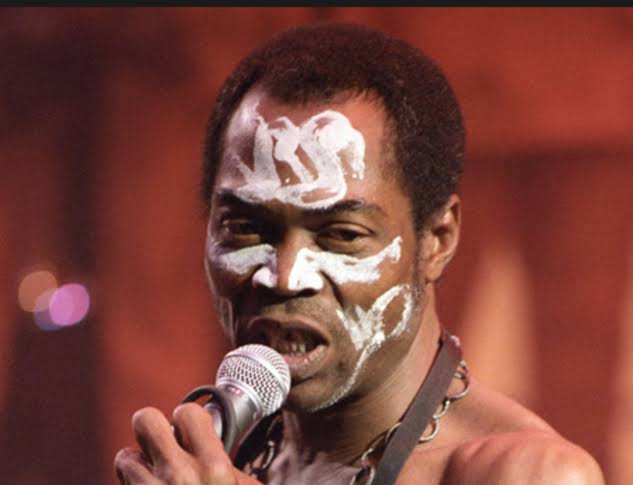
Photo Credit – Google
What separated Fela from many of his contemporaries was the clarity of his political intent. His lyrics did not gesture vaguely toward protest. They targeted specific systems of power. Songs such as Zombie and Expensive Shit criticised military authority, state violence and economic hypocrisy with names and details intact. The Kalakuta Republic, his communal compound, operated as both creative base and political statement. It invited confrontation, and confrontation arrived repeatedly in the form of raids, arrests and censorship. Recognising Fela within a Grammy framework effectively acknowledges an artist who treated music as an instrument of civic opposition, not simply cultural export.

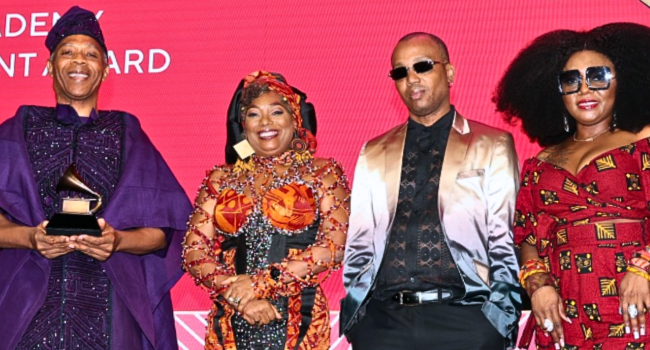
Photo Credit – Google
The significance extends beyond one career. African music has often been positioned internationally as an adjacent category rather than a central force in shaping modern sound. Labels such as “world music” historically isolated it from the mainstream narrative of innovation. Fela’s influence contradicts that separation. His rhythmic architecture appears in hip-hop sampling, contemporary jazz ensembles, dance music production and the groove logic of present-day African pop. Many artists borrow Afrobeat’s horn arrangements and layered percussion without always naming the source. Formal recognition forces that lineage into the open.
There is also the question of timing. Fela did not receive major Grammy recognition during his lifetime, despite circulating widely outside Nigeria from the 1970s onward. If the Lifetime Achievement honour is confirmed, it reads less as discovery than delayed acknowledgement. Cultural impact rarely waits for institutions, and institutions rarely move at the speed of culture. The gap between the two is where artists like Fela often live, celebrated by audiences, debated by critics, and only later absorbed into official histories.

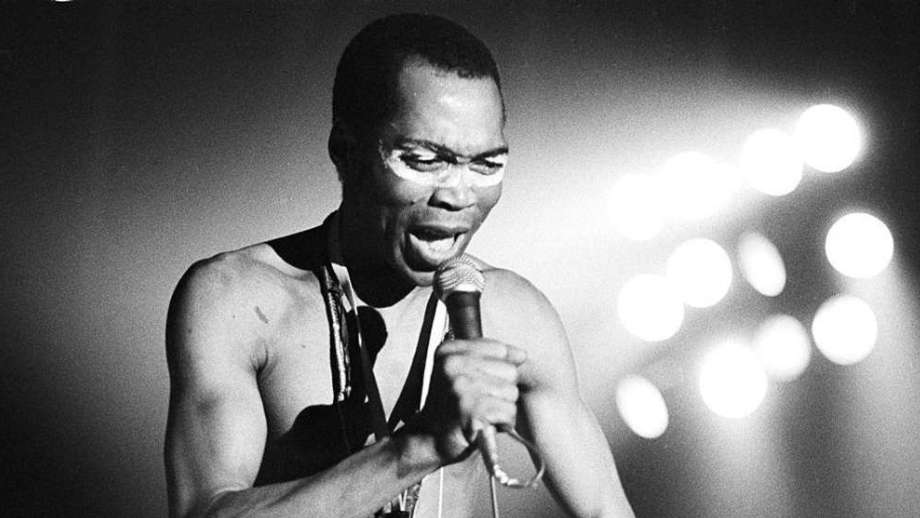
Photo Credit – Google
Renewed attention around the award has practical consequences. Younger listeners encountering his work for the first time are being directed toward original recordings rather than secondhand myth. Archives, exhibitions and academic programmes are revisiting Afrobeat as a disciplined musical system, not just a rebellious aesthetic. This shift matters because Fela is frequently reduced to an image of defiance, the performer as symbol, while the technical precision of his band leadership and composition receives less scrutiny than it deserves.
The moment also sharpens discussion about the relationship between contemporary Afrobeats and its foundation. Today’s global African pop industry operates on a scale Fela could not have imagined, yet many of its rhythmic instincts trace back to his experiments. His career demonstrated that African musicians could export sound without flattening identity for international approval. That lesson remains central to how current artists balance local specificity with global reach.

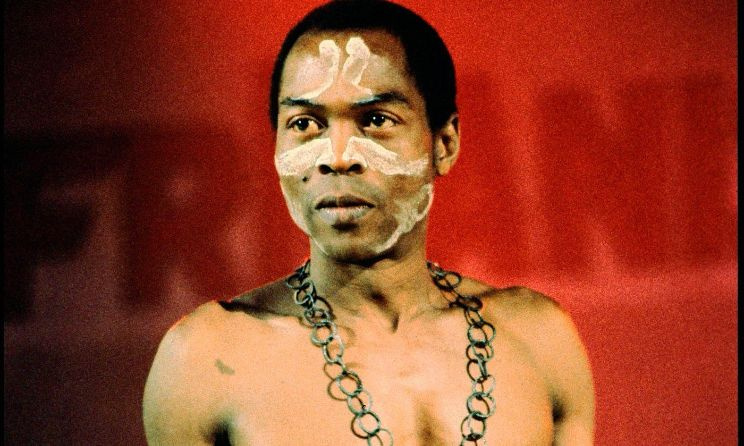
Photo Credit – Google
Perhaps the most enduring effect of this recognition is the renewed circulation of Fela’s political language. His critiques of authority, inequality and cultural dependency have not aged into nostalgia. They read like frameworks that still apply. A Grammy platform introduces those ideas to listeners who may know the groove but not the argument behind it. It expands his presence from cult admiration into formal historical placement, which shapes how future generations interpret both his music and the period that produced it.
Awards follow legacies. They do not manufacture them. Fela Kuti’s position in modern music was secured by the architecture of his work and the risks he attached to it. Institutional recognition does not rewrite that history, but it influences how widely and accurately the history circulates. If confirmed, the Lifetime Achievement Award closes part of the distance between influence and acknowledgement. More importantly, it encourages engagement with Fela not as a monument, but as an active reference point for how music can confront power while remaining structurally inventive.