
Top Xclusiv
Fela Kuti’s Grammy Lifetime Achievement Award and it’s Impact to His Legacy

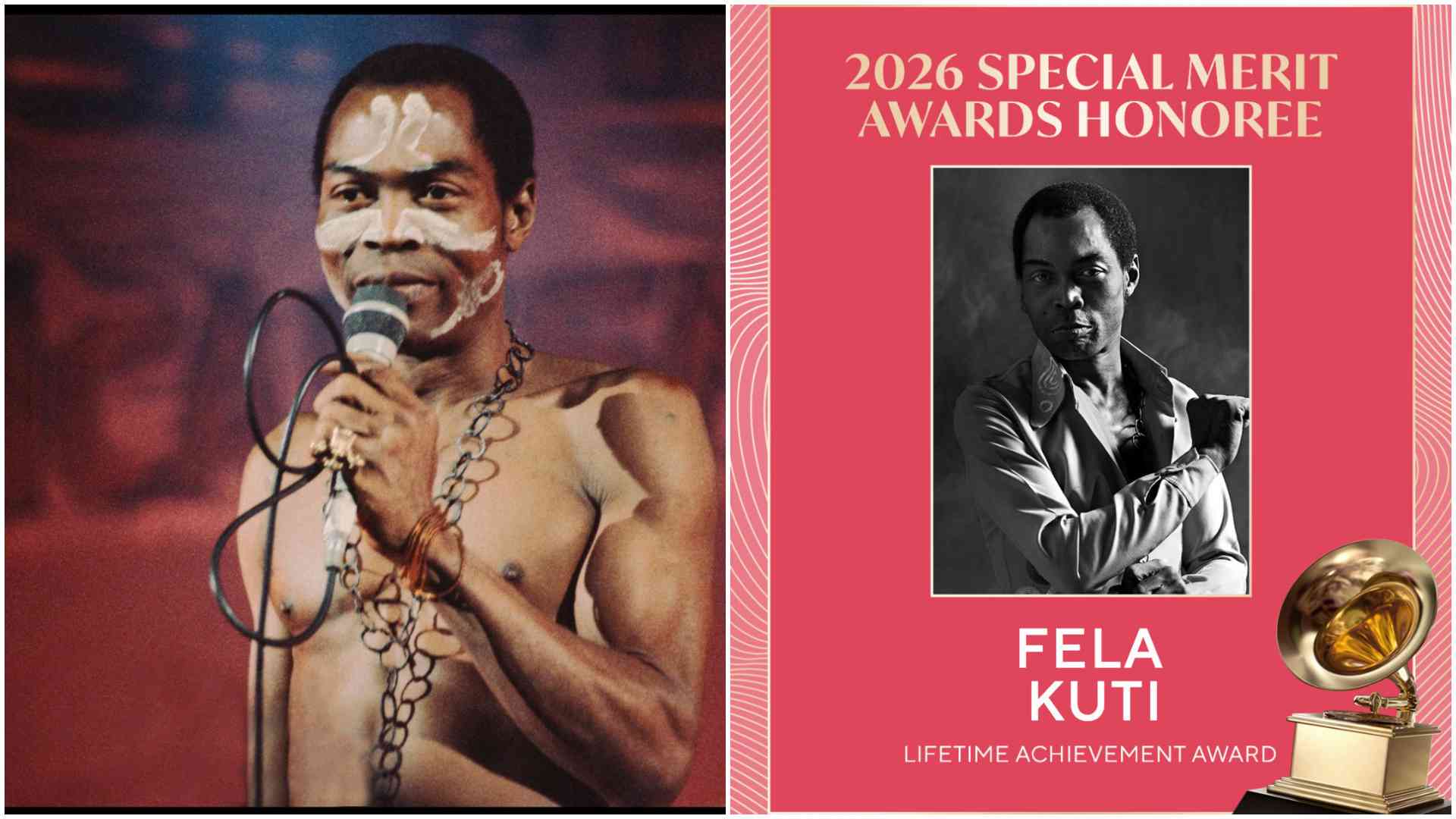
Fela Anikulapo Kuti’s reported recognition with a Grammy Lifetime Achievement Award in January 2026 arrives decades after the period that defined his influence, which is part of what makes the moment complicated. His legacy has never depended on Western validation. Afrobeat reshaped global music long before award institutions caught up. Yet formal recognition still carries weight because it determines how history is archived, taught and circulated to new audiences.
The Lifetime Achievement Award is designed to acknowledge artists whose recorded output alters the direction of music itself. By that measure, Fela’s case is straightforward. He constructed Afrobeat as a hybrid language, combining jazz improvisation, funk bass lines, Yoruba percussion and extended band arrangements that rejected radio formats. His compositions unfolded gradually, often stretching beyond ten minutes, driven by rhythm sections that functioned like engines rather than accompaniment. The structure of the music mattered as much as the message. It prioritised endurance, repetition and collective energy over commercial neatness.
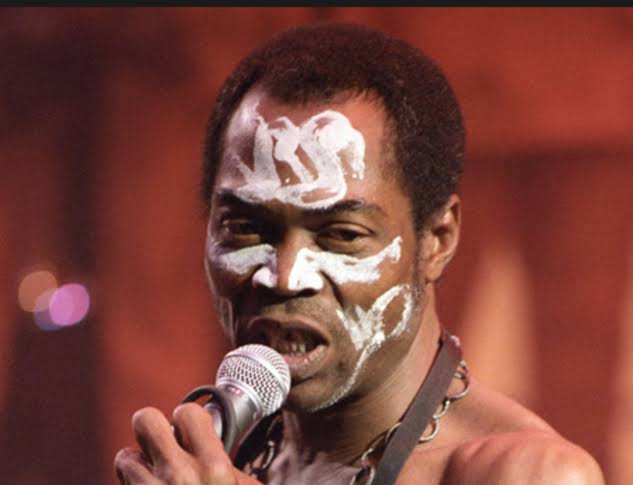
Photo Credit – Google
What separated Fela from many of his contemporaries was the clarity of his political intent. His lyrics did not gesture vaguely toward protest. They targeted specific systems of power. Songs such as Zombie and Expensive Shit criticised military authority, state violence and economic hypocrisy with names and details intact. The Kalakuta Republic, his communal compound, operated as both creative base and political statement. It invited confrontation, and confrontation arrived repeatedly in the form of raids, arrests and censorship. Recognising Fela within a Grammy framework effectively acknowledges an artist who treated music as an instrument of civic opposition, not simply cultural export.
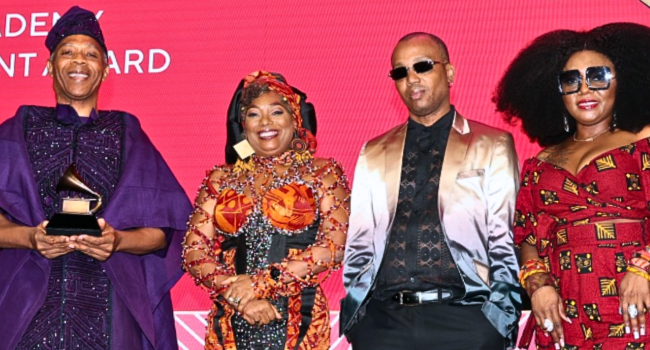
Photo Credit – Google
The significance extends beyond one career. African music has often been positioned internationally as an adjacent category rather than a central force in shaping modern sound. Labels such as “world music” historically isolated it from the mainstream narrative of innovation. Fela’s influence contradicts that separation. His rhythmic architecture appears in hip-hop sampling, contemporary jazz ensembles, dance music production and the groove logic of present-day African pop. Many artists borrow Afrobeat’s horn arrangements and layered percussion without always naming the source. Formal recognition forces that lineage into the open.
There is also the question of timing. Fela did not receive major Grammy recognition during his lifetime, despite circulating widely outside Nigeria from the 1970s onward. If the Lifetime Achievement honour is confirmed, it reads less as discovery than delayed acknowledgement. Cultural impact rarely waits for institutions, and institutions rarely move at the speed of culture. The gap between the two is where artists like Fela often live, celebrated by audiences, debated by critics, and only later absorbed into official histories.
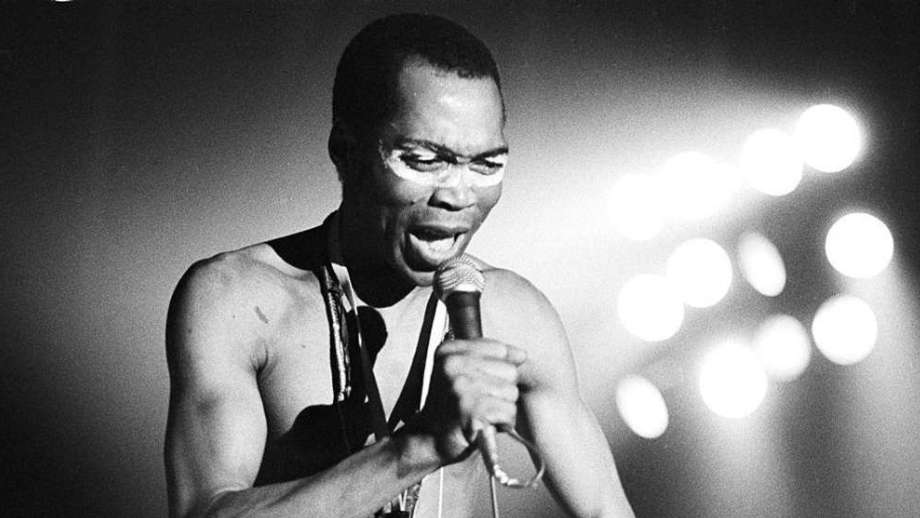
Photo Credit – Google
Renewed attention around the award has practical consequences. Younger listeners encountering his work for the first time are being directed toward original recordings rather than secondhand myth. Archives, exhibitions and academic programmes are revisiting Afrobeat as a disciplined musical system, not just a rebellious aesthetic. This shift matters because Fela is frequently reduced to an image of defiance, the performer as symbol, while the technical precision of his band leadership and composition receives less scrutiny than it deserves.
The moment also sharpens discussion about the relationship between contemporary Afrobeats and its foundation. Today’s global African pop industry operates on a scale Fela could not have imagined, yet many of its rhythmic instincts trace back to his experiments. His career demonstrated that African musicians could export sound without flattening identity for international approval. That lesson remains central to how current artists balance local specificity with global reach.
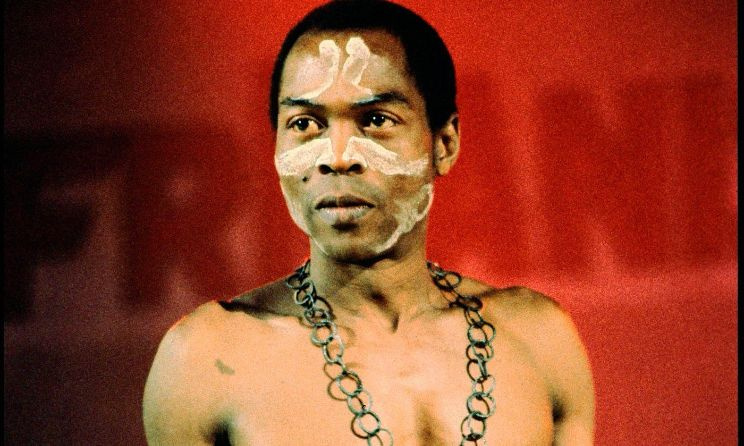
Photo Credit – Google
Perhaps the most enduring effect of this recognition is the renewed circulation of Fela’s political language. His critiques of authority, inequality and cultural dependency have not aged into nostalgia. They read like frameworks that still apply. A Grammy platform introduces those ideas to listeners who may know the groove but not the argument behind it. It expands his presence from cult admiration into formal historical placement, which shapes how future generations interpret both his music and the period that produced it.
Awards follow legacies. They do not manufacture them. Fela Kuti’s position in modern music was secured by the architecture of his work and the risks he attached to it. Institutional recognition does not rewrite that history, but it influences how widely and accurately the history circulates. If confirmed, the Lifetime Achievement Award closes part of the distance between influence and acknowledgement. More importantly, it encourages engagement with Fela not as a monument, but as an active reference point for how music can confront power while remaining structurally inventive.


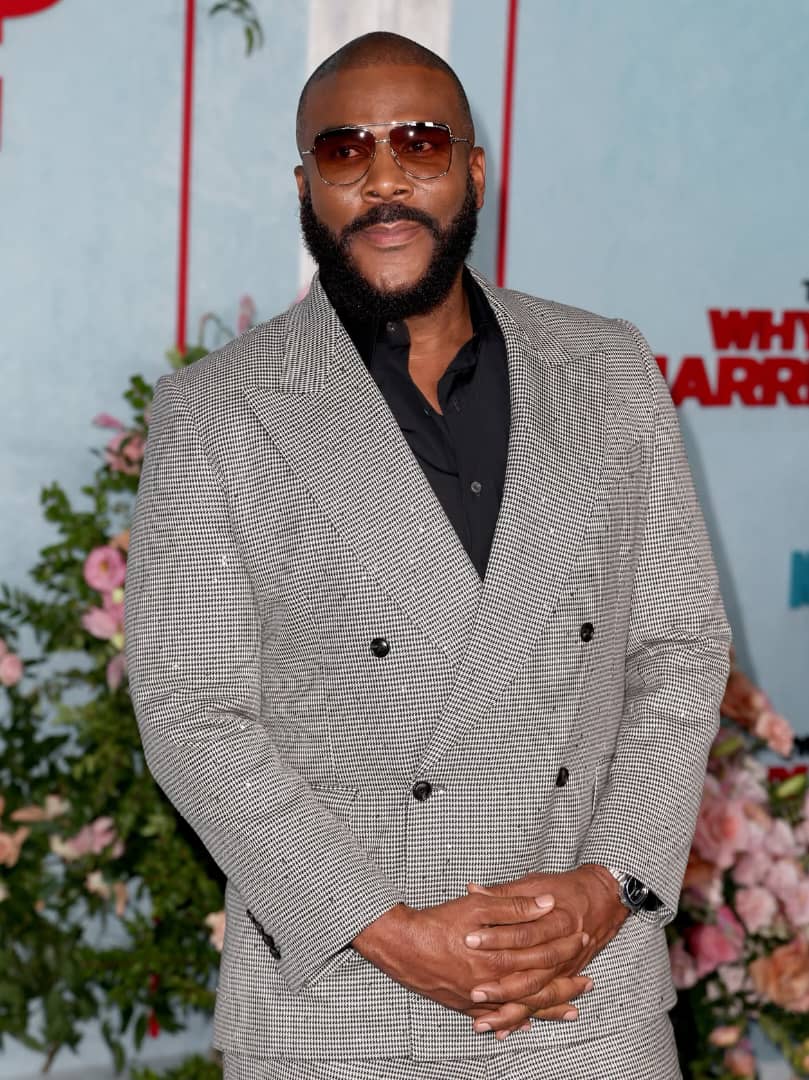
Tyler Perry has explained why he has no plans to get married, saying his decision is influenced by what he has seen people lose financially after divorce.
The actor, filmmaker and producer spoke about his decision during an appearance on The Jennifer Hudson Show while promoting his new Netflix film, Why Did I Get Married Again? The movie is the third instalment in Perry’s Why Did I Get Married? franchise, which began in 2007.
When Jennifer Hudson asked Perry if he planned to get married, he answered, “Nope.” When asked if he simply did not want to marry, Perry clarified that marriage itself was not his concern.
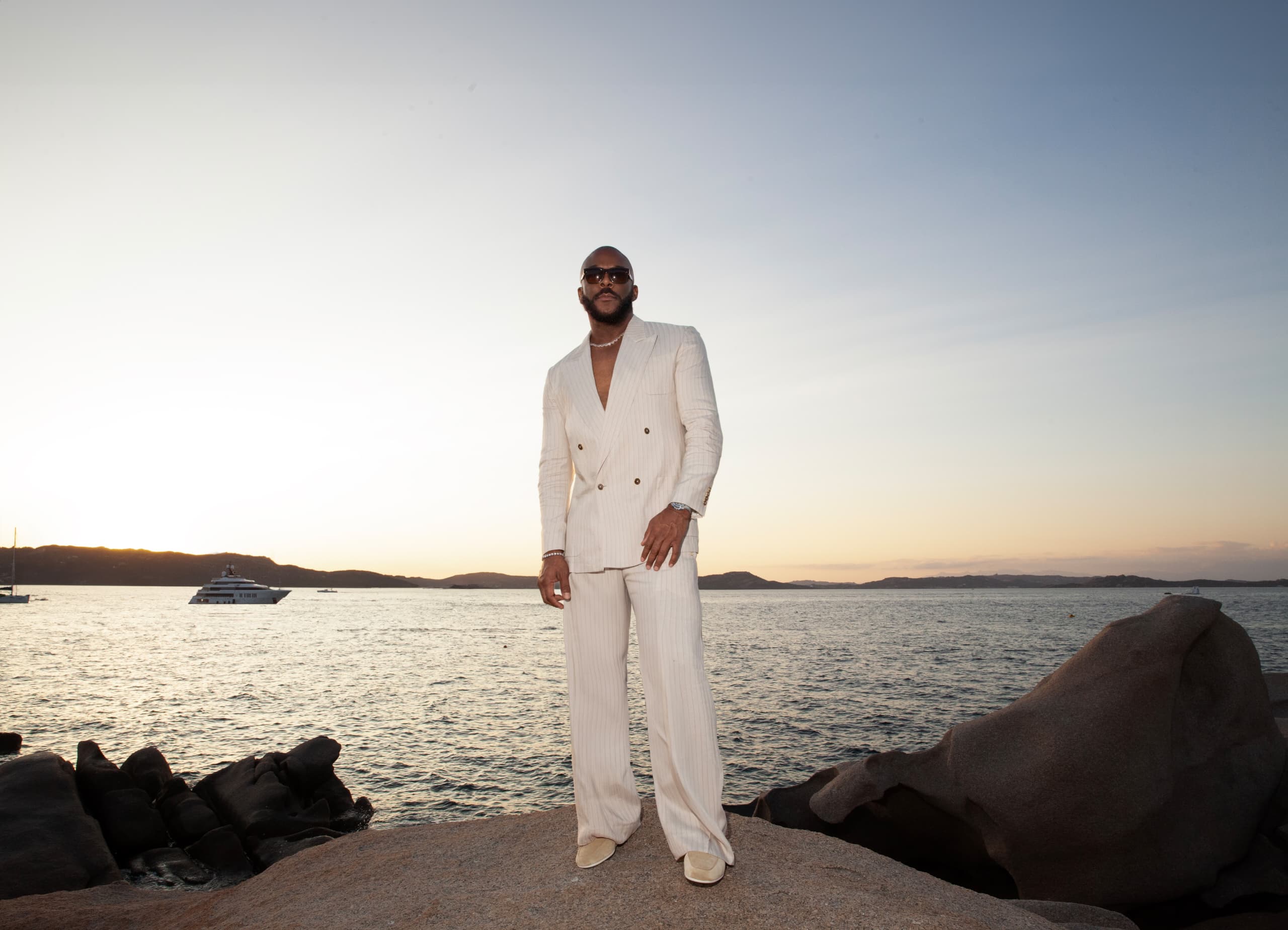
Photo: Instagram/@tylerperry
“It’s not the marriage that bothers me. It’s the divorce,” he said.
Perry explained that he has seen financially successful people go broke after divorce.
“Everybody that I know that did well and went broke, it was because of a divorce,” he added.
His Why Did I Get Married? films have followed couples dealing with problems in their relationships, even as Perry has chosen not to marry in his own life.
Perry, 57, was previously in a long-term relationship with model and filmmaker Gelila Bekele. The pair were together from 2009 to 2020 and share an 11-year-old son, Aman.
During an appearance on TODAY with Jenna & Sheinelle, he said he plans to move to Puerto Rico with Aman at the beginning of 2027 and cut back on his workload.
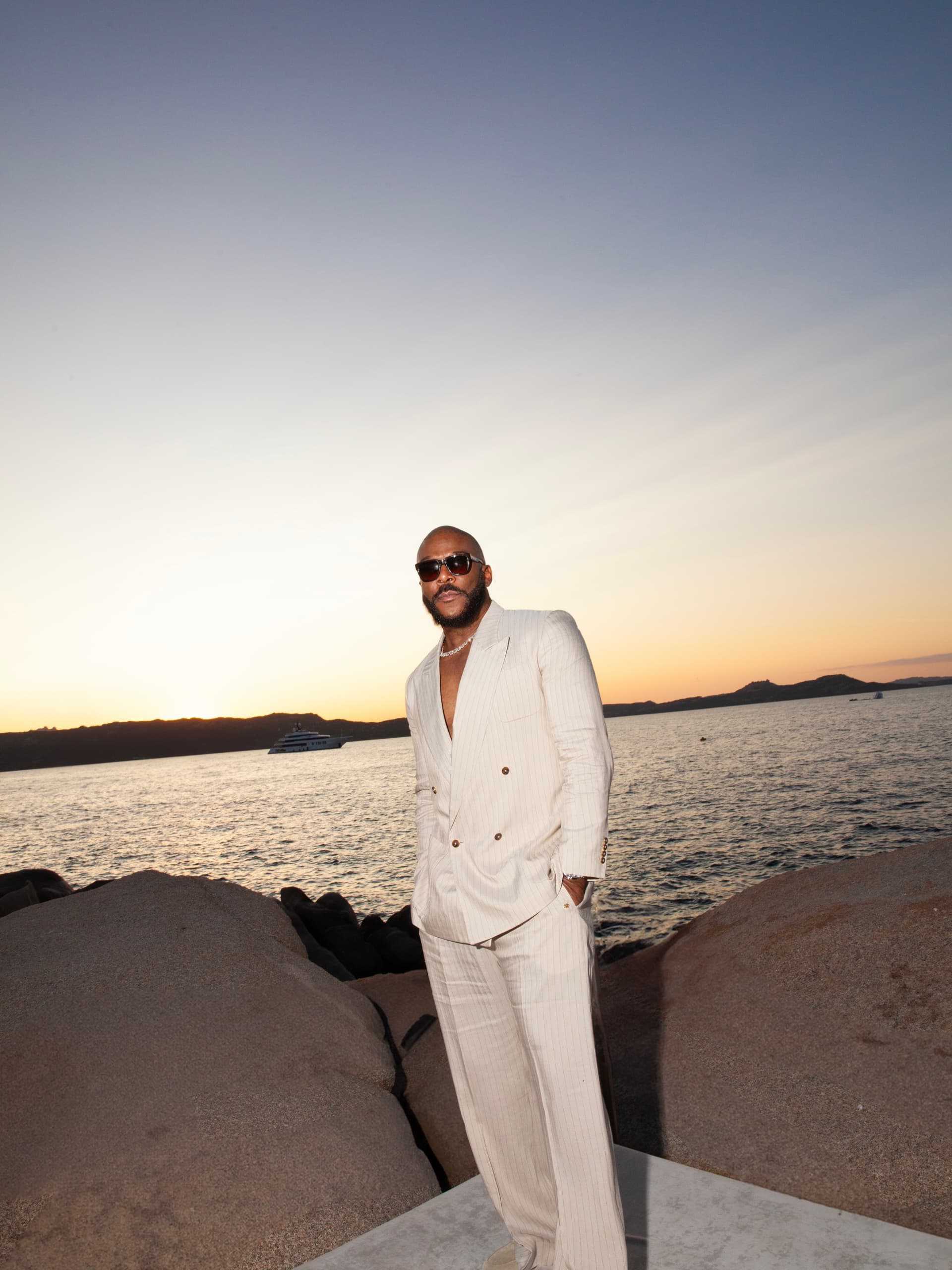
Photo: Instagram/@tylerperry
“Yes, I’m moving to Puerto Rico at the beginning of the year and I’m going to slow down a whole lot,” Perry said.
Meanwhile, Why Did I Get Married Again? continues the story of the couples from the earlier films. The new movie takes the characters to Lake Como, Italy, for the destination wedding of Marcus and Angela’s daughter.
Perry wrote, directed and stars in the film, which also features returning cast members Jill Scott, Tasha Smith, Michael Jai White, Richard T. Jones, Sharon Leal and Lamman Rucker, with Taraji P. Henson also joining the cast.
Why Did I Get Married Again? began streaming on Netflix on September 9, 2026.
Watch Below:

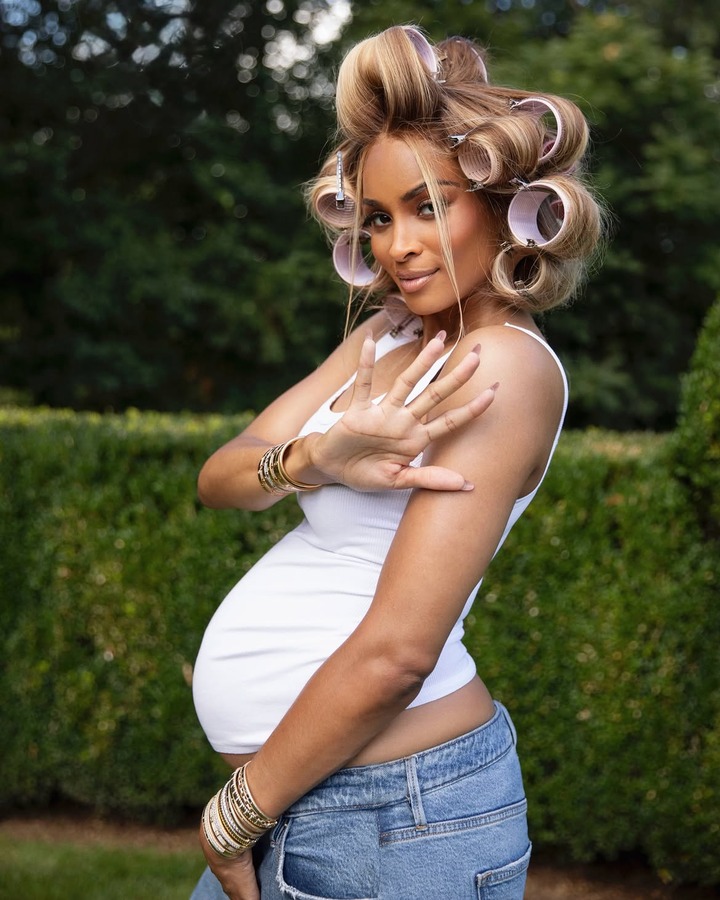
Ciara and her husband, Russell Wilson, are expecting another child. The couple announced the pregnancy on September 6, 2026.
The news was shared through a joint Instagram post featuring photos and videos of Ciara showing off her growing baby bump. In one of the clips, she is seen hanging white shirts on a clothesline, with each shirt representing one of her children. A blank baby onesie is then shown to represent the newest addition to the family.
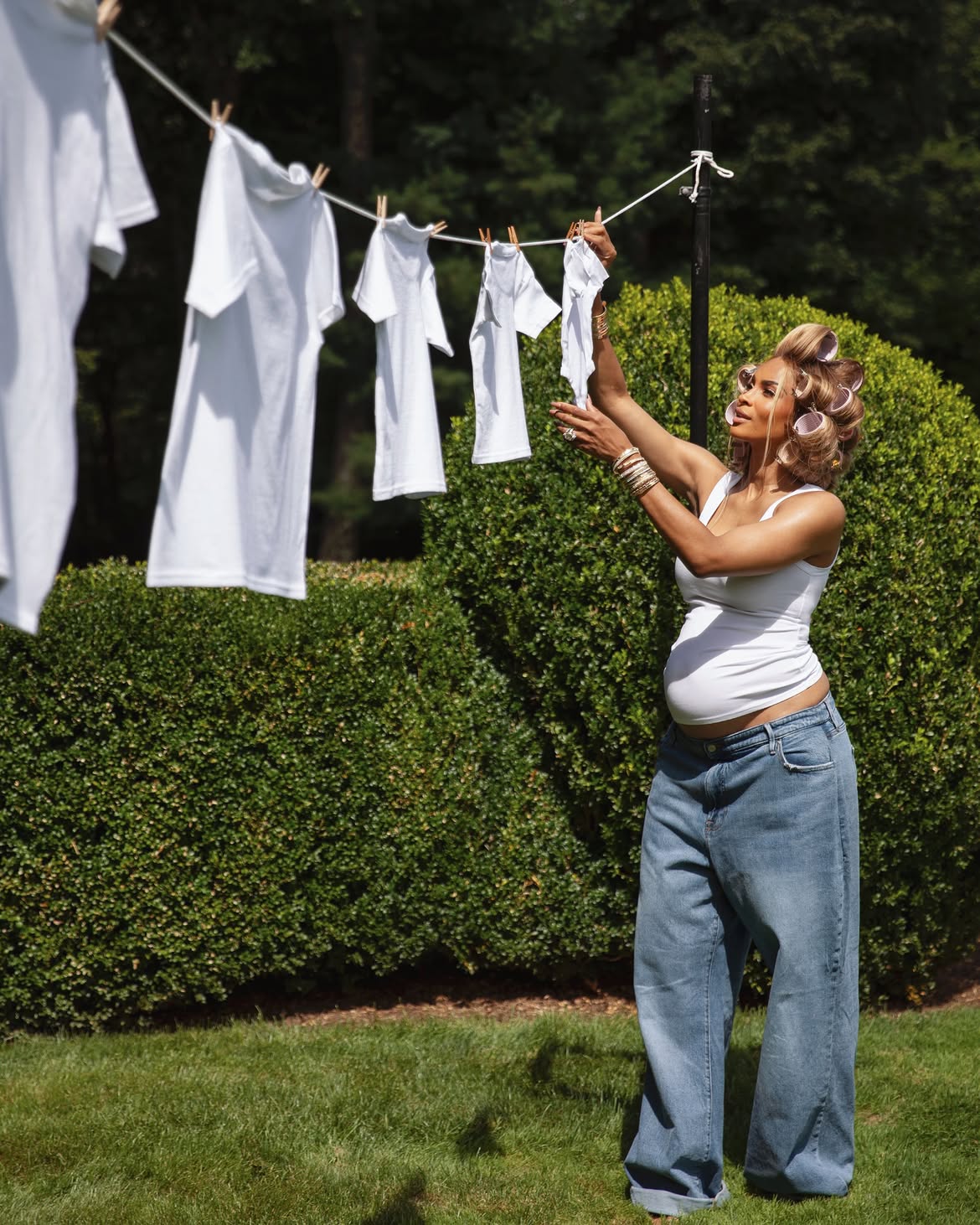
Photo: Instagram/@dangerusswilson
The couple captioned the announcement, “One more person to Love.” They also appeared together holding up five fingers.
Ciara already has four children. She shares 12-year-old Future Zahir with rapper Future, while she and Wilson are parents to 9-year-old Sienna Princess, 6-year-old Win Harrison and 2-year-old Amora Princess. The new baby will therefore be Ciara’s fifth child and Wilson’s fourth.
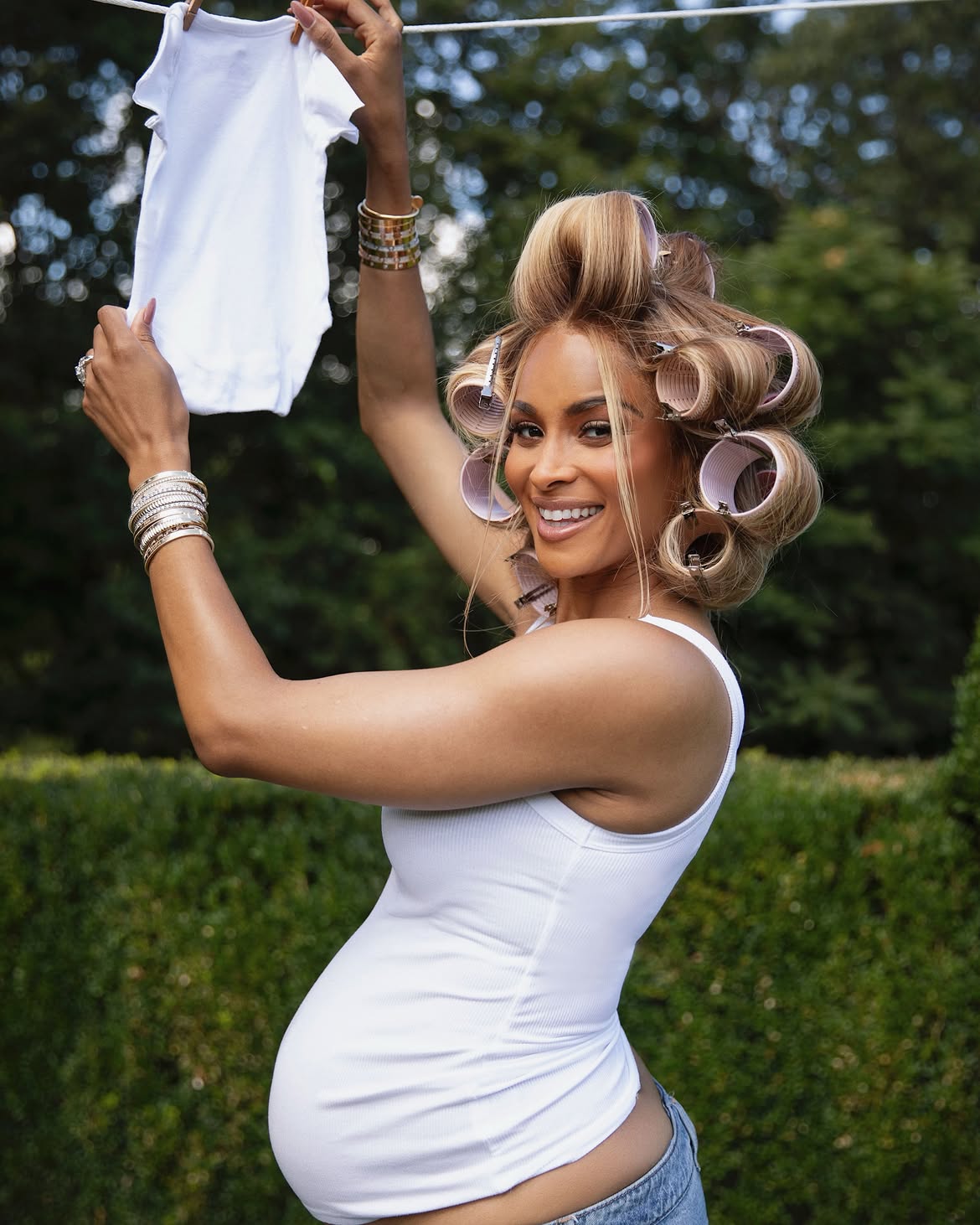
Photo: Instagram/@dangerusswilson
Read Also: Ciara Traces Her Roots to Benin Republic
The pregnancy comes after years of Wilson openly talking about wanting another child. Shortly after Amora was born in December 2023, Wilson joked about having a fifth baby, referring to the idea as “Cinco.” Ciara was open to the idea.
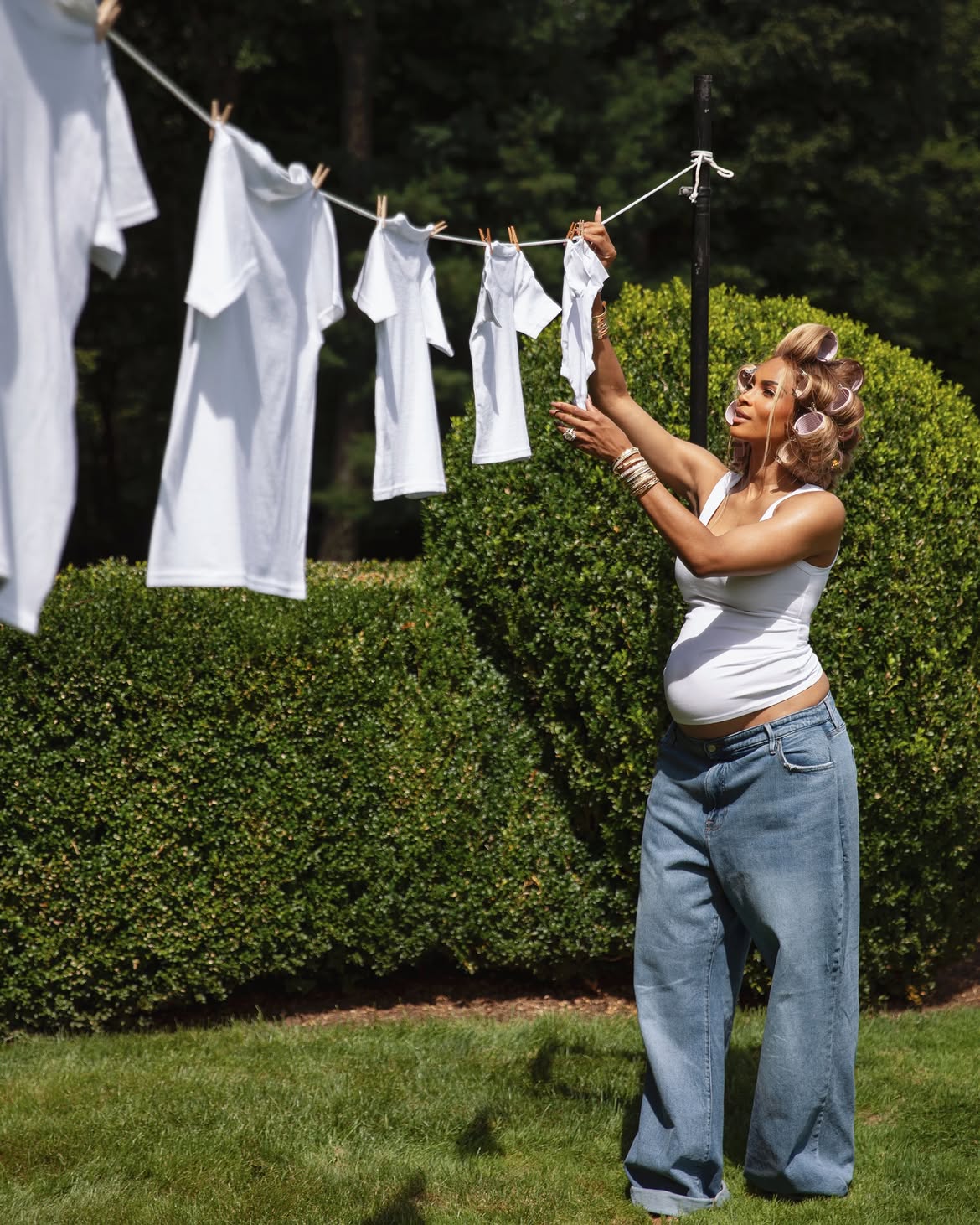
Photo: Instagram/@dangerusswilson
Wilson again spoke about the possibility in July 2026, saying that he was trying to convince Ciara to have a fifth child. He said the couple already had four amazing children and hoped “Cinco” would happen.
Ciara and Wilson got married in 2016. Wilson retired from professional football in June 2026. He has joined CBS Sports as a broadcaster.
The couple has not yet announced the baby’s sex or name. Their pregnancy announcement is a welcomed development for the couples.
Top Xclusiv
Shakira Reveals She Waited 20 Days for Burna Boy’s Verse on the FIFA World Cup Song “Dai Dai”

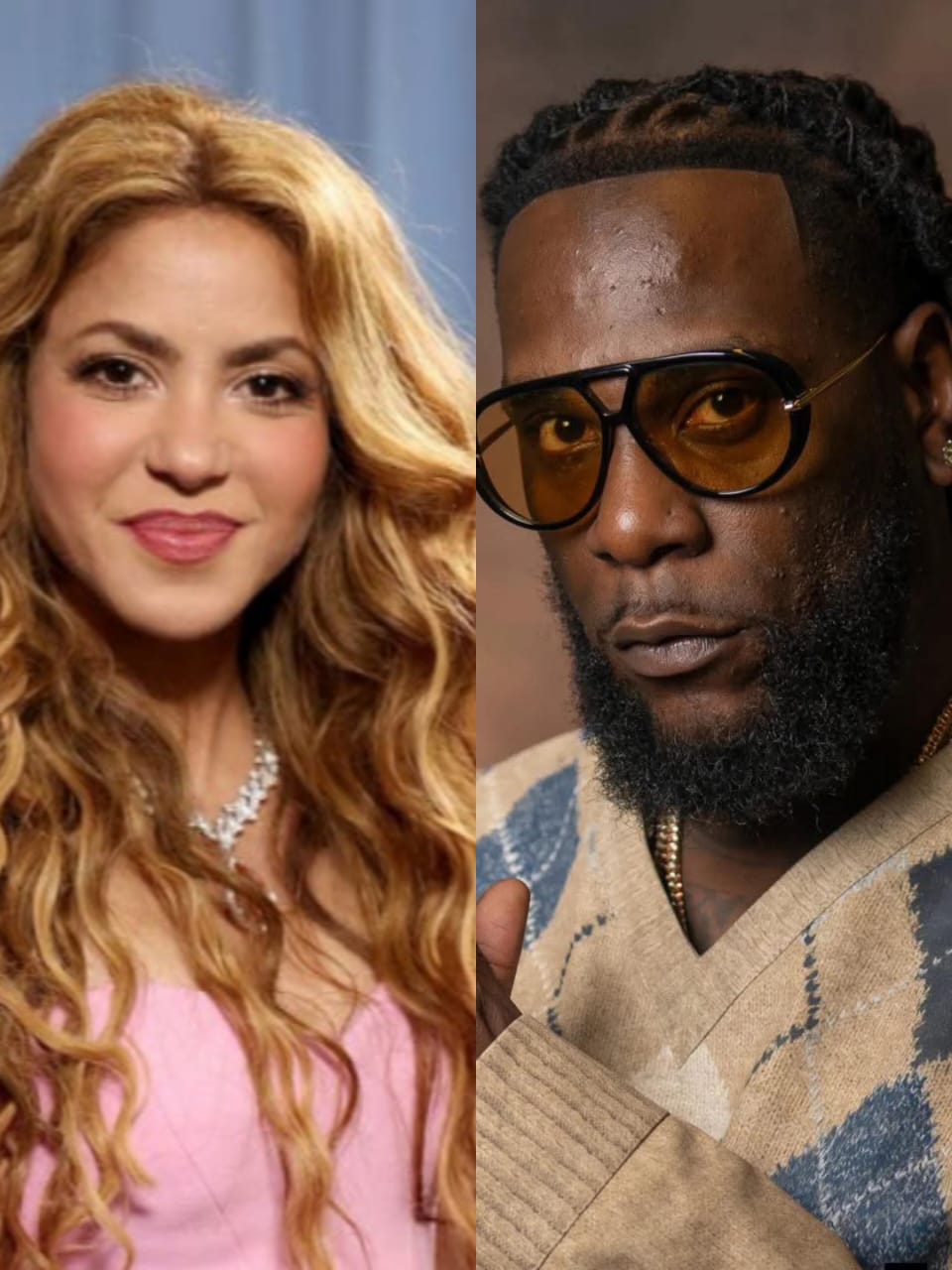
Colombian music star Shakira has shared a behind-the-scenes story about her collaboration with Nigerian Grammy winner Burna Boy on the 2026 FIFA World Cup anthem during a recent appearance on the Capital Evening Show with Jimmy Hill, revealing that she waited nearly three weeks before receiving his contribution to the song.
Speaking about how the collaboration came together, the singer explained that Burna Boy sent his verse 20 days after agreeing to be part of the project. Despite the delay, she said she remained confident that he would deliver because she was determined to have him on the record.
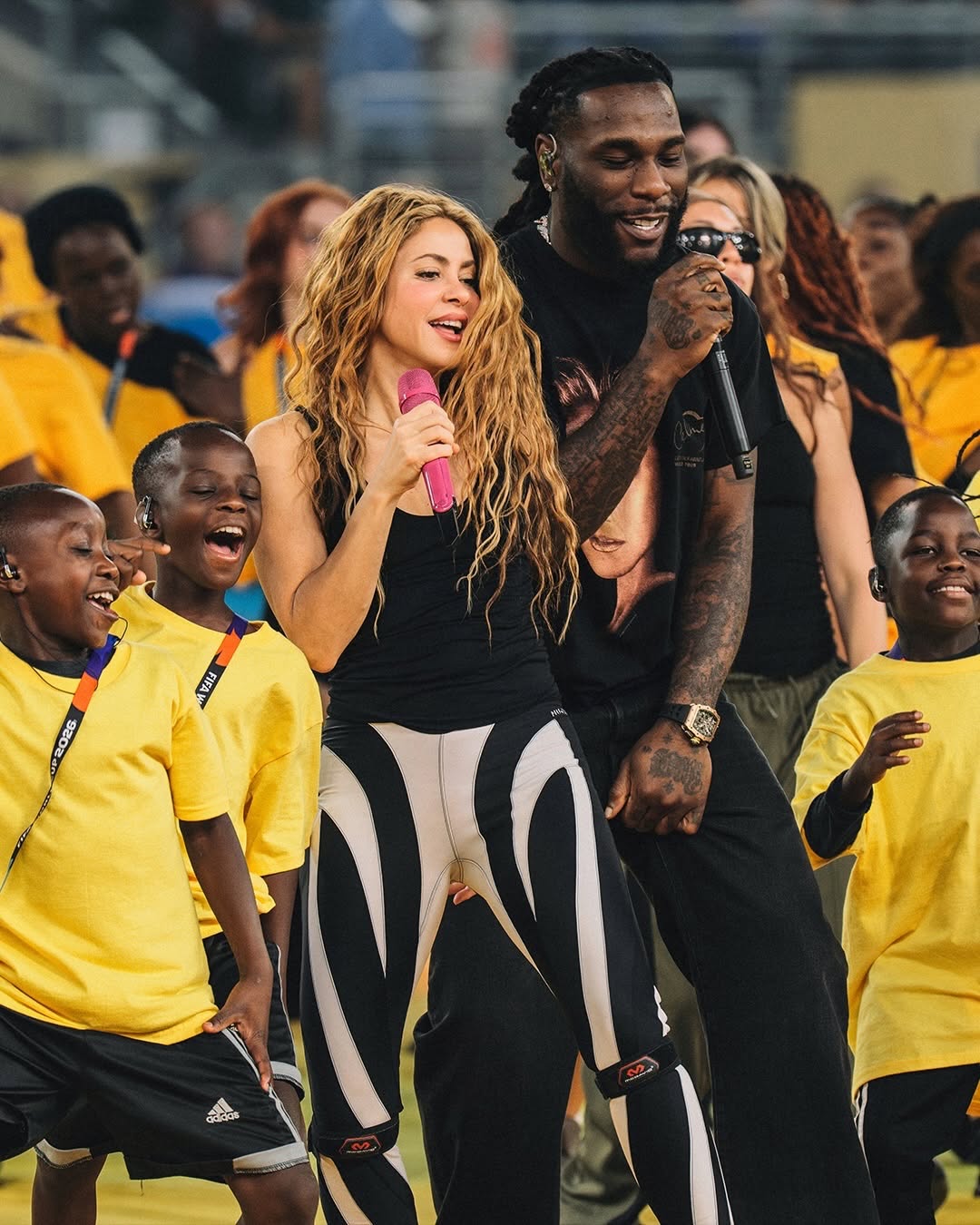
Photo: Instagram
“I called him and I was like, ‘Hey, are you down to do this?’ And he was like, ‘Yeah, why not?’… I was like waiting for 20 days for him to send something and I’m like, ‘Okay, maybe he’s not gonna do it.’ But then he sent his magic and it was just absolutely perfect,” Shakira said.
Shakira also explained why she specifically reached out to the African Giant hitmaker. According to her, she had been a fan of his music for years and wanted a distinctive male voice that could match the energy and global appeal of the World Cup.
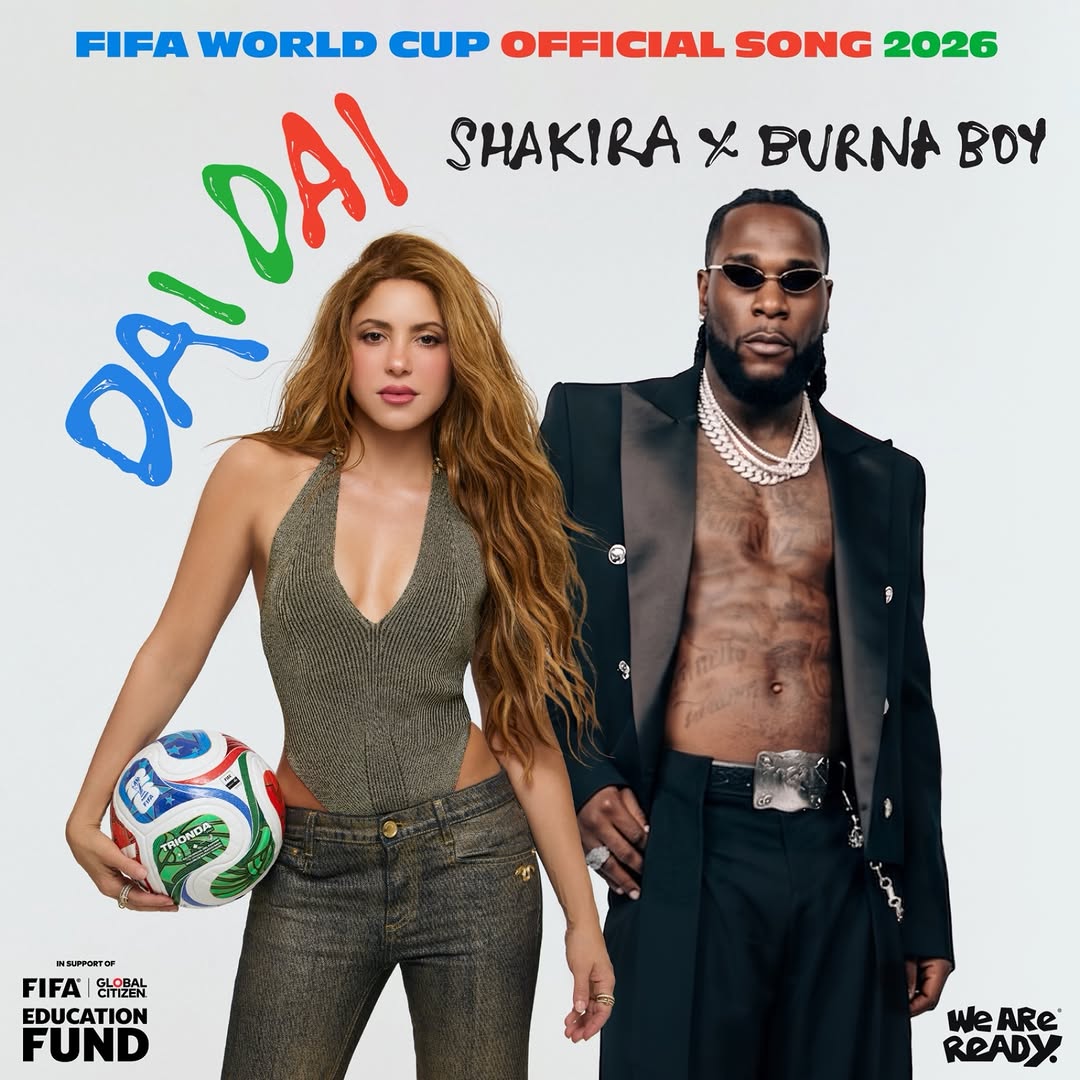
Photo: Instagram/@shakira
“And I’ve always loved Burna, like I always wanted to do something with him,” Shakira said. She praised his unique vocal style, adding, “I think his voice is just, it works so well on this song, so well. I couldn’t imagine anybody else on it, actually.”
The collaboration resulted in “Dai Dai,” the official song released for the 2026 FIFA World Cup. The track brought together two internationally recognised artists, pairing Shakira’s long-running connection with FIFA World Cup music with Burna Boy’s contribution to the tournament’s latest anthem.
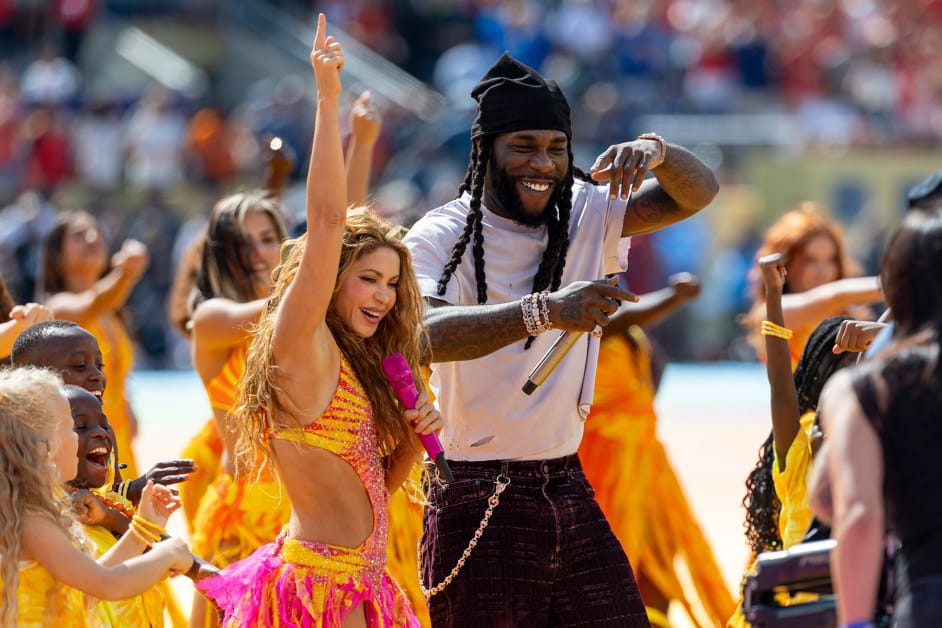
Photo: Instagram
The 2026 project also added another chapter to Shakira’s history with the FIFA World Cup. She performed “Waka Waka (This Time for Africa)”, the official song of the 2010 tournament in South Africa, before releasing “La La La” for the 2014 World Cup in Brazil. Her collaboration with Burna Boy on “Dai Dai” continued that association, this time alongside one of Africa’s biggest music stars.
Looking back on the collaboration, Shakira said Burna Boy’s contribution justified the wait. Although she admitted she briefly wondered whether he would eventually send his verse, she said the finished record confirmed why she had wanted him on the song from the beginning, describing his contribution as “absolutely perfect”.

Victony’s ‘SLICK Remix’ Video Featuring Summer Walker and Don Toliver: Review

Kehlani to Perform at Rhythm Unplugged 2026 for Detty December

Lil Baby Confirmed as Headliner for Flytime’s Detty December 2026

Nancy Isime Gives Aṣọ Òkè a Cool, Corporate Look

Laura Ikeji Proves Polka Dots Are Back and Better Than Ever

Rapper Tommie Lee Arrested at 2026 FIFA World Cup.

New Music to Kickstart Your Week From Victony, Timaya, Duncan Mighty, Mr Eazi & Fave.
The Dangers of Adult Skincare Products for Children and Teens.

Ayra Starr Performs ‘Rush’ and ‘Heaven Baby’ at NFL Halftime Show in London | Watch Video

Ayra Starr and ZAYN Finally Share the Screen in “Heaven Baby” Video

Kizz Daniel’s ‘Owo Oluwa’ Finds Grace in Faith, Family and Loss

‘Black Market’ Breaks Guinness World Record With Over 51,000 Viewers


-

 The Best Dressed Celebrities This Week1 month ago
The Best-Dressed Stars of the Week Kept Things Chic and Daring
-

 Celebrity Style1 month ago
Our Favourite Looks at ‘The Wedding Story’ Premiere
-

 Movies2 months ago
“Dear Ajayi” Makes History as First Nigerian Production in Venice Days Competition | Watch Trailer
-

 Entertainment2 months ago
Funke Akindele Releases First Images of ‘The Four’
-
 Models2 months ago
Tamunosoye Karibi-George Wins African Top Model Title at Miss World
-

 Big Brother Naija1 month ago
All the Drama BBNaija Week 6 Brought
-
 Entertainment1 month ago
Burna Boy Becomes First Nigerian Artist to Surpass 4 Billion YouTube Views
-

 Celebrity Style2 months ago
The Best-Dressed Celebrities of August 2026
-

 Celebrity Bios1 month ago
5 Things You Didn’t Know About Ayra Starr
-

 Health2 months ago
5 Nigerian Foods to Avoid Before Bed