
Top Xclusiv
Breaking news: Diddy arrested over sex trafficking

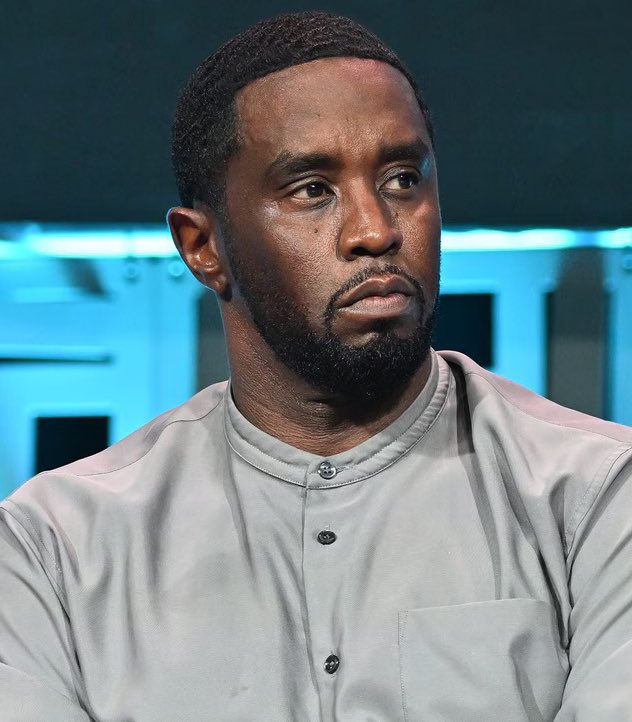
On September 17, 2024, the entertainment world was shaken when Sean Combs, better known as “Diddy,” was arrested by federal agents at the Park Hyatt Hotel in New York City. The arrest was not only unexpected but also tied to a sweeping indictment involving multiple serious charges, including “racketeering”and “sex trafficking”.
The case has thrust the longtime mogul into the center of a legal battle that could threaten his legacy and possibly his freedom for decades to come.
The Arrest and Charges
Diddy was taken into custody by federal officers in a surprise move, captured on video as he walked through the hotel lobby. The footage, which surfaced on various platforms, showed him being swiftly apprehended by agents from Homeland Security.
Diddy, dressed in his signature sleek attire, seemed taken aback as the agents led him away in handcuffs, an image that starkly contrasted his usual composed, powerful public persona.
The charges against Diddy are extensive and severe, with allegations that his business empire has long been involved in an array of criminal activities. According to the indictment,
which has been in development for several months, Diddy’s business dealings were part of a broader criminal enterprise engaged in illegal activities such as sex trafficking, forced labor, and even obstruction of justice. Prosecutors allege that these activities have been ongoing for over a decade, casting a dark shadow over Diddy’s rise to fame and fortune.
Watch below 👇
One of the key accusations is that Diddy exploited women and employees, coercing them into illicit activities to sustain his lavish lifestyle. The indictment suggests that some victims were lured into his infamous private parties under false pretenses and then subjected to abuse, including being drugged and forced into prostitution.
These claims, combined with testimonies from numerous individuals, paint a troubling picture of a man who, for decades, maintained a public image as a savvy businessman while allegedly running a criminal network behind the scenes.
Legal Proceedings and Diddy’s Defense
Diddy’s legal team, headed by high-profile defense attorney Marc Agnifilo, has been quick to push back against the charges. In a public statement, Agnifilo asserted that Diddy is innocent and emphasized that his client has cooperated fully with law enforcement throughout the investigation.
The legal team has expressed disappointment with how the case has been handled, suggesting that Diddy is being unfairly targeted due to his public persona and immense wealth.
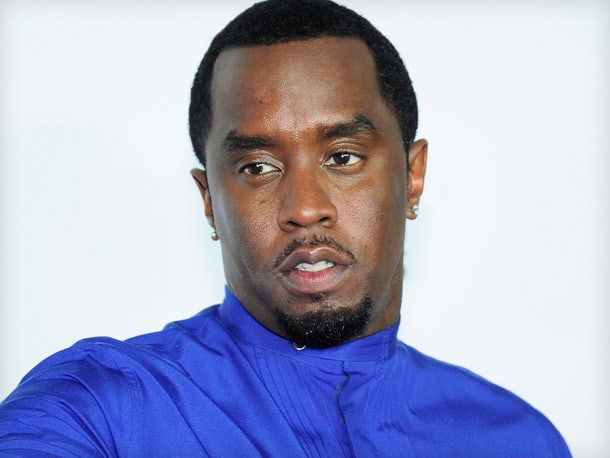
Diddy
Despite his defense team’s efforts, Diddy was denied bail and is currently being held at the Metropolitan Detention Center in Brooklyn, where he has been placed on suicide watch. The decision to deny bail was reportedly based on the judge’s belief that Diddy poses a flight risk, given his vast resources and international connections.
This detention has only intensified the media scrutiny surrounding the case, as more details continue to emerge.
The Broader Implications
The fallout from Diddy’s arrest is not only personal but also professional. Diddy’s long-standing career as a music producer, fashion designer, and businessman has been characterized by his relentless ambition and success.
He has built a brand that transcends music, extending into fashion with his Sean John line, and into the spirits industry with his involvement in Ciroc vodka. However, these ventures are now at risk as his arrest threatens to tarnish his carefully cultivated image.
Additionally, the case is expected to have a ripple effect throughout the entertainment industry, as it may inspire further investigations into other high-profile individuals and their alleged misconduct. Several former associates and victims have already come forward, emboldened by Diddy’s arrest. One such individual, singer and reality TV star Aubrey O’Day, spoke out shortly after the arrest, hinting at years of abuse by Diddy during their professional relationship
The Road Ahead
As Diddy remains in custody, awaiting trial, the world watches closely. If convicted, he faces decades in prison, potentially life behind bars. For now, his legal team is working to build a defense, with hopes of clearing his name.
Meanwhile, the public’s perception of Diddy is rapidly shifting, as more people come forward with their stories and new details surface about the alleged extent of his criminal enterprise.
Read also: Dj cuppy to become first female president
The trial is expected to be one of the most high-profile legal battles of the decade, as it involves not only a prominent figure but also addresses broader societal issues surrounding power, exploitation, and abuse in the entertainment industry. Whether Diddy’s legacy will survive the scandal remains uncertain, but one thing is clear: this case will have lasting implications for everyone involved.
In summary, Sean “Diddy” Combs’ arrest has ignited intense public interest, and the legal proceedings that follow will determine whether the man who once stood at the pinnacle of pop culture will spend the rest of his life behind bars. As the facts unfold, both supporters and critics await what could be a defining moment in the intersection of fame, power, and justice.

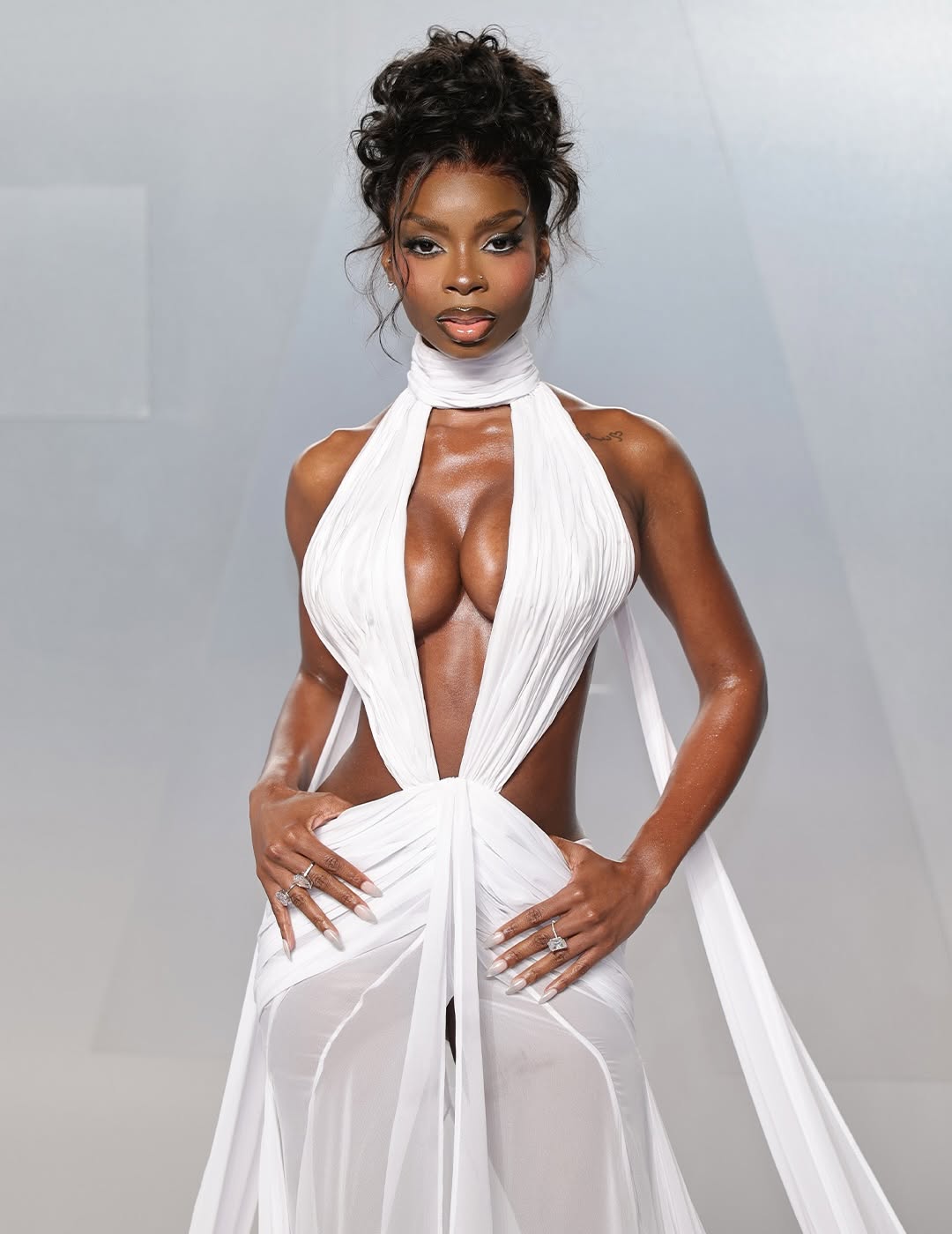
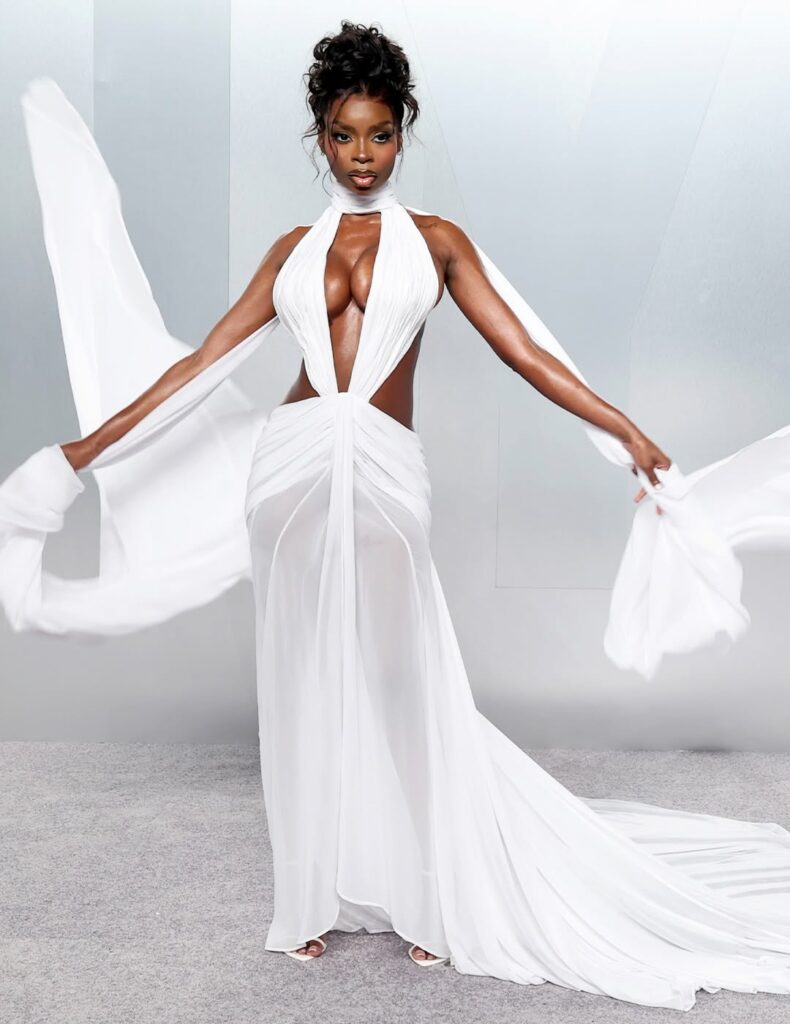
After the Oscars ceremony, the Vanity Fair after‑party becomes its own runway, where attendees arrive in remarkable looks and make as much of a style statement as they did on the official red carpet. Olandria Carthen, who has been making headlines for her fashion looks since appearing on Love Island USA as “Bama the Barbie,” lived up to her reputation at the 2026 Vanity Fair Oscars after‑party in Los Angeles on March 15, 2026, wearing a custom white gown by Pajtim Raci.
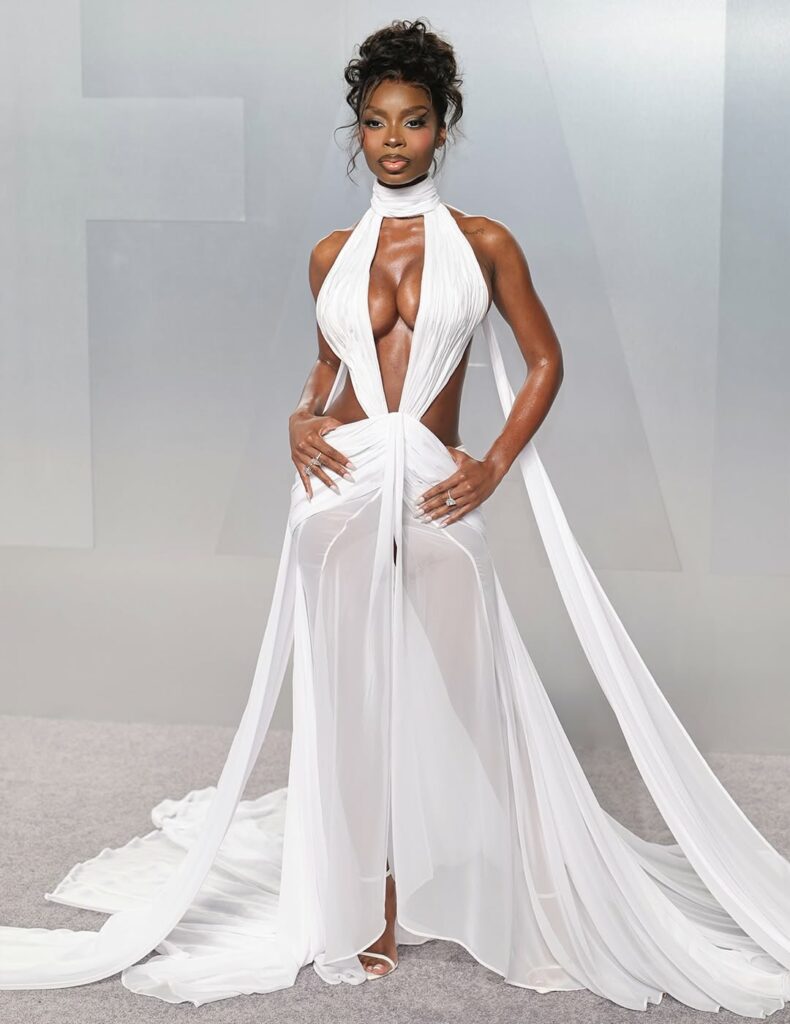
Olandria Carthen – Instagram
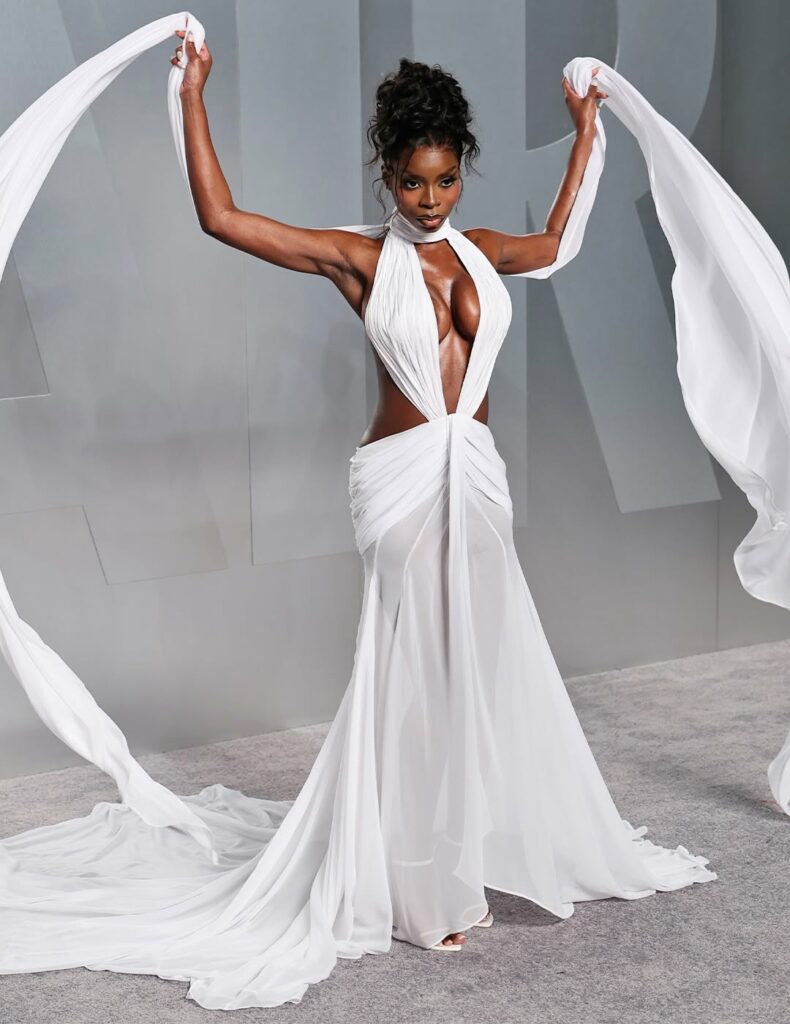
Olandria wore a custom pleated gown featuring a dramatic halter-neckline that transitions into a plunging, open front bodice. The bodice is tightly ruched, all the white chiffon pulled into a single structured point at the waist before opening into a sheer floor-length skirt with a train.
Olandria Carthen – Instagram
Wide cutouts on both sides of the waist left her midsection exposed, reflecting the gown’s deliberate design.
Her hair was styled in a loose curly updo with a few pieces falling around her face. Makeup included sculpted eyebrows, a soft smoky eye, and a glossy 90s inspired lip. Accessories were diamond pieces by Azature, including statement rings.
Olandria Carthen – Instagram
This gown showed a more sculptural side of Pajtim Raci. Chiffon is a difficult fabric to work with keeping the bodice firm while allowing the skirt and cape to flow is not easy. Pajtim got it right, and Olandria had no trouble wearing it. That credit belongs to the designer.

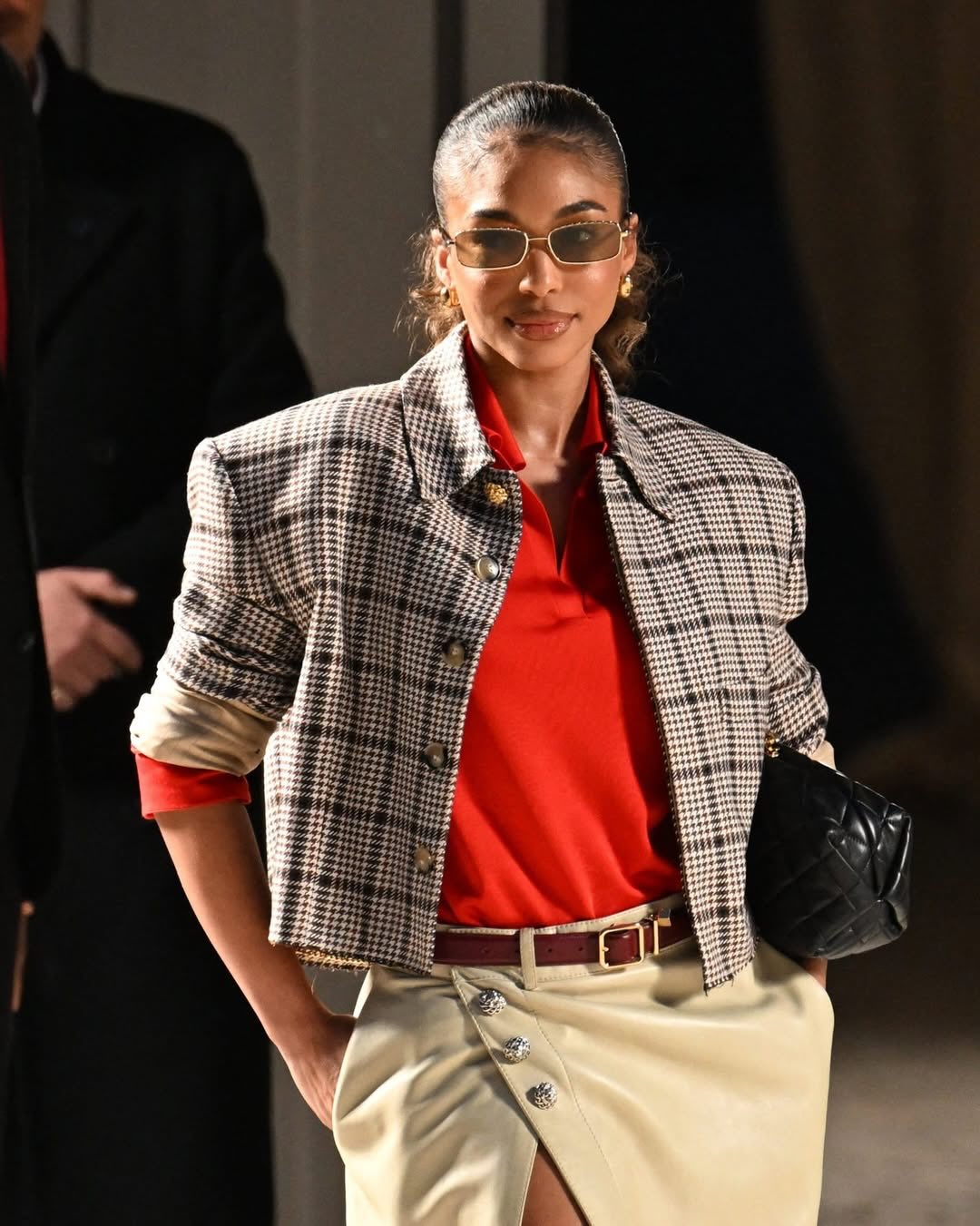
Lori Harvey stepped out for the Chanel Fall/Winter 2026 Womenswear Show in Paris, wearing a look that paired a cropped tweed jacket with a vivid red blouse and a beige Chanel skirt cut with a striking high slit.
The look consists of a bright red blouse worn beneath a cropped brown and cream tweed jacket. The blouse was slightly open at the collar, creating a V-shaped neckline. The jacket featured tweed fabric and metallic buttons along the front.
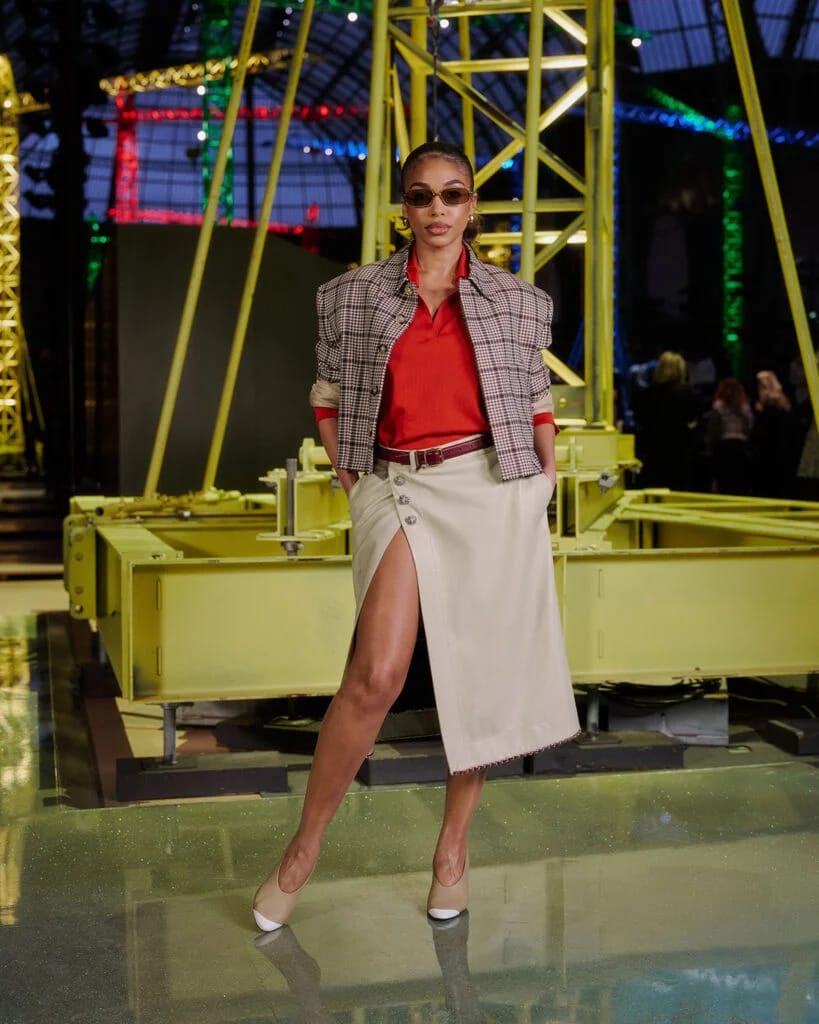
Photo credit: Instagram
Harvey wore a beige Chanel midi skirt that was fastened in front with three rows of large buttons. The cut opened high along the right side, forming a high slit revealing her leg. A slim burgundy belt sat at the waist, repeating the colour of the blouse.
She completed her look with a small black quilted Chanel clutch, narrow-tinted sunglasses, and pointed nude heels.
Harvey kept her hair pulled back into a firm ponytail. Her makeup featured warm tones, with softly shaped brows, light eye definition and glossy nude lips. Harvey’s styling and choice of accessories helped her stand out among the guests at the Paris show.

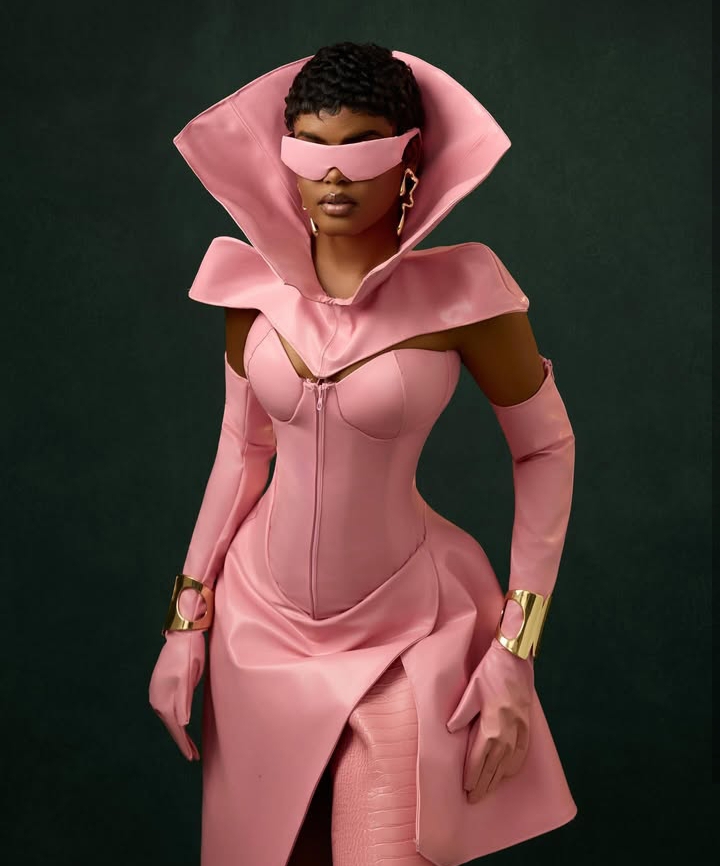
When it comes to birthday photoshoots, most celebrities play it safe. A glamorous dress, soft lighting, a cake prop and a few smiles for the camera. But Jadrolita chose a completely different direction for her latest birthday shoot. She stepped into a futuristic world, dressed head to toe in pink, poses as a character pulled straight from a sci-fi film rather than a traditional celebrant.
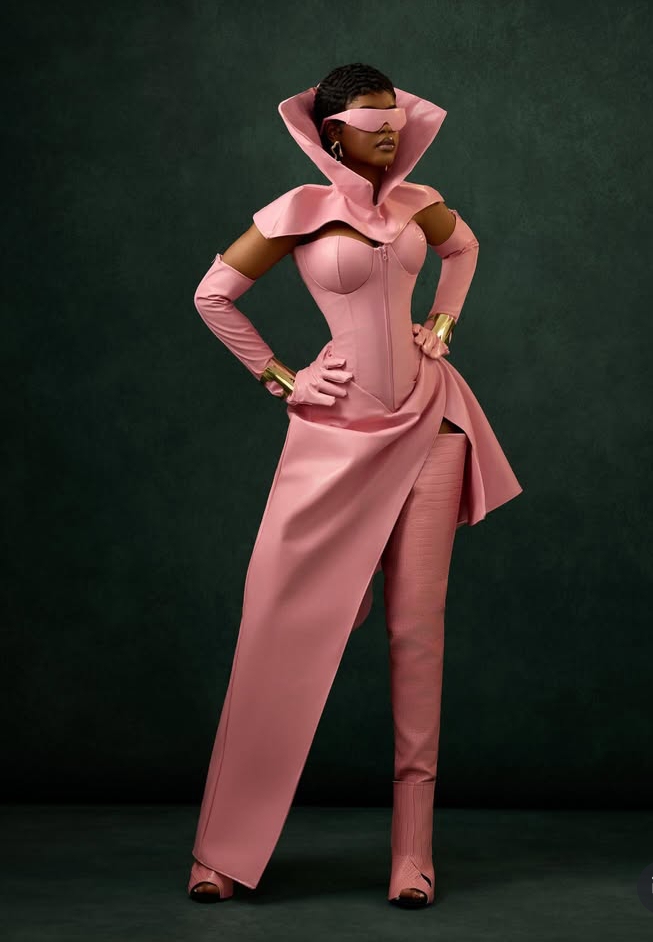
Photo: Ibor Edosa Victor
The concept leaned heavily into technology, identity, and digital culture, themes that already sit at the center of Jadrolita’s public persona. Known for blending artificial intelligence storytelling with lifestyle content, her birthday shoot felt personal and carefully planned rather than experimental.
The first thing that stands out is the colour choice. Every part of the look revolves around pink. It gave the impression of someone existing in a digital universe where colour replaces emotion and storytelling happens visually before words are spoken.
Her outfit consists of a fitted bodysuit crafted from a glossy material. The structure hugged her silhouette closely, creating a clean outline from shoulder to ankle.
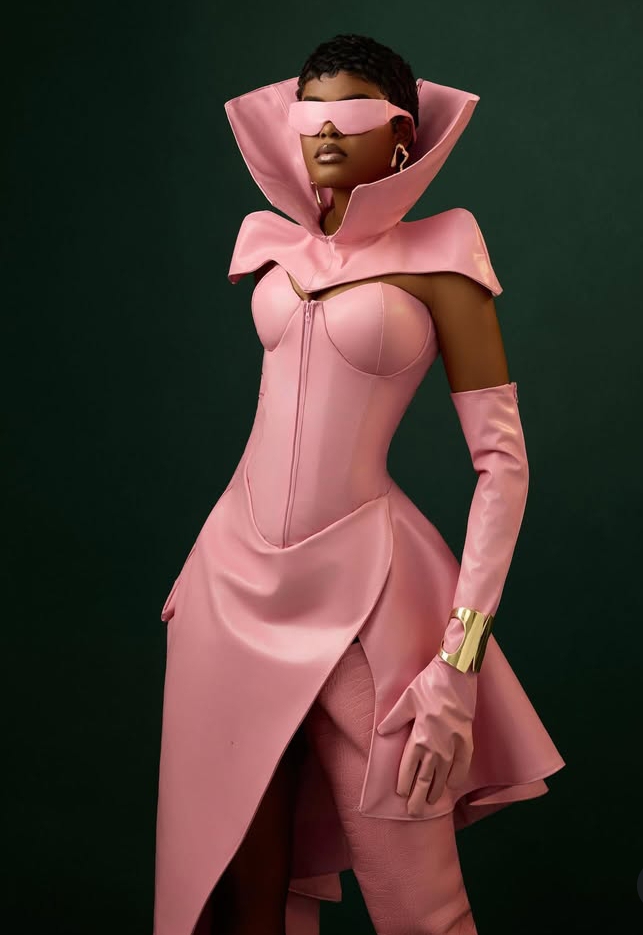
Photo: Ibor Edosa Victor
Layered over the bodysuit was a sculpted jacket designed with exaggerated shoulders and defined edges. The tailoring introduced structure without making the outfit look heavy. Instead, it reinforced the futuristic theme, resembling protective gear worn by a character built for a digital era. Not forgetting her glasses which completed the futuristic look.
Hair and makeup followed the same direction. Her hair was styled in a short pixie cut with clean edges. Her makeup was kept nude.
What makes this birthday shoot notable is how clearly it reflects Jadrolita’s brand. She has built an online identity around digital intelligence, virtual interaction, and futuristic storytelling. Instead of separating her birthday celebration from that identity, she leaned fully into it.

Bovi and Nomzamo Mbatha to Host the 12th AMVCA

Tacha Brings Volume into Focus With this Look

Teminikan Just Found Your New Favourite Jeans

Ayra Starr Walks Through The Jennifer Hudson Show Spirit Tunnel Like It’s Routine

Toyin Abraham’s Over Sabi Aunty Crosses ₦1 Billion at the Box Office

Uzor Arukwe, Idia Aisien and Others at the Bridgerton Season 4 Premiere in South Africa

Abuja’s 6 Classic Restaurants Worth Visiting

IShowSpeed Hits 50 Million Subscribers in Lagos, Celebrates Milestone Live

Tracee Ellis Ross Launches Eyewear Collaboration with Emmanuelle Khanh

Mr Eazi Leads DJ Cuppy Through a Private Wine Tasting

Toka McBaror’s ‘The Creek’ Trailer Drops, Full Cast (Bucci Franklin, Sam Dede, Sunshine Rosman) & What to Expect

Are We Finally Getting the R9 Album? Fans Read the Signs Around Rihanna
-
 Movies3 months ago
Toyin Abraham’s Over Sabi Aunty Crosses ₦1 Billion at the Box Office
-
 Celebrity Style3 months ago
Pantone’s 2026 Colour Cloud Trend Gets Uche Montana’s Seal of Approval
-
 Celebrity Style3 months ago
Uzor Arukwe, Idia Aisien and Others at the Bridgerton Season 4 Premiere in South Africa
-

 Celebrity Style5 months ago
Uche Montana Offers a Perfect Take on Wearing Leather
-
 Fashion4 months ago
Tolu Bally Impresses in Bold Floral Two-Piece Look
-

 Celebrity Style5 months ago
November’s Best Dressed Star
-

 Fitness5 months ago
Glute Workouts That Deliver Real Results
-

 Health5 months ago
Disordered Eating Vs. Eating Disorder: Experts Explain The Differences And When To Seek Help
-

 Movies5 months ago
4 Nollywood Movies To Watch This Week
-

 Fashion5 months ago
Apet Modella Brings a Fresh, Stylish Twist to Street Style