
Top Xclusiv
Popular Streamer Kai Cenat Returns to Lagos

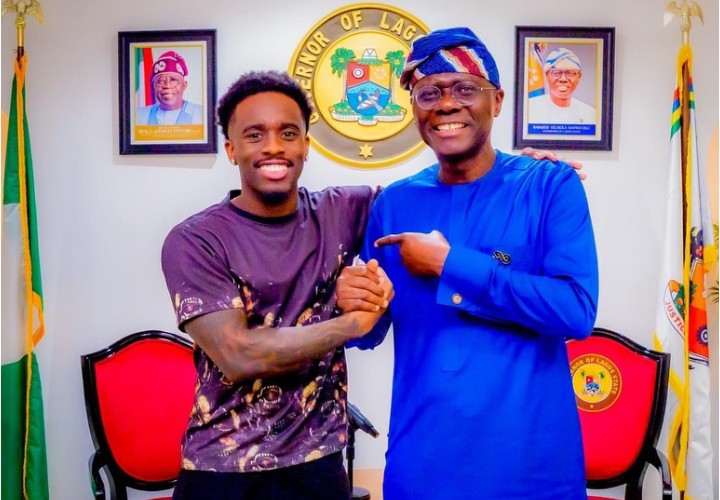
American content creator and livestreamer Kai Cenat has returned to Lagos, for his second visit. Cenat, known for his gaming and interactive livestreams on Twitch, arrived on Wednesday, 4 February 2026, and was met with fans at Murtala Muhammed International Airport.
During his visit, the streamer paid a courtesy call to Lagos State Governor Babajide Sanwo-Olu at Lagos House, Marina. The meeting focused on his ongoing philanthropic initiatives, including a $5 million education project originally aimed at building a school in the Makoko community. Plans have since been refined, with a new location in Yaba while still ensuring the Makoko children benefit from the project.
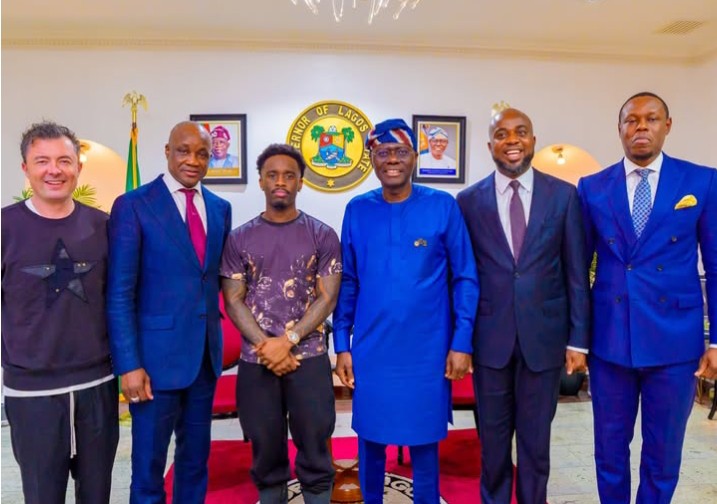
Photo: Instagram
Cenat’s presence in Lagos has generated significant attention on social media, highlighting both his influence and the impact of his charitable work. Fans have closely followed his activities, from airport arrivals to his engagement with local leaders.
Known for his large following over 20 million on Twitch. His return includes engagement with local initiatives and project discussions in Nigeria.



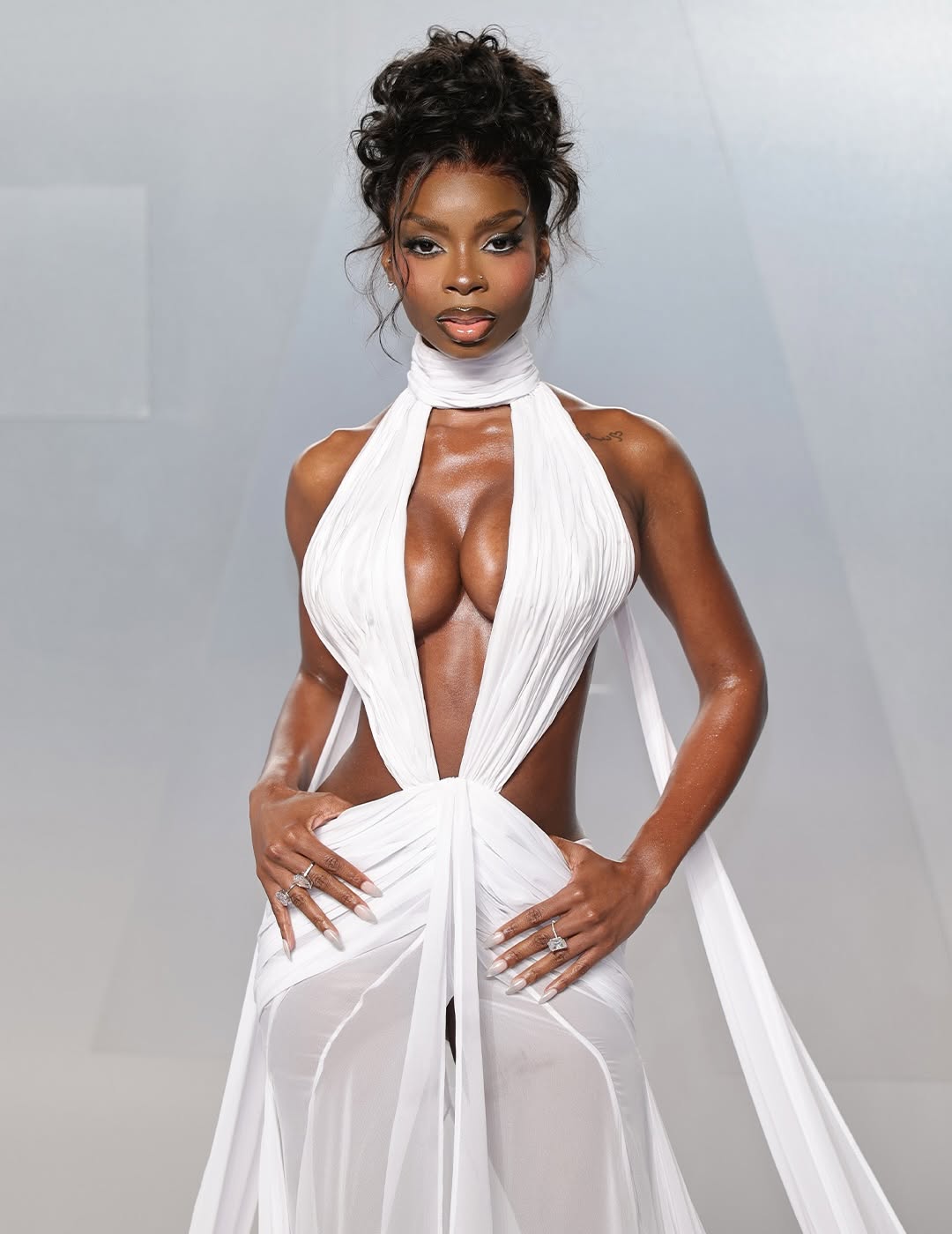
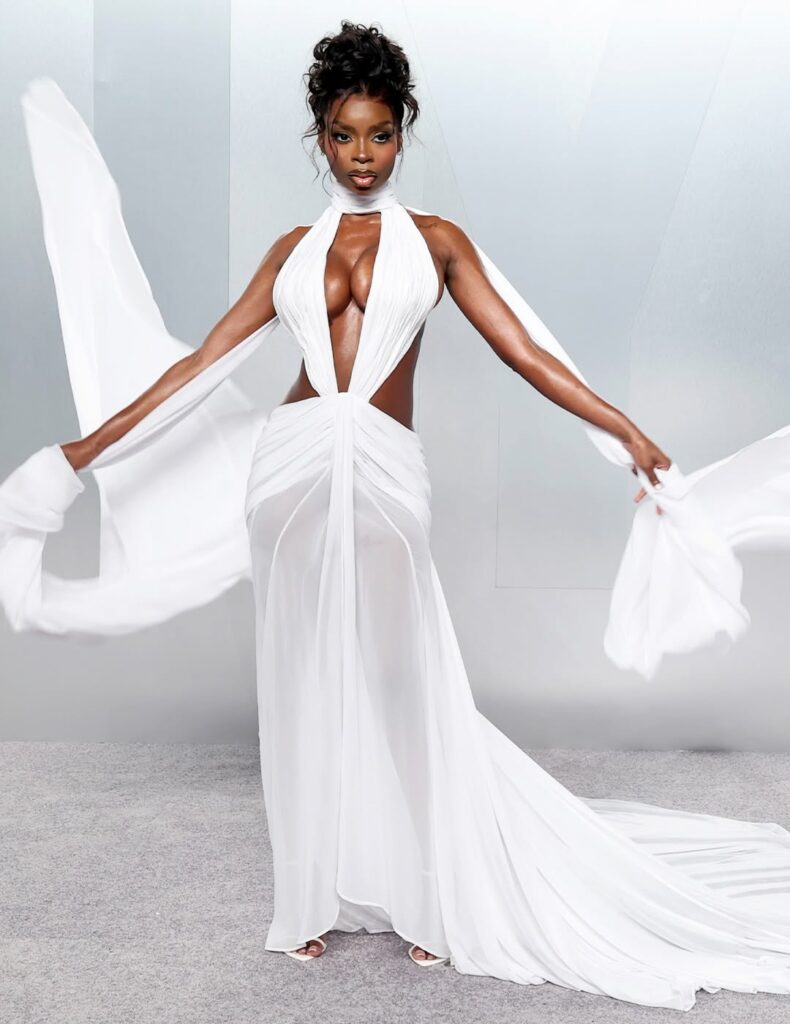
After the Oscars ceremony, the Vanity Fair after‑party becomes its own runway, where attendees arrive in remarkable looks and make as much of a style statement as they did on the official red carpet. Olandria Carthen, who has been making headlines for her fashion looks since appearing on Love Island USA as “Bama the Barbie,” lived up to her reputation at the 2026 Vanity Fair Oscars after‑party in Los Angeles on March 15, 2026, wearing a custom white gown by Pajtim Raci.
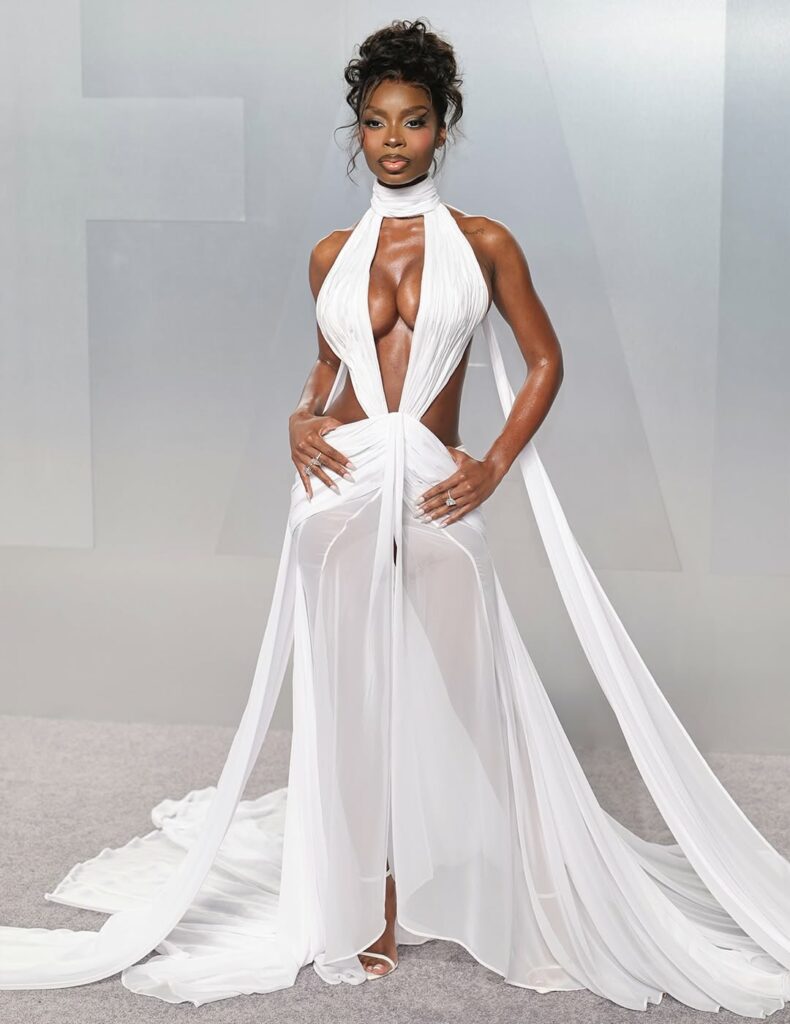
Olandria Carthen – Instagram
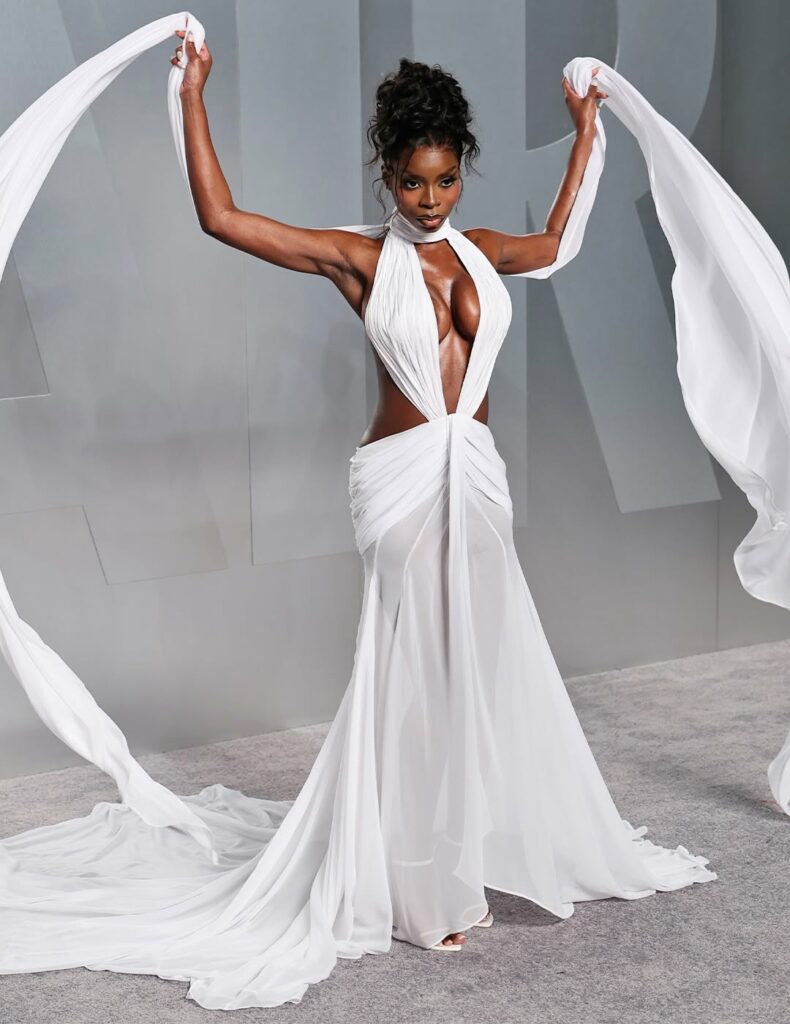
Olandria wore a custom pleated gown featuring a dramatic halter-neckline that transitions into a plunging, open front bodice. The bodice is tightly ruched, all the white chiffon pulled into a single structured point at the waist before opening into a sheer floor-length skirt with a train.
Olandria Carthen – Instagram
Wide cutouts on both sides of the waist left her midsection exposed, reflecting the gown’s deliberate design.
Her hair was styled in a loose curly updo with a few pieces falling around her face. Makeup included sculpted eyebrows, a soft smoky eye, and a glossy 90s inspired lip. Accessories were diamond pieces by Azature, including statement rings.
Olandria Carthen – Instagram
This gown showed a more sculptural side of Pajtim Raci. Chiffon is a difficult fabric to work with keeping the bodice firm while allowing the skirt and cape to flow is not easy. Pajtim got it right, and Olandria had no trouble wearing it. That credit belongs to the designer.
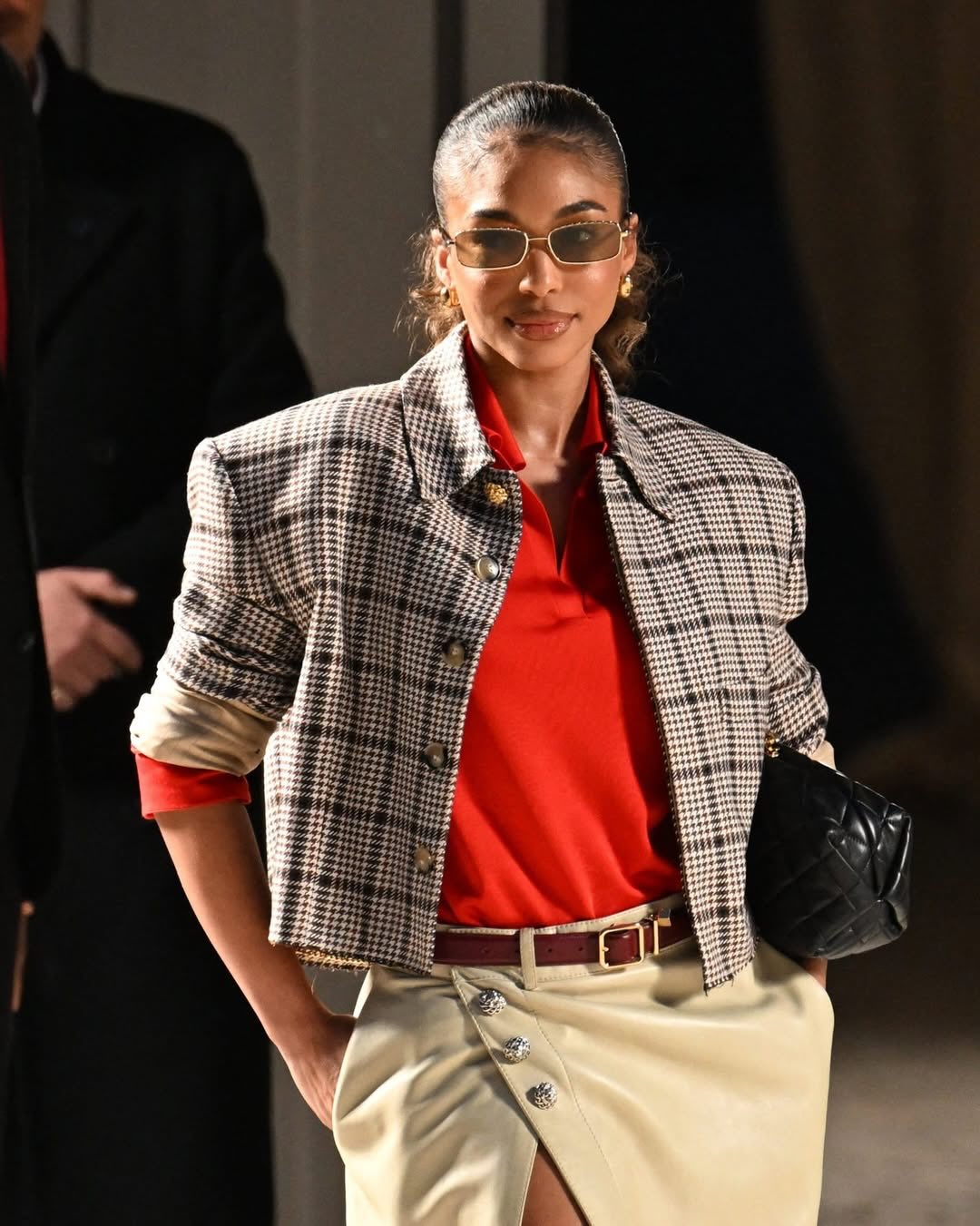
Lori Harvey stepped out for the Chanel Fall/Winter 2026 Womenswear Show in Paris, wearing a look that paired a cropped tweed jacket with a vivid red blouse and a beige Chanel skirt cut with a striking high slit.
The look consists of a bright red blouse worn beneath a cropped brown and cream tweed jacket. The blouse was slightly open at the collar, creating a V-shaped neckline. The jacket featured tweed fabric and metallic buttons along the front.
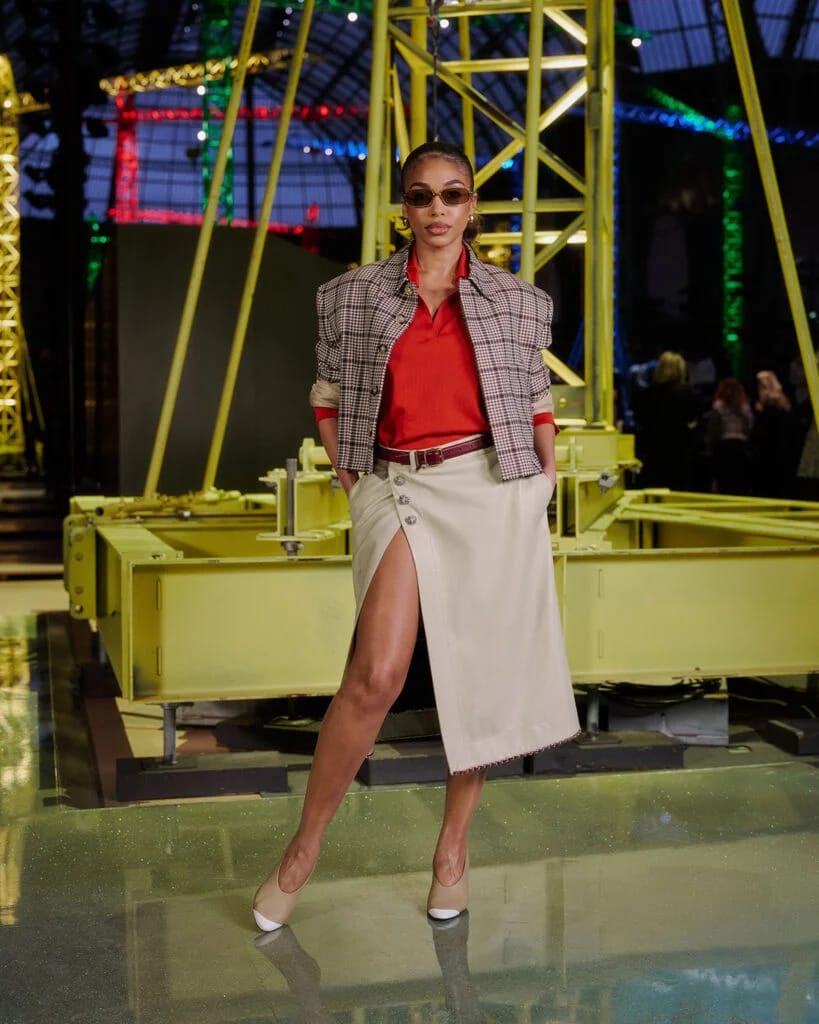
Photo credit: Instagram
Harvey wore a beige Chanel midi skirt that was fastened in front with three rows of large buttons. The cut opened high along the right side, forming a high slit revealing her leg. A slim burgundy belt sat at the waist, repeating the colour of the blouse.
She completed her look with a small black quilted Chanel clutch, narrow-tinted sunglasses, and pointed nude heels.
Harvey kept her hair pulled back into a firm ponytail. Her makeup featured warm tones, with softly shaped brows, light eye definition and glossy nude lips. Harvey’s styling and choice of accessories helped her stand out among the guests at the Paris show.

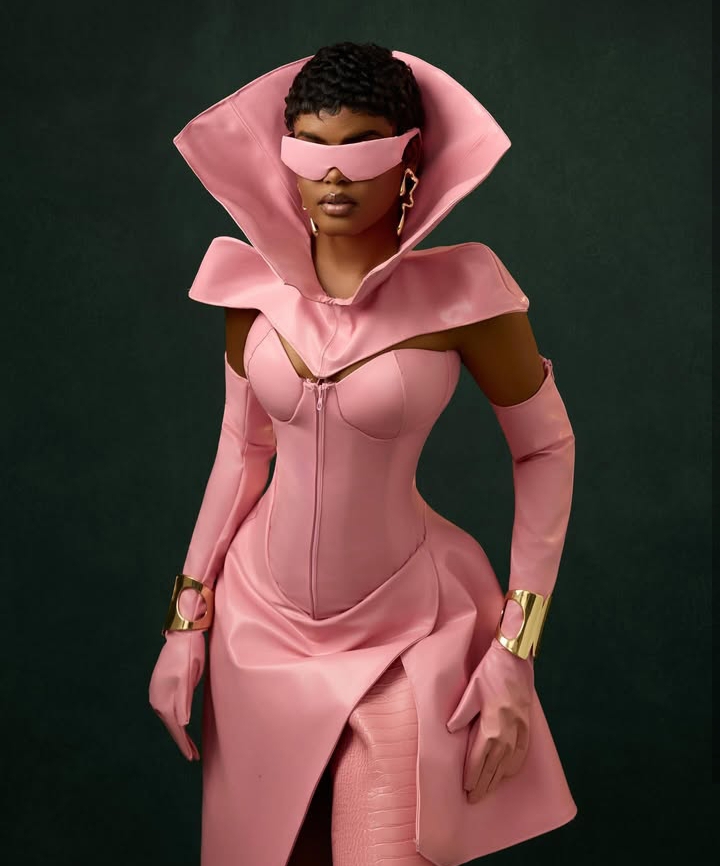
When it comes to birthday photoshoots, most celebrities play it safe. A glamorous dress, soft lighting, a cake prop and a few smiles for the camera. But Jadrolita chose a completely different direction for her latest birthday shoot. She stepped into a futuristic world, dressed head to toe in pink, poses as a character pulled straight from a sci-fi film rather than a traditional celebrant.
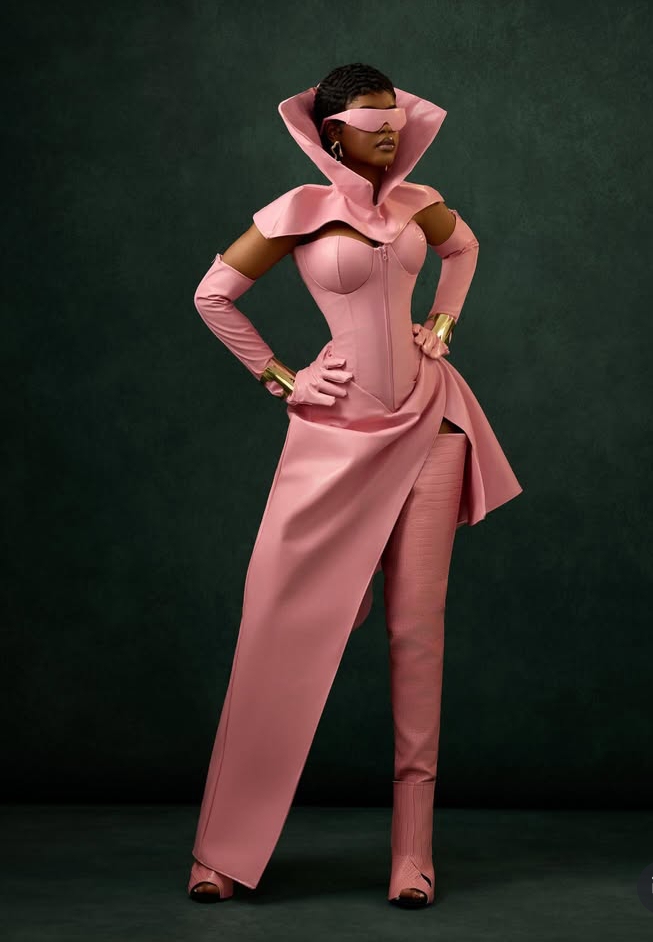
Photo: Ibor Edosa Victor
The concept leaned heavily into technology, identity, and digital culture, themes that already sit at the center of Jadrolita’s public persona. Known for blending artificial intelligence storytelling with lifestyle content, her birthday shoot felt personal and carefully planned rather than experimental.
The first thing that stands out is the colour choice. Every part of the look revolves around pink. It gave the impression of someone existing in a digital universe where colour replaces emotion and storytelling happens visually before words are spoken.
Her outfit consists of a fitted bodysuit crafted from a glossy material. The structure hugged her silhouette closely, creating a clean outline from shoulder to ankle.
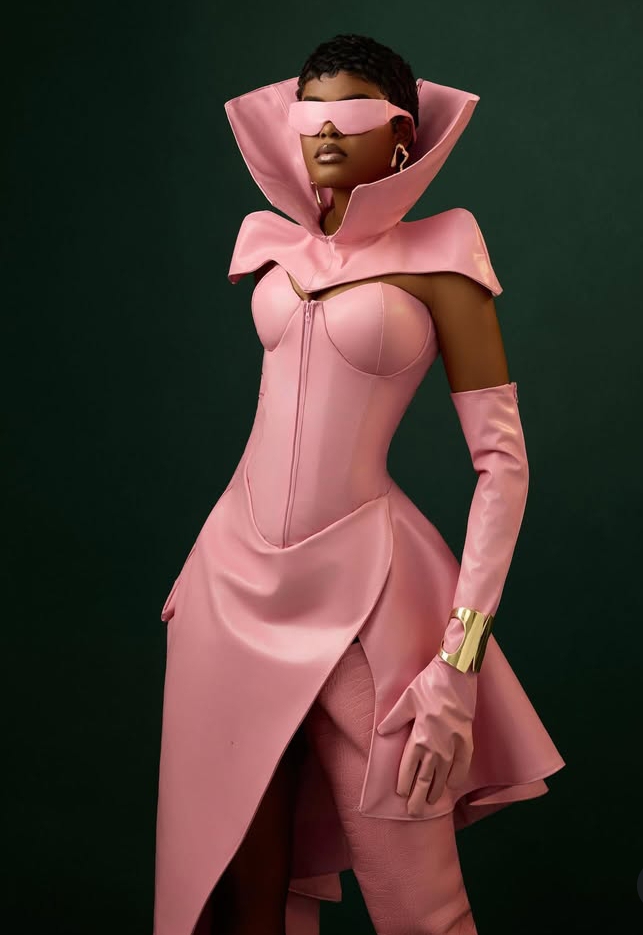
Photo: Ibor Edosa Victor
Layered over the bodysuit was a sculpted jacket designed with exaggerated shoulders and defined edges. The tailoring introduced structure without making the outfit look heavy. Instead, it reinforced the futuristic theme, resembling protective gear worn by a character built for a digital era. Not forgetting her glasses which completed the futuristic look.
Hair and makeup followed the same direction. Her hair was styled in a short pixie cut with clean edges. Her makeup was kept nude.
What makes this birthday shoot notable is how clearly it reflects Jadrolita’s brand. She has built an online identity around digital intelligence, virtual interaction, and futuristic storytelling. Instead of separating her birthday celebration from that identity, she leaned fully into it.

Yvonne Godswill Looks Incredible In Black Leather During Night Out

Mimi Yina Means Business in a Pink Skirt Suit

Shine Rosman Brings a Fresh Edge to the White Bubble-Hem Dress

Ini Edo’s Trish O Couture Laser-Cut Dress is Pure Electricity

Toyin Abraham’s Over Sabi Aunty Crosses ₦1 Billion at the Box Office

Pantone’s 2026 Colour Cloud Trend Gets Uche Montana’s Seal of Approval

Uzor Arukwe, Idia Aisien and Others at the Bridgerton Season 4 Premiere in South Africa

Tolu Bally Impresses in Bold Floral Two-Piece Look

Toka McBaror’s ‘The Creek’ Trailer Drops, Full Cast (Bucci Franklin, Sam Dede, Sunshine Rosman) & What to Expect

Ashmusy Suited Up in Burgundy

Are We Finally Getting the R9 Album? Fans Read the Signs Around Rihanna

Tolubally Teases Her Bag-It Jeans from 2207byBally on Instagram


-

 Lagos Fashion Week5 months ago
Lagos Fashion Week’s Earthshot Prize Win Highlights a Changing Direction in African Fashion Production
-
 Movies2 months ago
Toyin Abraham’s Over Sabi Aunty Crosses ₦1 Billion at the Box Office
-
 Celebrity Style3 months ago
Pantone’s 2026 Colour Cloud Trend Gets Uche Montana’s Seal of Approval
-
 Celebrity Style2 months ago
Uzor Arukwe, Idia Aisien and Others at the Bridgerton Season 4 Premiere in South Africa
-
 Celebrity News5 months ago
Burna Boy Commands the Spirit Tunnel on The Jennifer Hudson Show
-

 Celebrity Style4 months ago
Uche Montana Offers a Perfect Take on Wearing Leather
-

 Celebrity Style5 months ago
Diadem Okojie Perfects Polka Dots
-
 Fashion3 months ago
Tolu Bally Impresses in Bold Floral Two-Piece Look
-

 Movies4 months ago
4 Nollywood Movies To Watch This Week
-

 Health4 months ago
Disordered Eating Vs. Eating Disorder: Experts Explain The Differences And When To Seek Help