
Movies
“The Black Book” with Richard Mofe-Damijo


“The Black Book” , released in September 22nd, 2023, This movie is a real Masterpiece. A thriller of 2 hours 4mn with Richard Mofe-Damijo, A great Actor. After his son is framed for a kidnapping, a bereaved deacon takes justice into his own hands and fights a corrupt police gang to absolve him.
Released on September 22, 2023, “The Black Book” has been making waves in the Nigerian film industry with its thought-provoking storyline and outstanding performances. Directed by Editi Effiong, the movie boasts an impressive cast, including Richard Mofe Damijo, Olumide Owuru, Ade Laoye, Sam Dede, Shaffy Bello, and Ireti Doyle, who bring to life a tale of corruption, injustice, and the quest for truth.
The movie follows Paul Edema, a bereaved deacon played by Richard Mode Damijo, who finds himself at the center of a web of corruption when his son Damilola Edema [Olumide Owuro] is falsely accused of kidnapping. As Paul navigates the treacherous landscape of corrupt police officials, he takes matters into his own hands, seeking justice and redemption.
With its gripping narrative, “The Black Book” keeps viewers on the edge of their seats, wondering what will happen next. The movie raises important questions about the flaws in the justice system and the lengths to which one will go to clear their loved one’s name.
This movie also sheds light on the prevalent corruption and moral decadence in Nigeria today especially in the corridors of power.
The performances in the movie are top-notch, with Richard Mofe Damijo delivering a standout performance as the determined and desperate Paul Edema and Ade Laoye also shines in her role as the annoying journalist.
“The Black Book” is noteworthy, with a blend of realism and stylized visuals that perfectly capture the mood and tone of the film. The use of lighting is also impressive, with a muted colour palette that reflects the dark and corrupt world Paul finds himself in.
The set design in “The Black Book” is authentic and immersive, transporting viewers to the bustling streets and cramped bus stops of Lagos, Nigeria. From the rundown police station to the cramped homes and dimly lit bars, each set is meticulously crafted to create a sense of realism and grit. The production design team has done an excellent job of creating a believable environment that draws the viewer in.
The soundtrack is a mix of traditional Nigerian music and contemporary beats, creating a unique and captivating sound that sets the tone for the film. The sound effects helped in conveying emotions and suspense to the viewers.
The costume design in “The Black Book” is understated yet effective, with each character’s wardrobe reflecting their personality and social status. Paul’s simple yet dignified attire contrasts with the flashy clothing of the corrupt police officers, highlighting the stark differences between good and evil.
The flaws?
The story progression was a bit fluffy. The intro was quite engaging but there were a few lapses from the character of Paul Edema, the journalist who isn’t supposed to be unnecessarily annoying and the fumigator that wiped the four policemen- That scene looked fake. We signed up for action, so the action we expected to get!
Overall, “The Black Book” is a good watch for fans of Nigerian cinema and crime and action thrillers. In as much as it has its impressive side, it’s a weak attempt at a John Wick story. It squanders a good premise and gives us a weak and ineffective thriller.
Rating: 7/ 10
Genre: Crime and Action thriller.


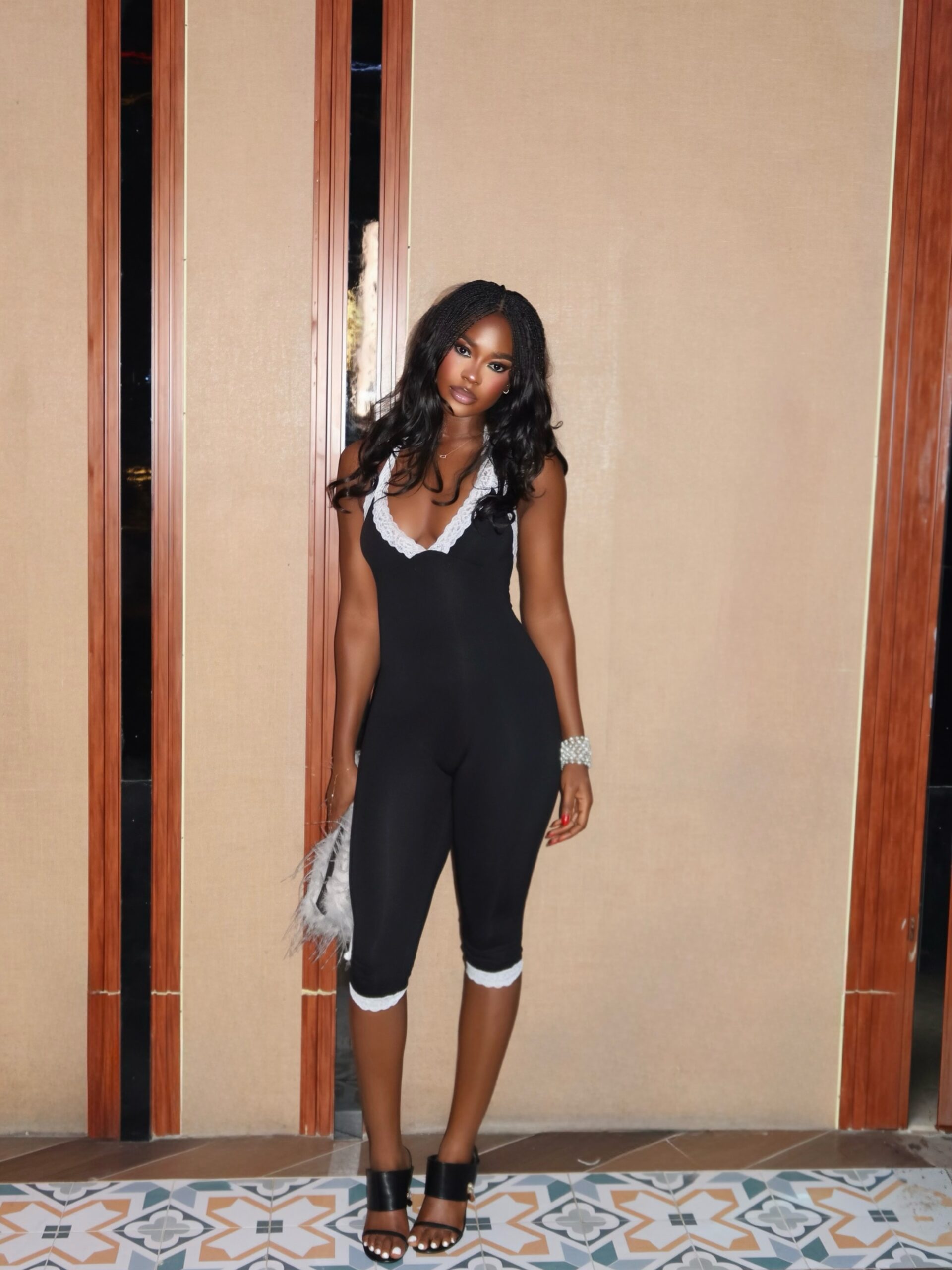
Sometimes the simplest outfit says the most. In a recent post on Instagram, Dede Ashiogwu styled herself in a fitted black jumpsuit and let the white lace trim stand out. She captioned the post “I pull up like I own the city”.
The photos were taken on a night out. She wore a black sleeveless Oh Polly halter capri jumpsuit with a deep V neckline and thin straps. White lace ran along the neckline and the edges of the straps, following the dip of the V. The legs ended just below the knee, with another strip of white lace at each hem.
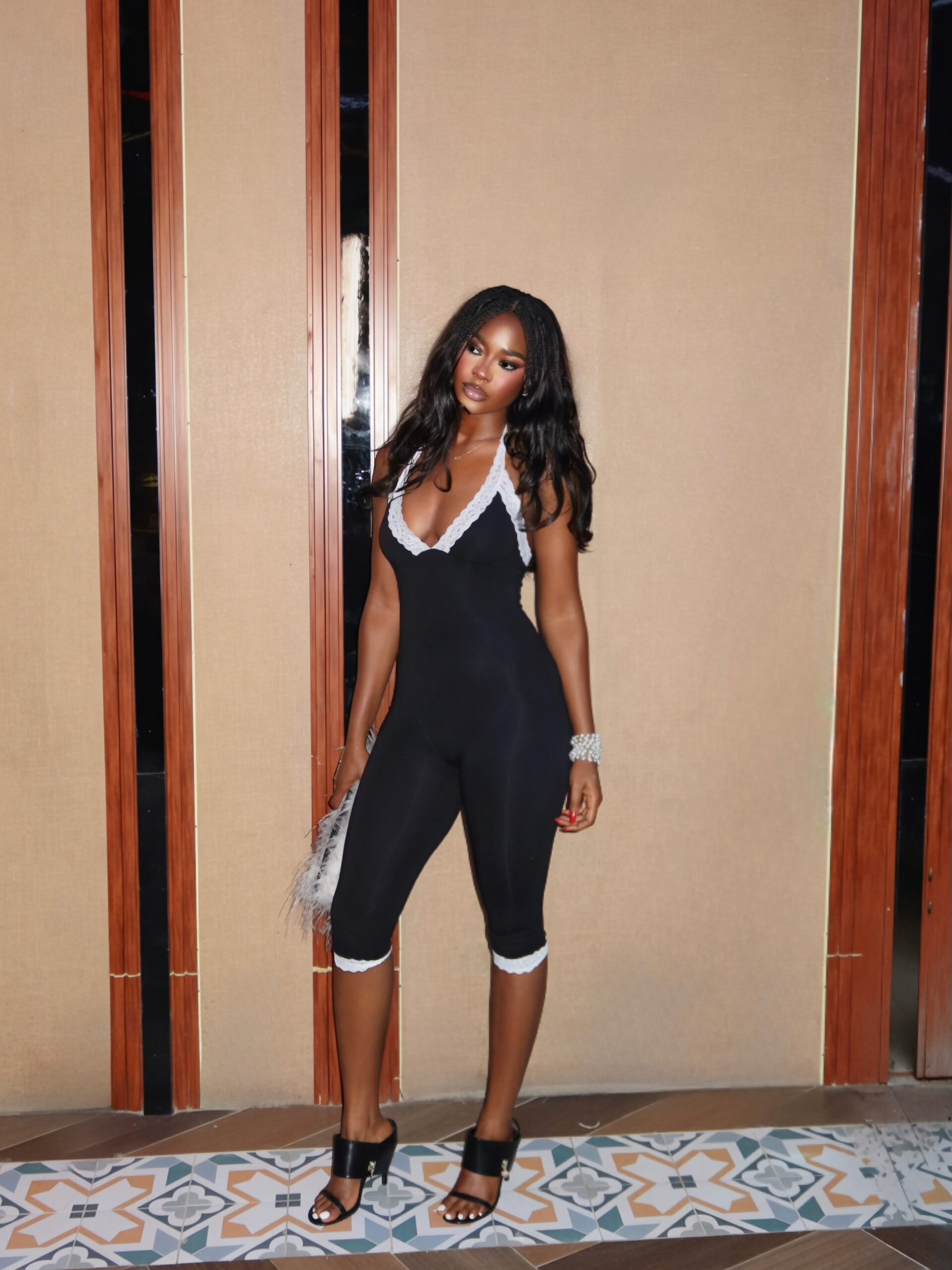
Photo: Instagram/@dedeashiogwu
She carried a fur structured clutch and wore a wide pearl bracelet.
Her hair was parted in the middle, with braids at the top that turned into long, loose waves past her shoulders. Her heels were Givenchy Shark Lock Heart sandals, with thick straps. Her makeup was soft, with warm tones and a nude pink lip.
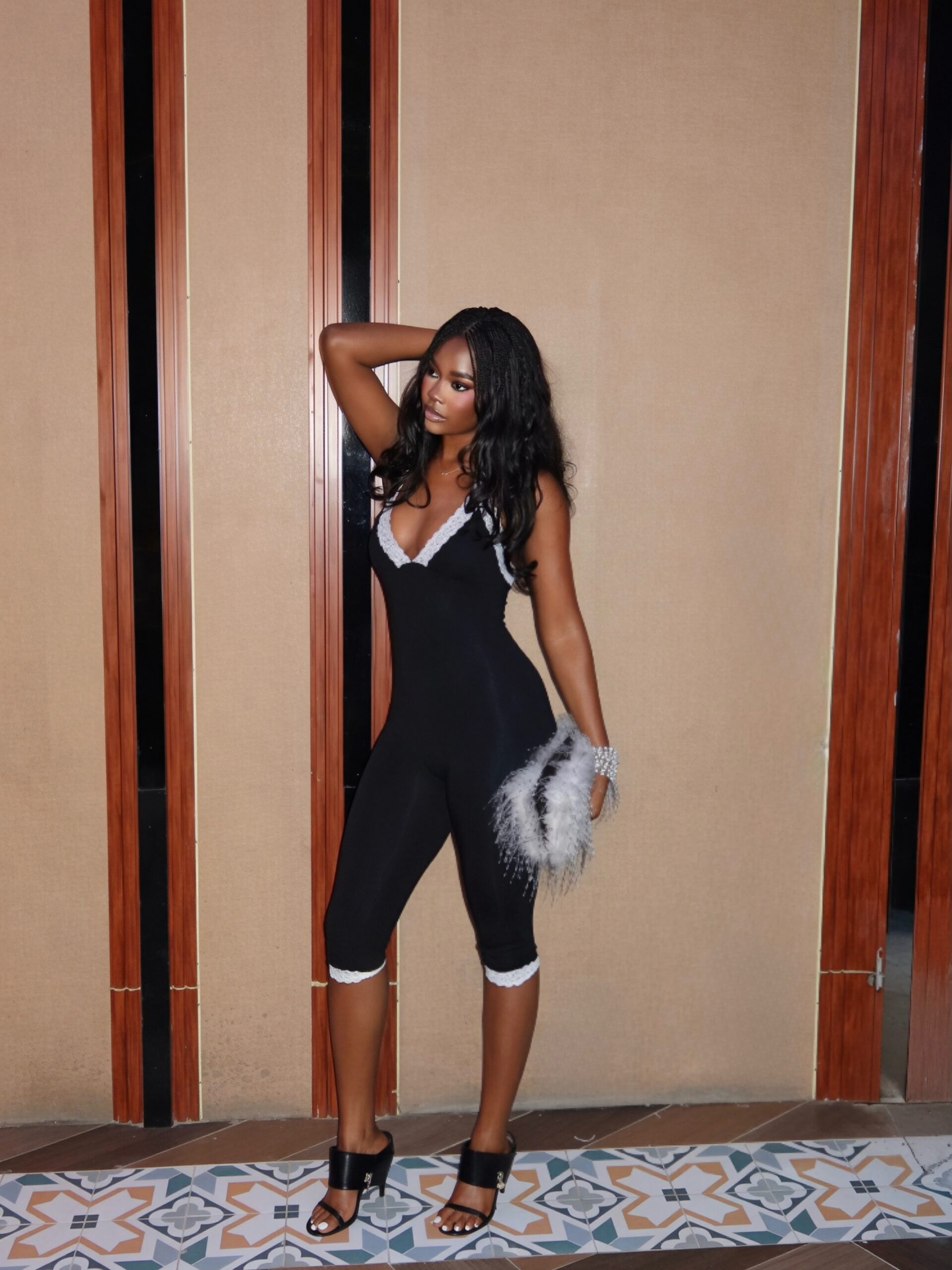
Photo: Instagram/@dedeashiogwu
Her 16 September post kept the same black base, with an oversized pinstripe blazer worn open over a short black skirt, sheer thigh-high stockings and pointed patent heels. The lace is what sets the jumpsuit apart from that look, running along the neckline, the straps and both hems.

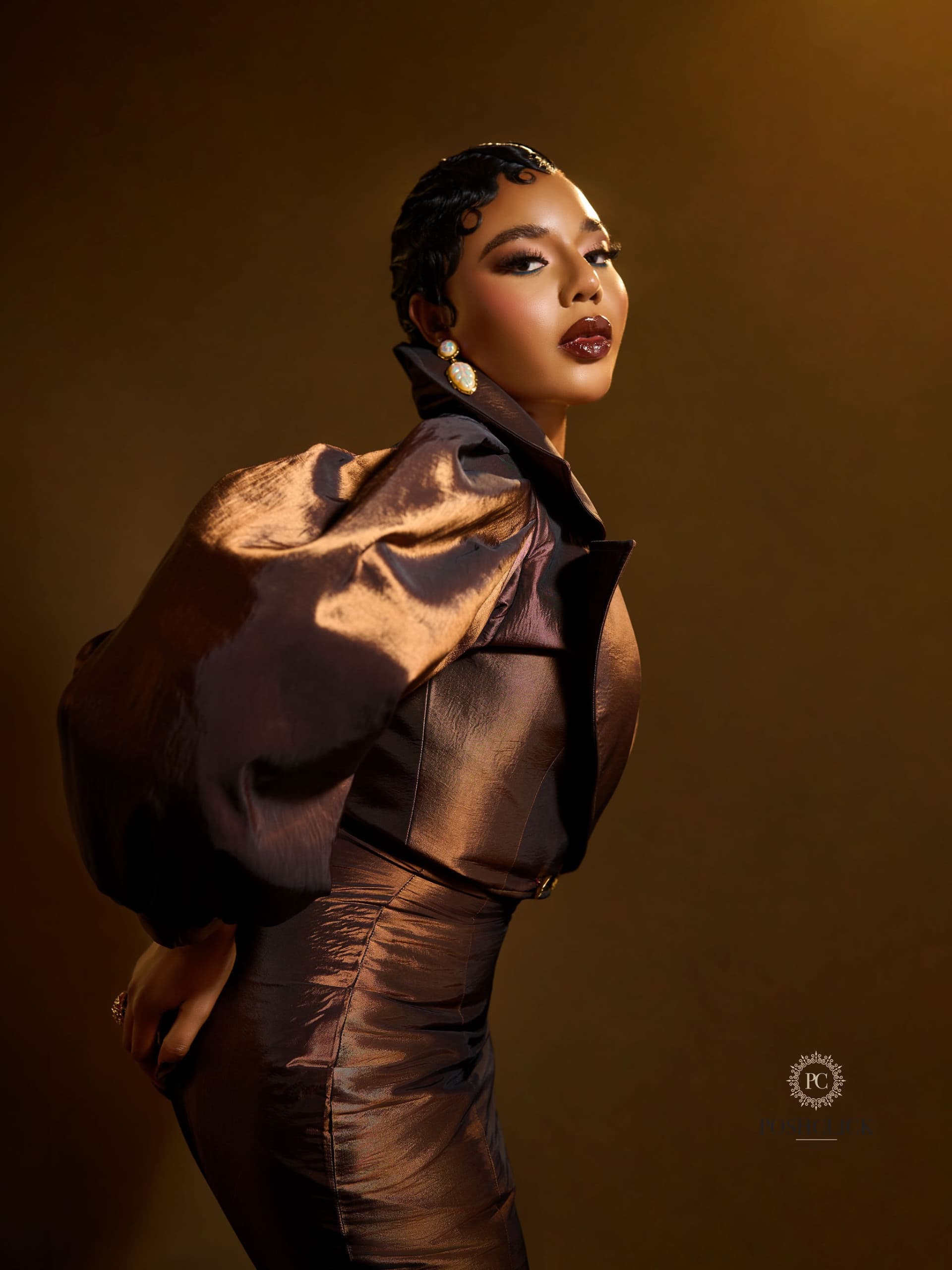
Nancy Isime has built a career across modelling, television presenting and acting. After years in front of the camera, the Nollywood actress is preparing to take on a new role as an executive producer, applying her experience in the entertainment industry to a project of her own.
In an Instagram video shared on October 7, 2026, Isime announced the project and admitted that she was nervous about taking on the responsibility.
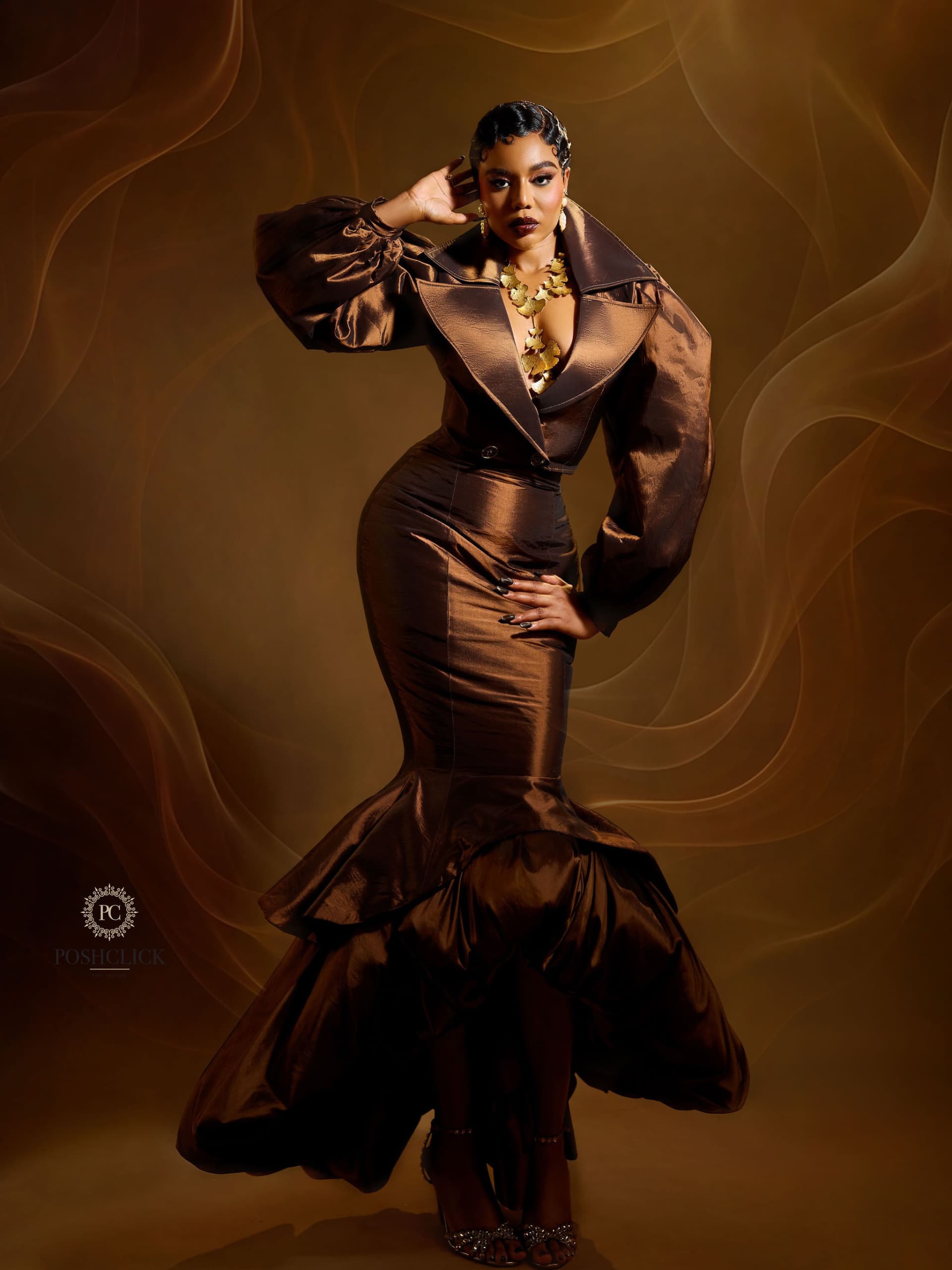
Photo: Instagram/@nancyisimeofficial
“This is my first production as executive producer. I can’t lie, I am nervous and wondering if I am ready, but I think it’s about time; I have also tried,” she said.
Isime also plans to document the production, giving fans a look at the process as the film takes shape. She intends to share updates on production meetings, creative decisions, successes and challenges along the way.
“My first film as an Executive Producer. And I want you to come along for the entire journey,” she added.
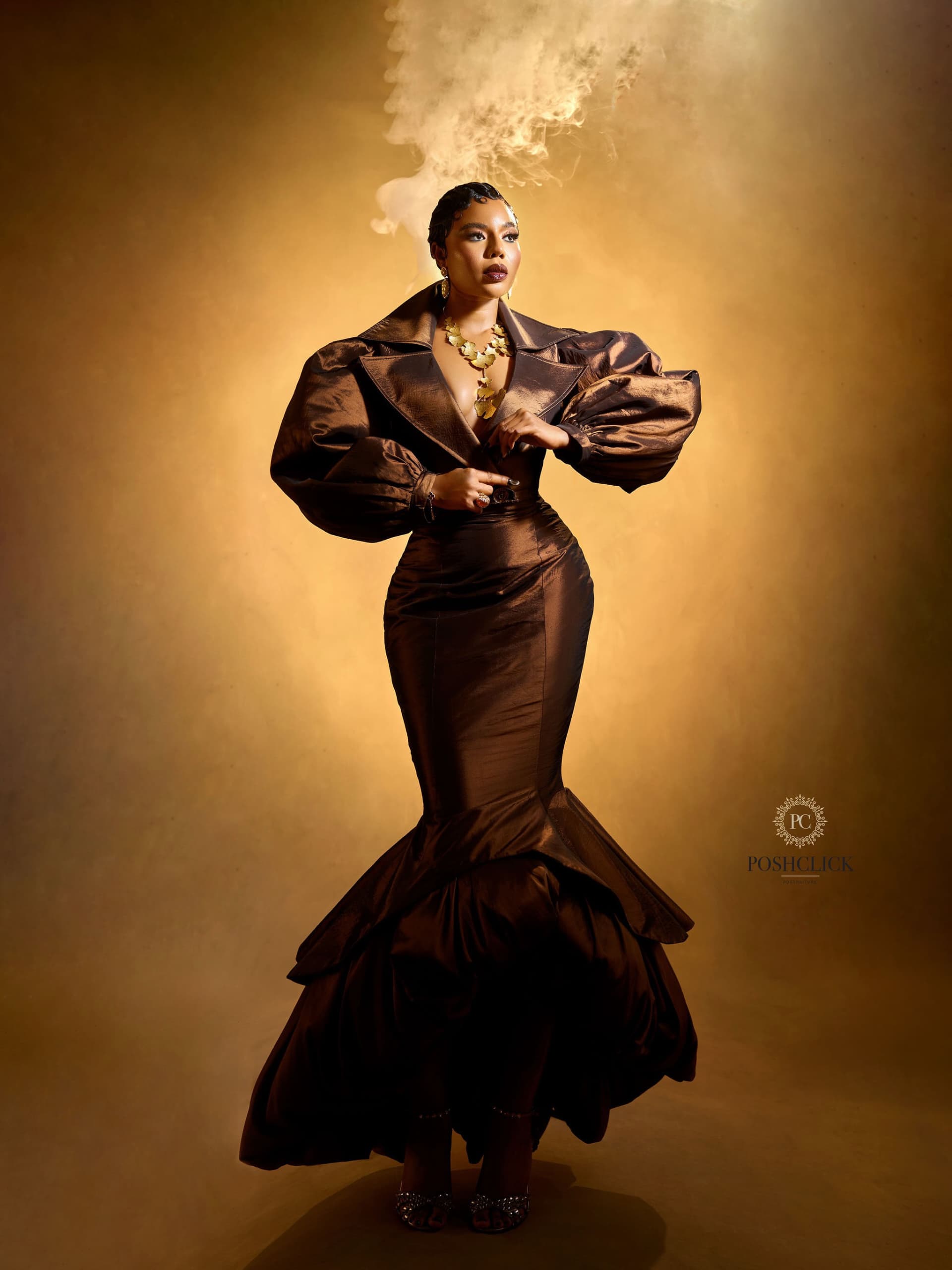
Photo: Instagram/@nancyisimeofficial
Her experience in television includes hosting The Nancy Isime Show, which launched in 2019. She also made her acting debut in the 2011 television series Echoes and has since appeared in Nollywood productions, including Blood Sisters, Shanty Town and The Wait.
Isime began her entertainment career as a model before moving into television presenting and acting, building experience across different parts of the industry before venturing into film production.
The film’s title, cast, storyline and release date have yet to be announced.
Movies
“Dear Ajayi” Makes History as First Nigerian Production in Venice Days Competition | Watch Trailer


“Dear Ajayi” Makes History as First Nigerian Production in Venice Damilola Orimogunje’s “Dear Ajayi” has been selected for the 2026 Giornate degli Autori, also known as Venice Days, at the 83rd Venice International Film Festival. The selection makes it the first Nigerian production to compete in the Venice Days section. The Nigeria-Germany co-production will have its world premiere as part of the competition.
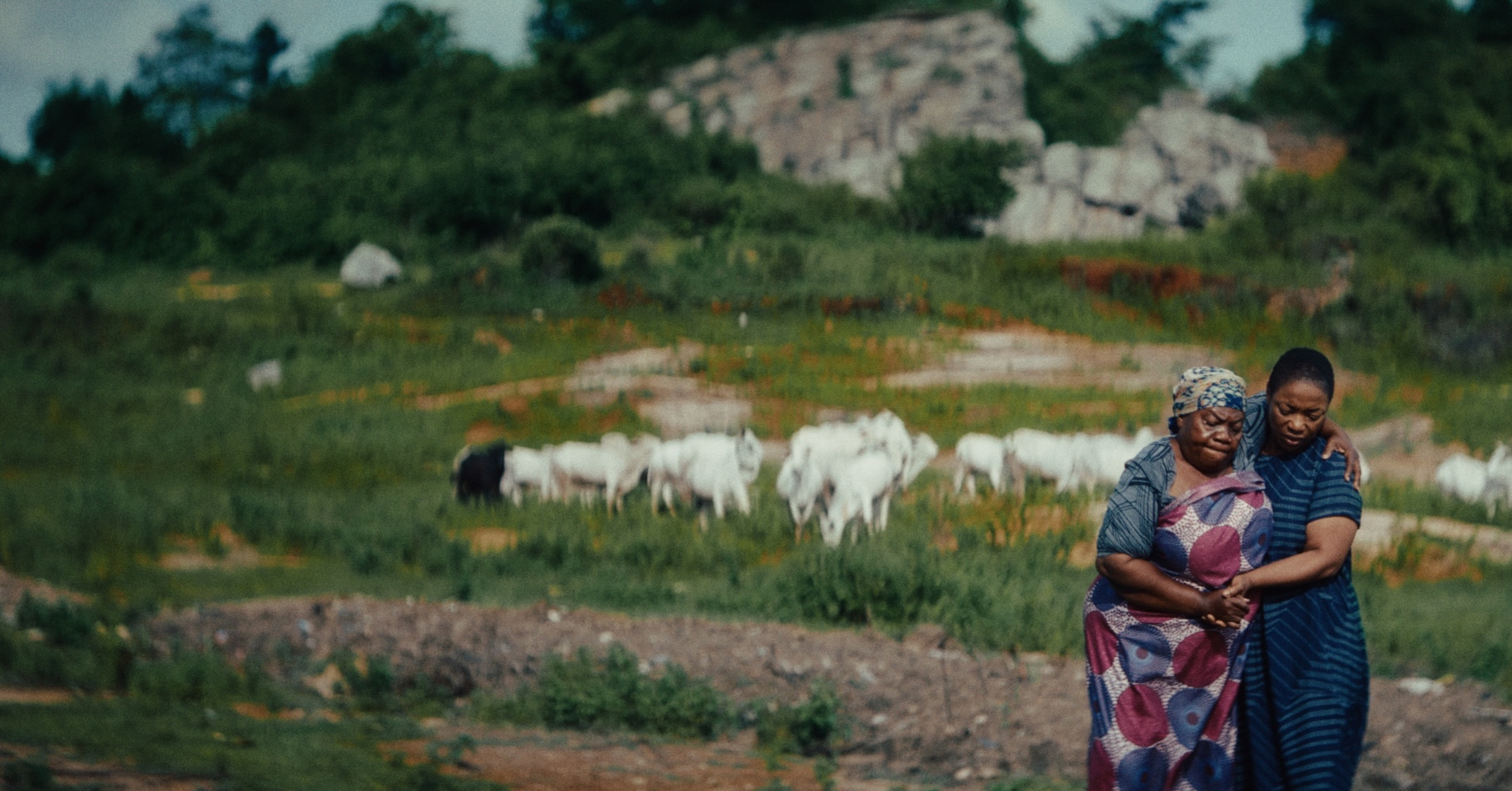
Photo: 2o9ine Films
Set in 1990s southwestern Nigeria, “Dear Ajayi” follows two sisters, Ade and Titi Ajayi, whose lives have gone in very different directions. Ade is a committed Christian and the main breadwinner in the family, while Titi is an aspiring singer who has chosen a more independent path. When their paralysed mother requires care, the sisters have no choice but to come back together.
Orimogunje wrote and directed the film. The cast includes Bimbo Akintola as Ade and Tosin Adeyemi as Titi, alongside Lanre Hassan, William Benson, Antar Laniyan, Uzoamaka Power, Michelle Dede and Chioma Omeruah, (Chigul)
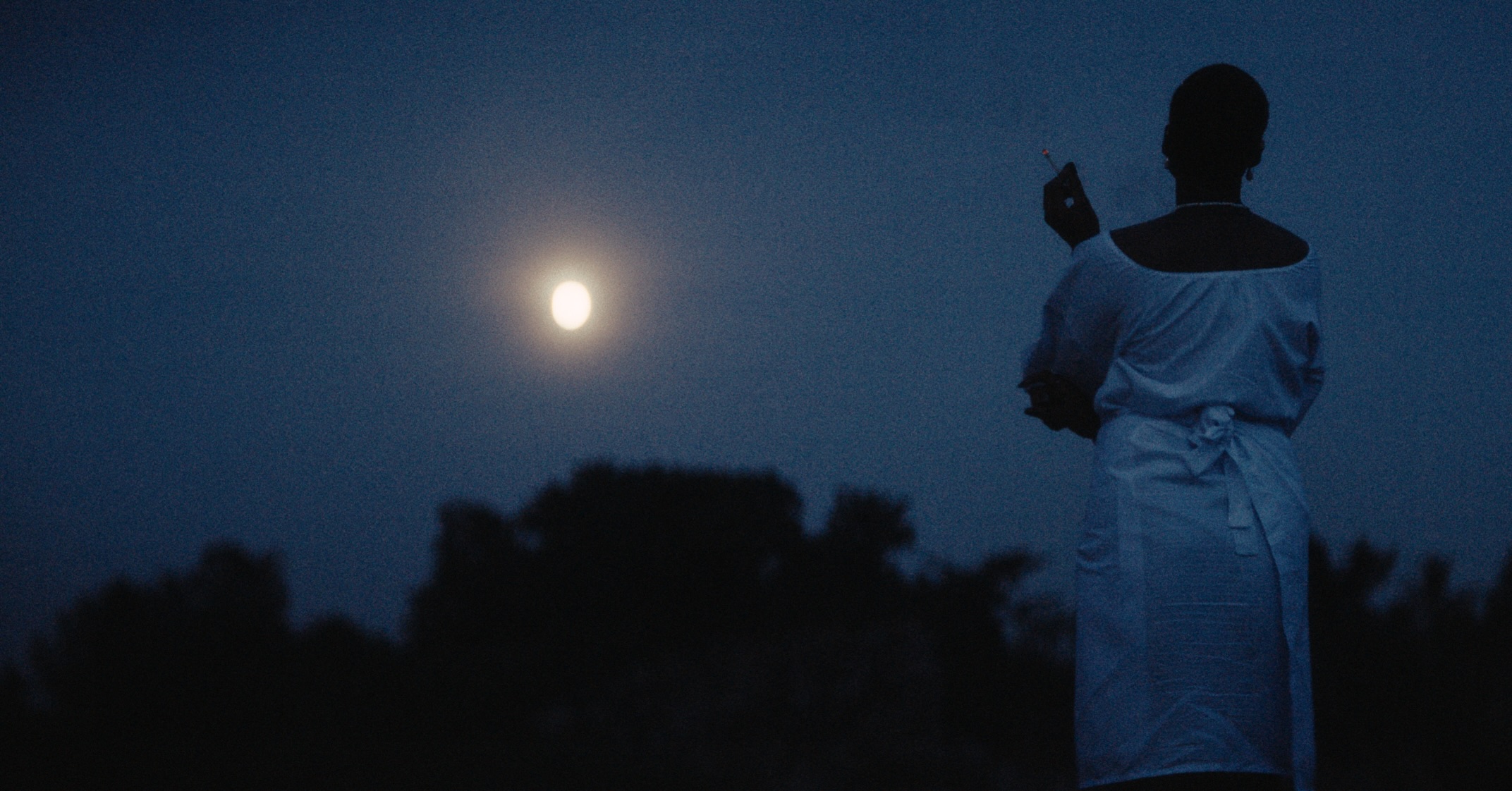
Photo: 2o9ine Films
Re Olunuga composed the music, while KC Obiajulu served as cinematographer. The film was produced by 2o9ine Films, with Mayana Films, Depth and Optics Productions and Zynox Productions joining as co-production partners.
The film received support from the Hubert Bals Fund+ Europe, while Luminalia is handling its world sales
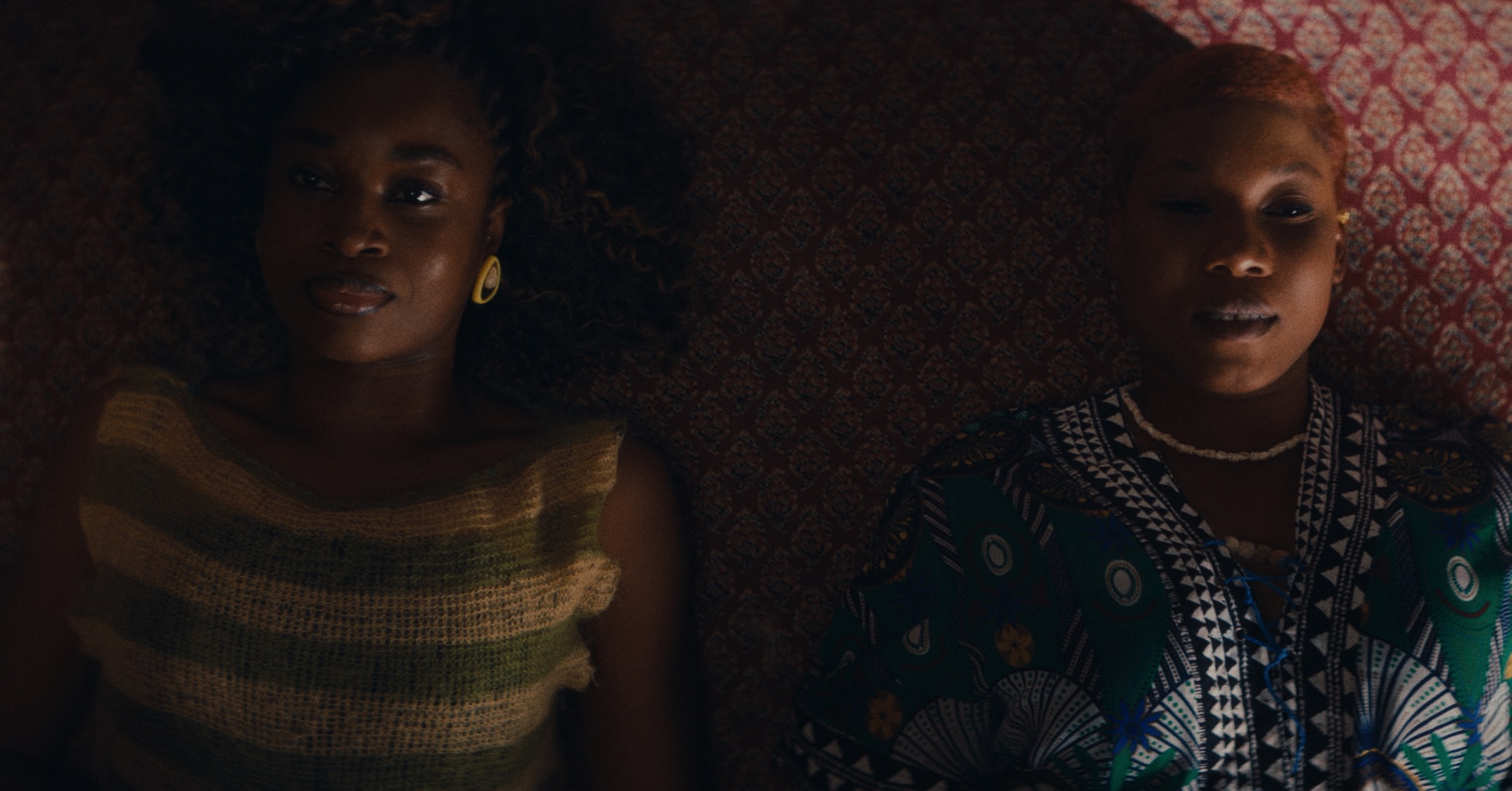
Photo: 2o9ine Films
Ahead of its Venice premiere, the first trailer gives viewers a look at the Ajayi family and the strained relationship between the two sisters.
Dear Ajayi will have its press and industry screening on September 4, with public screenings scheduled for September 10 and 12 during Venice Days.
Watch the trailer below.

What to Expect From Lagos Fashion Week 2026

Nail Colours for Dark Skin: What to Wear and What to Skip

Francis Duru Dies at 57

Broda Shaggi Reveals He Was Hit by a Stray Bullet

Laura Ikeji Proves Polka Dots Are Back and Better Than Ever

5 Nollywood Films to Stream on YouTube

What Exactly Are Ayra Starr and ZAYN Singing About on “Heaven Baby”?

These Nigerian Bag Brands Are Raising the Bar for Made-in-Nigeria Fashion
Broda Shaggi Reveals He Was Hit by a Stray Bullet

New Nigerian Movies to Watch on Netflix

Ayra Starr Performs ‘Rush’ and ‘Heaven Baby’ at NFL Halftime Show in London | Watch Video

Ayra Starr and ZAYN Finally Share the Screen in “Heaven Baby” Video


-

 Celebrity Style2 weeks ago
Nancy Isime Gives Aṣọ Òkè a Cool, Corporate Look
-

 Big Brother Naija2 months ago
Gerard Evicted from Big Brother Naija
-

 Fragrance2 months ago
Nigerian Fragrance Brands Winning Right Now — and You Need to Try
-

 Music1 month ago
Rema Tackles Mixed Signals and Desire on New Single “Oh No”
-

 High Tech2 months ago
Samsung, Duolingo Throw Shade at Apple Over iPhone Duo Reveal
-

 Lifestyle1 month ago
5 Beaches in Lagos for Your Next Staycation
-

 Celebrity Bios1 month ago
Tems’ Journey From Lagos to Global Stardom
-

 Big Brother Naija1 month ago
Keivo Emerges as Week 9 Head of House, Barry Grants All Housemates Immunity
-

 The Best Dressed Celebrities This Week1 month ago
The Best Dressed Stars Of The Week
-

 Celebrity Style1 month ago
Ayra Starr Goes Sheer in LaQuan Smith at NYFW