
Lifestyle
Beyond Spa Days: What Self-Care Looks Like Now


Not long ago, self-care was something people associated with indulgence. A face mask here, a long bath there, maybe a glass of wine and a playlist that made you feel like the main character. It was something you did on Sundays to reset before the chaos began again. But something’s shifted. These days, taking care of yourself doesn’t always look relaxing—or even enjoyable. Sometimes, it’s hard. Sometimes, it’s awkward. But it’s also more honest than ever.
For many people, self-care now means paying closer attention to what drains you—and choosing to step back, even if it’s uncomfortable. That could mean declining a group hangout because your energy’s shot. Or staying off your phone past 8 p.m. because you’re tired of bad news and dopamine loops. It’s noticing that you’re snapping more than usual, and asking why, instead of brushing it off as stress.

It’s also in the quiet routines that don’t make it to social media. Taking your meds every morning. Cooking enough food for the week because you know your future self will thank you. Booking a therapy session after putting it off for months. Tidying up—not to impress anyone—but because clutter makes it harder to think.
And there’s more nuance to it now. Resting doesn’t always mean lying on the couch all day. For some, it’s waking up early to walk before the streets get noisy. For others, it’s dropping a workout that used to feel good but now feels punishing. It’s adjusting—not quitting—when your body or brain tells you something’s off.

People are also learning that being constantly available isn’t sustainable. Ignoring texts for a while isn’t rude—it’s a boundary. Logging off isn’t lazy—it’s necessary. We’re not designed to be “on” all the time, and more people are beginning to live like that’s actually true.
Self-care isn’t one-size-fits-all anymore, and maybe it never was. For a new mother, it might be asking for help without feeling guilty. For a college student, it might be dropping a class they can’t mentally keep up with. For someone grieving, it might be just getting through the day with basic hygiene and food. It’s different, and that’s okay.

The idea that self-care has to be pretty or peaceful is fading. Sometimes it looks like letting go of people you’ve outgrown. Sometimes it’s admitting you’re not okay. These aren’t feel-good moments—but they are real, and they’re part of what care actually looks like.
So no, it’s not all candles and bathrobes anymore. And maybe that’s a good thing. Because self-care shouldn’t be something we earn after burnout. It should be something we build into our lives, day by day, even if it’s messy.













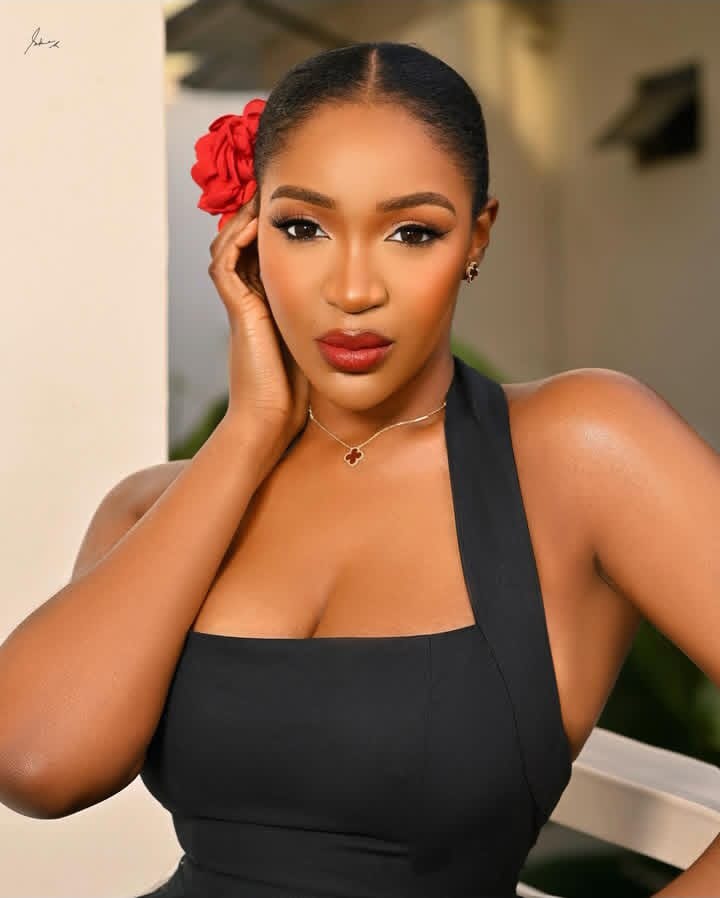
During the episode, Idia revealed, ‘I used to spend money on guys. If they complained that their business wasn’t doing well, I would give them several million naira,’ she told Toke.
She explained that at the time, she was dating with the intention of marriage, believing early support would be reciprocated. “I believed that if you help a guy in the beginning, later when he’s better, he will help you in return, and if that’s how you treat him, he will eventually treat you,” she said.
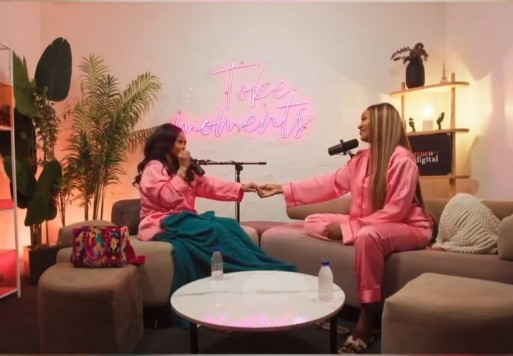
Photo credit: Instagram
showing Idia struggling to hold back tears as she reflected on how giving financially in relationships left her feeling taken advantage of. Her candidness resonated with viewers, and prompted conversations about emotional and financial boundaries.
Fans commented on clips from the podcast on YouTube and Instagram. Many shared similar experiences, noting that it’s common to help partners financially early in relationships only to feel let down later. Some viewers expressed support for Idia’s honesty, saying the episode was a conversation we all needed, while others debated whether financial support should ever be given without a clear commitment.
Overall, viewers could relate to Idia’s openness, turning her personal story into a broader discussion on love, trust, and boundaries. By speaking openly with Toke Makinwa, Idia transformed a private hurt into a public discussion, highlighting that relationships can be challenging.
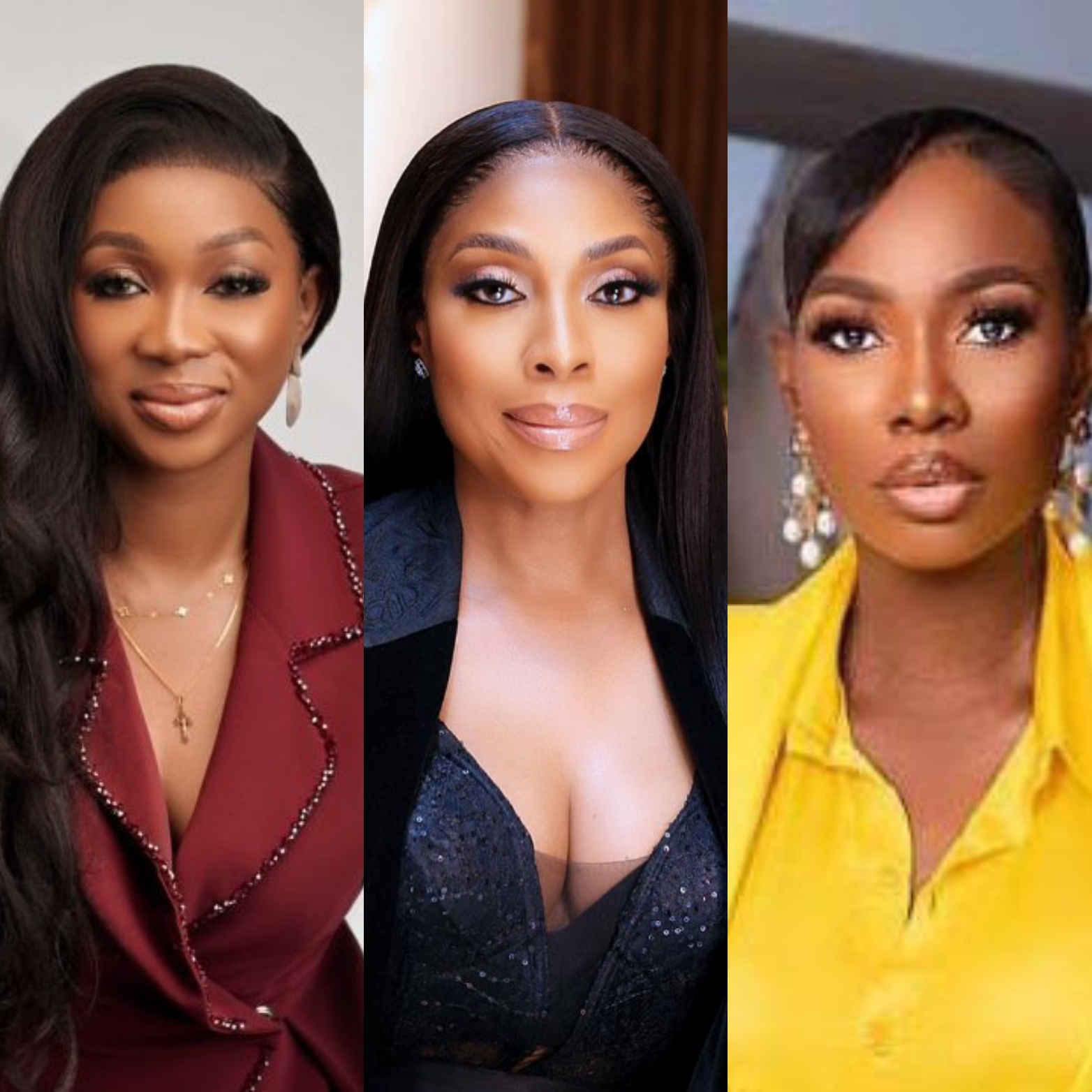
With International Women’s Day approaching this Sunday, March 8, 2026, we turn the spotlight on women who lead, inspire, and lift others. In this feature, we highlight five Nigerian women who have not only built remarkable careers in entertainment, beauty, fashion, media, and finance, but who have also built influential careers and created opportunities for others. Their stories showcase their professional impact that empowers those around them.
Tiwa Savage
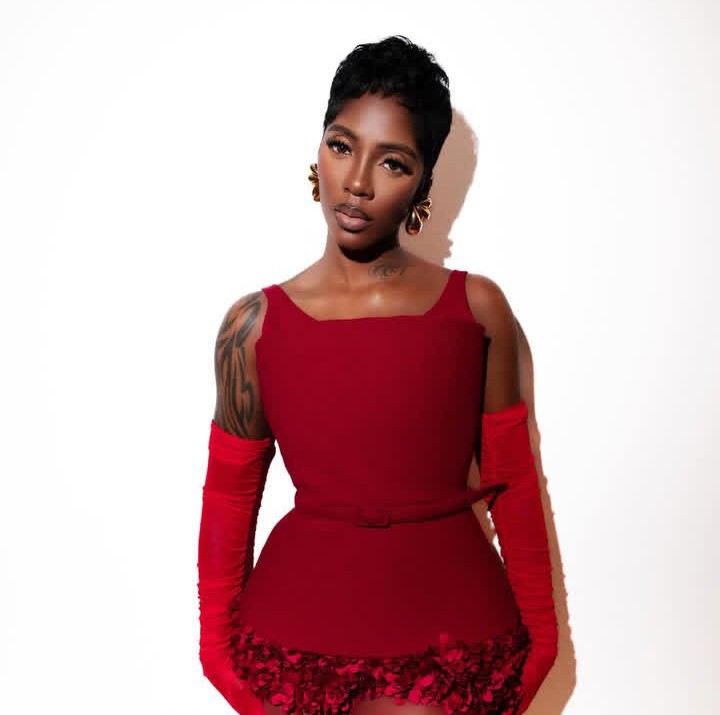
Tiwa Savage: Instagram
Tiwatope Omolara Savage, known as Tiwa Savage, is a singer, songwriter, and the first African female artist to sign with Jay-Z’s Roc Nation in July 2016. A graduate of Berklee College of Music in Boston, she signed with Mavin Records in 2012 and built one of the most recognised careers in Afrobeats.
She has spoken publicly throughout her career about the double standards female artists face: how their personal lives attract more attention than their work, and how they rarely receive the same professional respect as their male counterparts. For younger women in the industry, hearing someone at her level say it plainly has been widely noted.
In February 2026, she launched the Tiwa Savage Music Foundation, a philanthropic initiative dedicated to developing the next generation of African music creatives including producers, songwriters, sound engineers, and music executives, not just performers. Her reasoning was direct: behind every successful artist is an entire ecosystem of professionals, and across Africa, access to structured training for those roles is scarce. The foundation was created to change that.
Stella Ndekile

Stella Ndekile: Instagram
Stella Ndekile trained and worked as a Medical Laboratory Scientist at UNILAG Medical Centre before co-founding Nuban Beauty in 2015 alongside Jane Ogu. The brand officially launched in 2017, built around a straightforward observation: international cosmetics brands were not formulating products for African skin tones or Nigeria’s climate, and Nigerian women had been compensating for that gap for years.
Their In My Skin Foundation became popular among customers because it addressed that gap directly, matching the skin of the women buying it in a way that imported products consistently failed to do. Stella built the brand’s e-commerce platform herself and ran it solely online for two years before a physical store opened.
In 2025, she introduced an AI-powered Skin Decoder at the Lagos Makeup Fair, a tool that analyses hydration, pigmentation, and skin texture to generate personalised skincare recommendations, making that technology accessible to consumers. She has also published Success Uncharted, a book about building a business without a conventional roadmap to see that it has been done before.
Mimi Yina
Mimi Yina: Instagram
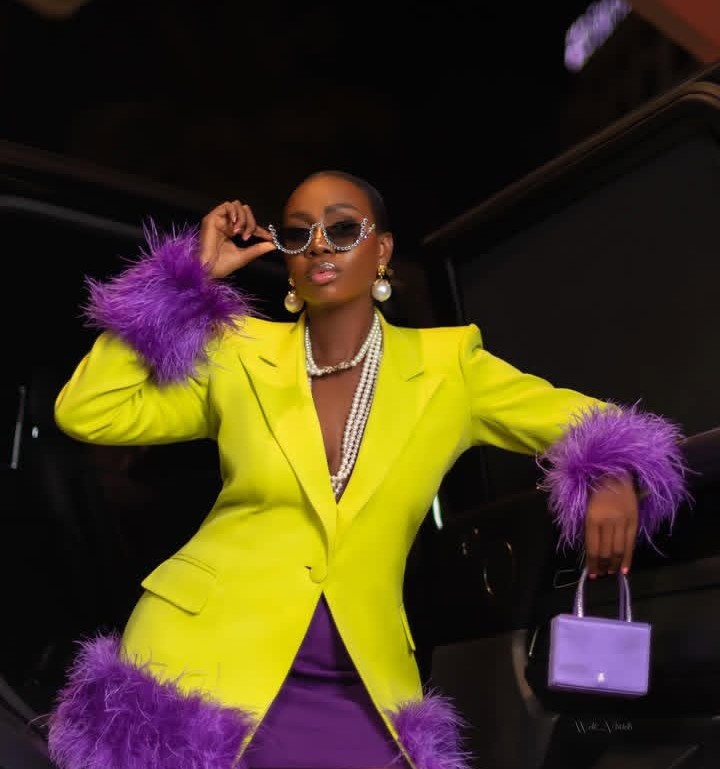
Mimi Linda Yina, known as Medlin Boss, grew up in Gboko, Benue State, and studied Sociology at the University of Port Harcourt. She started her fashion business as a student, sourcing clothes on trips abroad for coursemates who liked what she wore. By graduation it had turned into a real business with paying customers.
Her first store in Port Harcourt attracted a clientele that grew steadily to include Funke Akindele, Yemi Alade, Omotola Jolade-Ekeinde, Ini Edo, and Nancy Isime. Her styling of Teddy A and Bam Bam’s traditional wedding outfits was covered widely across Nigerian entertainment and fashion media. In 2019, she relocated Medlin Couture to Lagos. By 2021, she was dressing the judges and host of The Voice Nigeria.
Beyond her client work, she runs outreach programmes for underprivileged women and children and has used her public profile to advocate for women’s rights. She has spoken about the responsibility that comes with visibility in the fashion industry.
Mo Abudu
Mo Abudu: Instagram
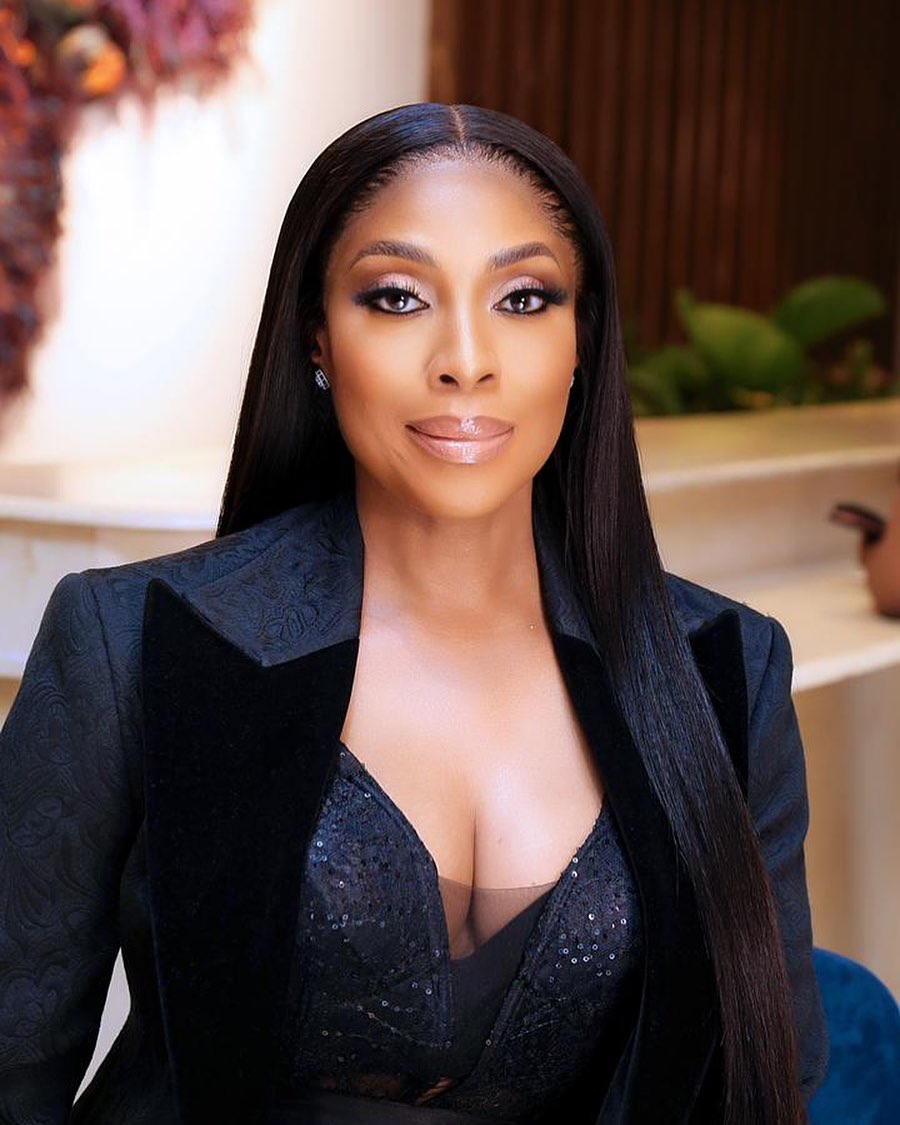
Mosunmola Abudu, known as Mo Abudu, launched her talk show Moments with Mo in 2006. In July 2013, she founded EbonyLife TV on DSTV as Africa’s first global black entertainment and lifestyle network, putting together the content slate, brand identity, and business model herself.
EbonyLife produced Fifty, The Governor, and Chief Daddy. In 2018, the company signed a co-production deal with Sony Pictures Television. In June 2020, it signed a multi-title deal with Netflix, making EbonyLife the first African company to do so. “Forbes has recognised her among Africa’s most influential media figures.
What she has built for others is just as significant. In partnership with the Lagos State Government, she established the EbonyLife Creative Academy, which offers free, practical training in filmmaking and media content production. It is open to working professionals and to complete beginners. She has mentored women in media throughout her career and pushed publicly for better funding access for African content creators.
Dr. Ngozi Okonjo-Iweala
Ngozi Okonjo-Iweala: Instagram
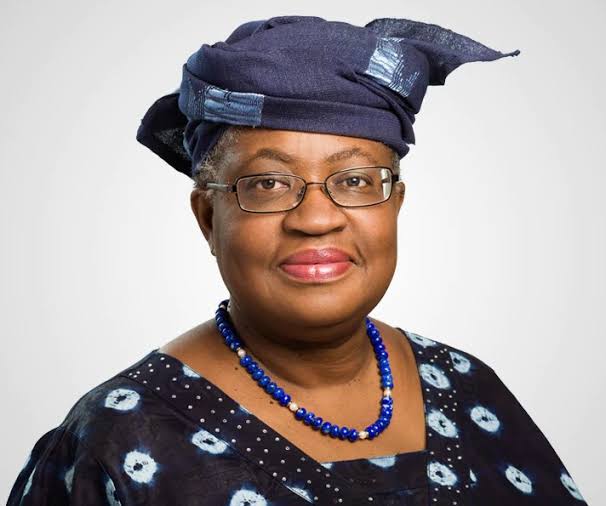
Dr. Ngozi Okonjo-Iweala was confirmed as Director-General of the World Trade Organization in February 2021 and took office on March 1, 2021, becoming the first woman and the first African to hold that position. The United States under the Trump administration had opposed her nomination. She gathered international support from WTO member countries until the incoming Biden administration reversed course and her confirmation went through.
She brought 25 years at the World Bank, two terms as Nigeria’s Finance Minister, and a term as Foreign Affairs Minister to that role. As Finance Minister, she published monthly government allocations that had previously been withheld from the public, and refused to approve expenditures she considered corrupt. Her mother was kidnapped in what was widely seen as an attempt to pressure her. She continued in her role regardless.
She has demonstrated, over four decades, that it is possible to hold senior positions in global institutions without softening your positions to make others comfortable. At 71, she continues to advocate for African debt restructuring and fairer trade terms for developing economies.
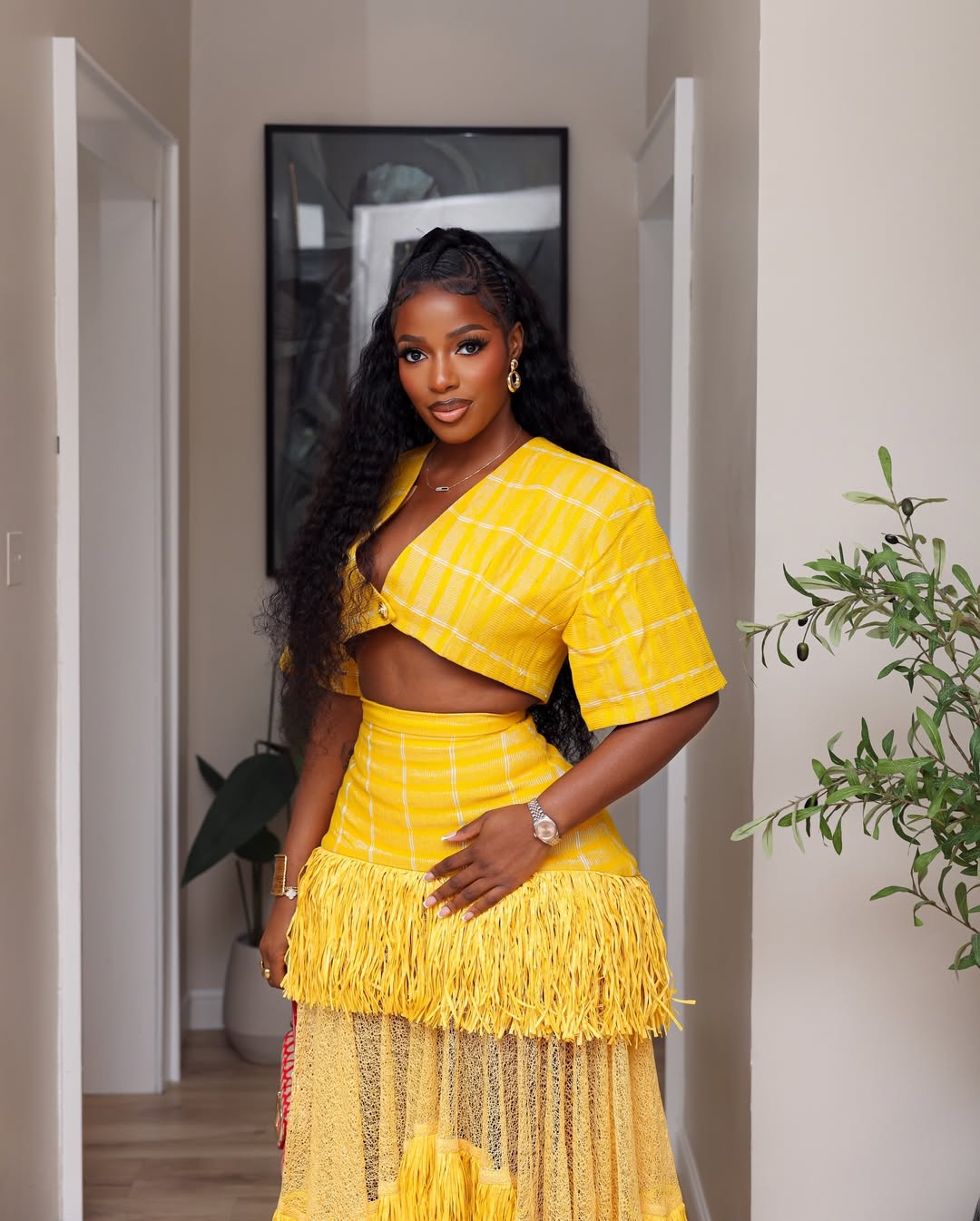
Hilda steps out in a yellow two-piece from Kīléntár, which includes a woven cropped top designed to define the waist.
Her outfit includes a check print crop top and a high-waisted midi skirt. The crop is a short-sleeved tailored cut that fastens at the front, forming a deep V-neckline. The skirt is layered with fringe detailing and a sheer mesh panel between the fringe tiers.
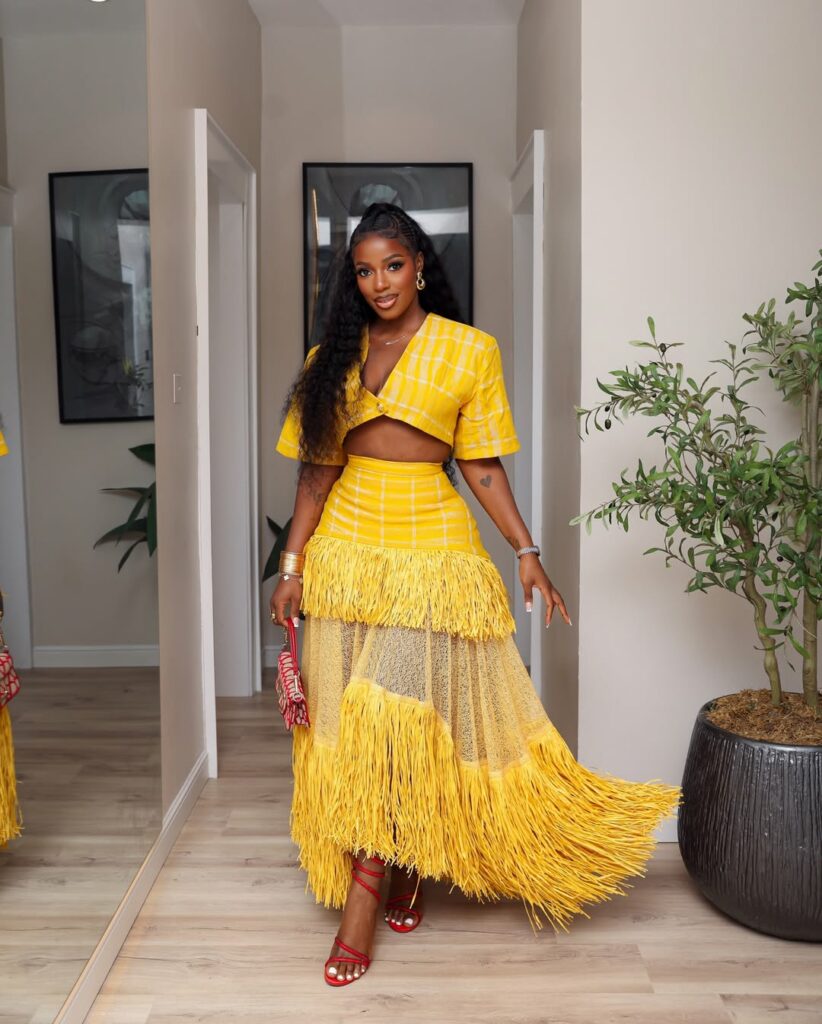
Photo credit: Instagram
She wore red sandals and a matching mini bag. The red pairing breaks up the monochrome yellow. The repeated pop of red draws the eye and adds definition to the outfit.
Hilda Baci wore pieces from KÍLÈNTÀR’s Ano Collection, photographed up close by Tade. The outfit is tailored to flatter her silhouette.
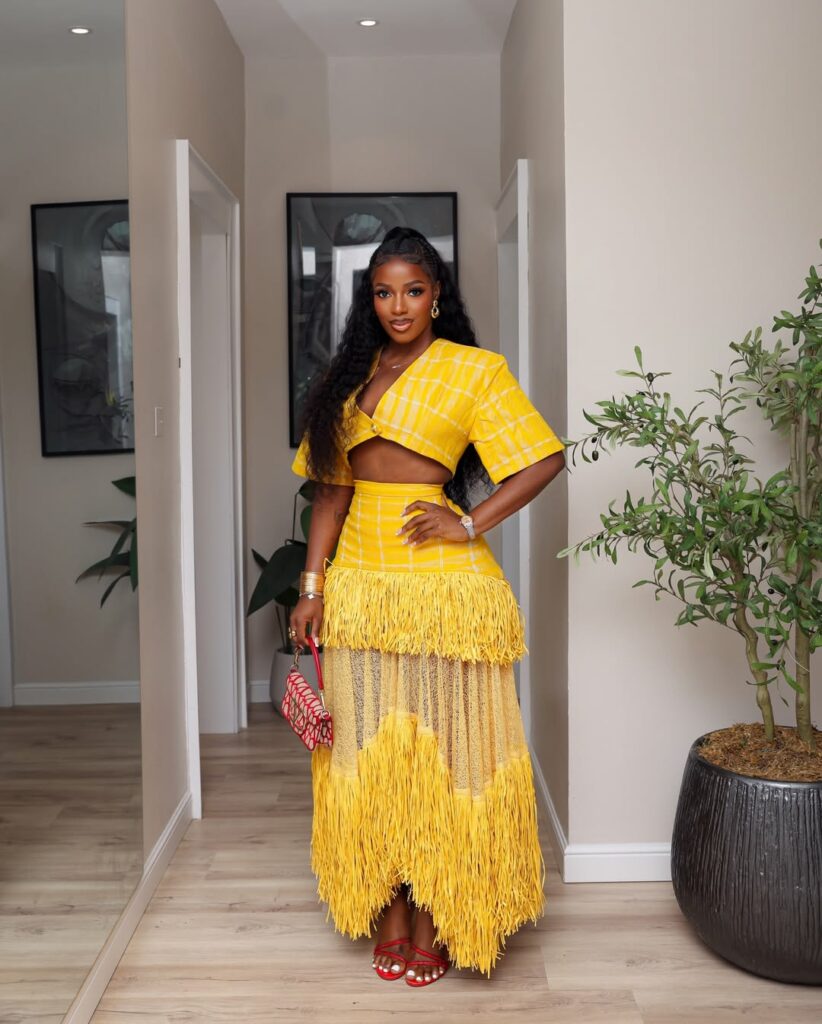
Photo credit: Instagram
Her hair was worn in a half-up ponytail with loose, voluminous body waves; it complements the structured top and fringe. Her makeup had a soft glam look with a dewy finish, defined brows, winged eyeliner, and a warm nude lip. Her gold-toned jewelry adds warmth to the yellow.
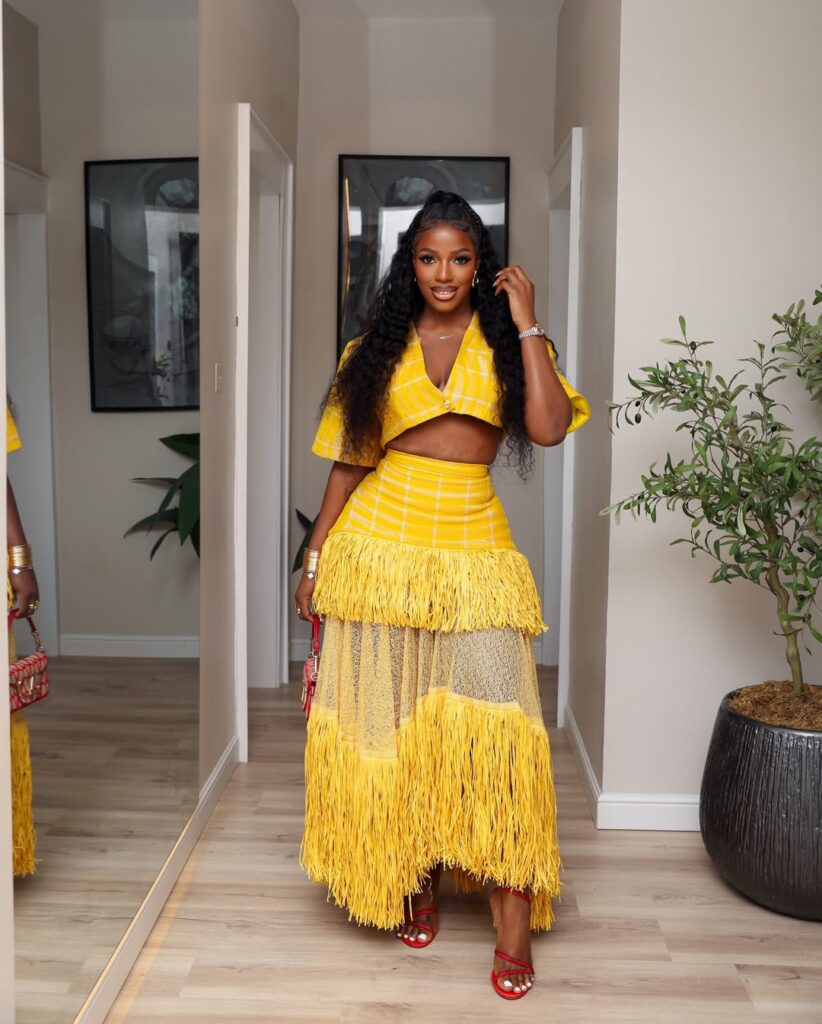
Photo credit: Instagram

Chioma Ikokwu Changes the Mood in Three Looks at ‘The Return of Arinzo’ Premiere

Idia Aisien Gives Floral Energy

Tems Performs “What You Need” on ‘Fallon’

Teminikan Styles a Blazer with Sheer Tights, and It Lands

Toyin Abraham’s Over Sabi Aunty Crosses ₦1 Billion at the Box Office

Pantone’s 2026 Colour Cloud Trend Gets Uche Montana’s Seal of Approval

Uzor Arukwe, Idia Aisien and Others at the Bridgerton Season 4 Premiere in South Africa

Tolu Bally Impresses in Bold Floral Two-Piece Look

Toka McBaror’s ‘The Creek’ Trailer Drops, Full Cast (Bucci Franklin, Sam Dede, Sunshine Rosman) & What to Expect

Are We Finally Getting the R9 Album? Fans Read the Signs Around Rihanna

Tolubally Teases Her Bag-It Jeans from 2207byBally on Instagram!

Tiwa Savage Launches Music Foundation, Teams Up with Berklee to Empower African Creatives


-

 Lagos Fashion Week5 months ago
Lagos Fashion Week’s Earthshot Prize Win Highlights a Changing Direction in African Fashion Production
-
 Movies2 months ago
Toyin Abraham’s Over Sabi Aunty Crosses ₦1 Billion at the Box Office
-
 Celebrity Style3 months ago
Pantone’s 2026 Colour Cloud Trend Gets Uche Montana’s Seal of Approval
-
 Celebrity Style2 months ago
Uzor Arukwe, Idia Aisien and Others at the Bridgerton Season 4 Premiere in South Africa
-

 Celebrity Style4 months ago
Uche Montana Offers a Perfect Take on Wearing Leather
-

 Celebrity Style5 months ago
Diadem Okojie Perfects Polka Dots
-
 Fashion3 months ago
Tolu Bally Impresses in Bold Floral Two-Piece Look
-

 Health4 months ago
Disordered Eating Vs. Eating Disorder: Experts Explain The Differences And When To Seek Help
-

 Movies4 months ago
4 Nollywood Movies To Watch This Week
-

 Fitness4 months ago
Glute Workouts That Deliver Real Results