
Movies
8 Thoughts I Had While Watching ‘Monica’

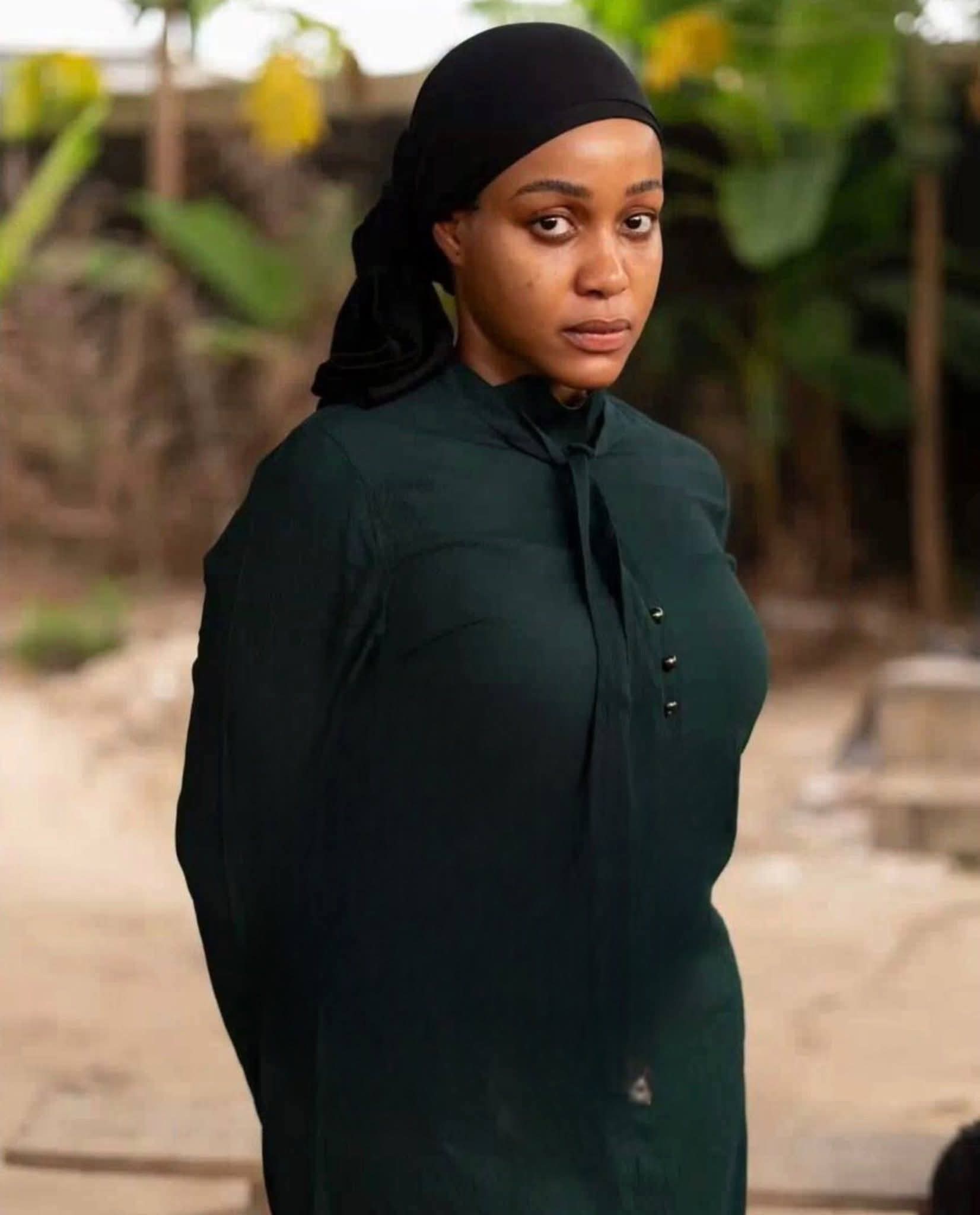
Uche Montana’s ‘Monica’, inspired by true events, has triggered mixed emotions since its release on 7th March, 2026. The sequel came out 3rd May, 2026 and became the record-breaking film to gain 10 million views in two days, and is running on 13 million views now, with strong audience reaction. Having watched the movie, here are eight thoughts.
Monica’s Story Shows the Harsh Reality Many First Daughters Face:
The movie depicts family struggles that many people experience within their homes. The story chronicles the life of some firstborn daughters who sacrifice their lives for the ones they love. Hence, it resonated with a lot of viewers who have experienced this reality.
Monica is the first daughter and born of her family who had to sacrifice her education and life since childhood, hawking her mother’s Pap and taking charge just so the home could be in order. Her siblings despised her at every slightest chance without second thought and got away with it because no parent could stand up for her. Monica couldn’t even stand up for herself, thereby losing her identity and self-worth. This part is largely portrayed in ‘Monica’ 1.
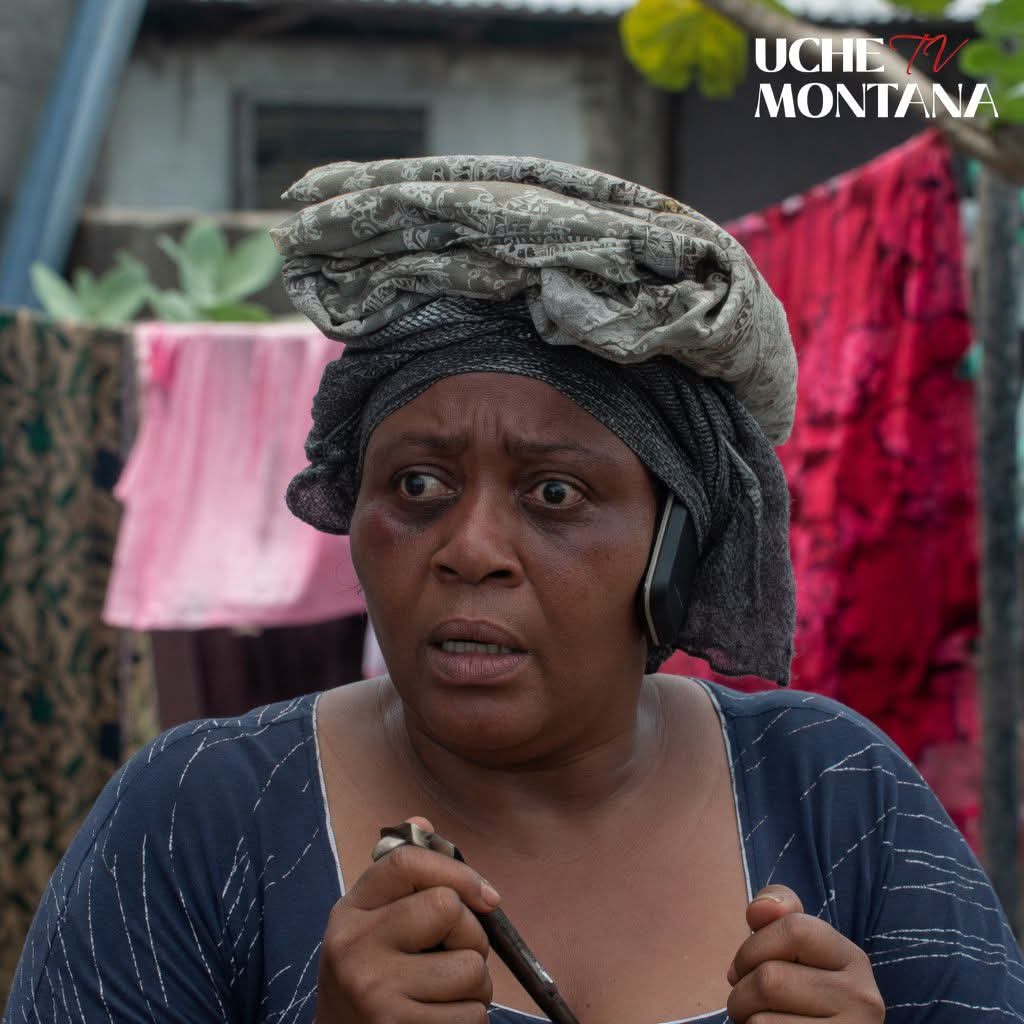
Photo – Facebook
Each Character a Different Layer of Family Dysfunction:
Every action, word, and expressions were so intentional so as to send the message the movie had to pass.
Each character carried every stigma that individuals face in life. Some people are Monica, who lose their voice and self-esteem, having to bear the consequences and responsibilities they didn’t choose for themselves but had to accept since it appeared so. They think that if they do not fill in the gap, who will? This has caged several individuals in trauma and unhealed wounds.
Bobo became a replica of his dad because he wasn’t taught quickly who a man should be by his father. His father wasn’t a good representation of such a figure. Bobo learnt quickly how to be lazy and irresponsible.
Chika, on the other hand, cares less about anyone’s emotions and sacrifices. She became ruthless since her mother always had her back in everything. An honest thought is that she took after her mother.
Mama Monica taught us how wrong parenting and favouritism can cause harm to children. Leaving us to wonder if she was also operating on unhealed trauma. She is the primary antagonist in the film, shaped by her role as a mother and the choices she makes.
Monica’s Sacrifice Became the Heart of The Story:
Monica didn’t have to take up responsibilities she was forced into. But it turned out so for her. As though it was her purpose to shoulder the consequences of her failed parents.
She sacrificed her education, life, money, time, and even her lover without a payback.
Identity can be lost in situations where you have to give your all without someone reminding you to slow down or even cut off to find yourself.
Mama Monica would always say she was the ‘pepper’ and the ‘salt’ in their home, but Monica was everything. When their father had kidney failure in ‘Monica’ 2 and no one could help with his dialysis, she stepped in without a second thought. In the middle of that, Bobo’s wife, Sharon, had an emergency labour of which she had to pay the hospital bills for her operation. Yet none of this was recognised and remembered by all of them.
Every sacrifice she made was a hope for approval, recognition, and love, yet that wasn’t in the picture.
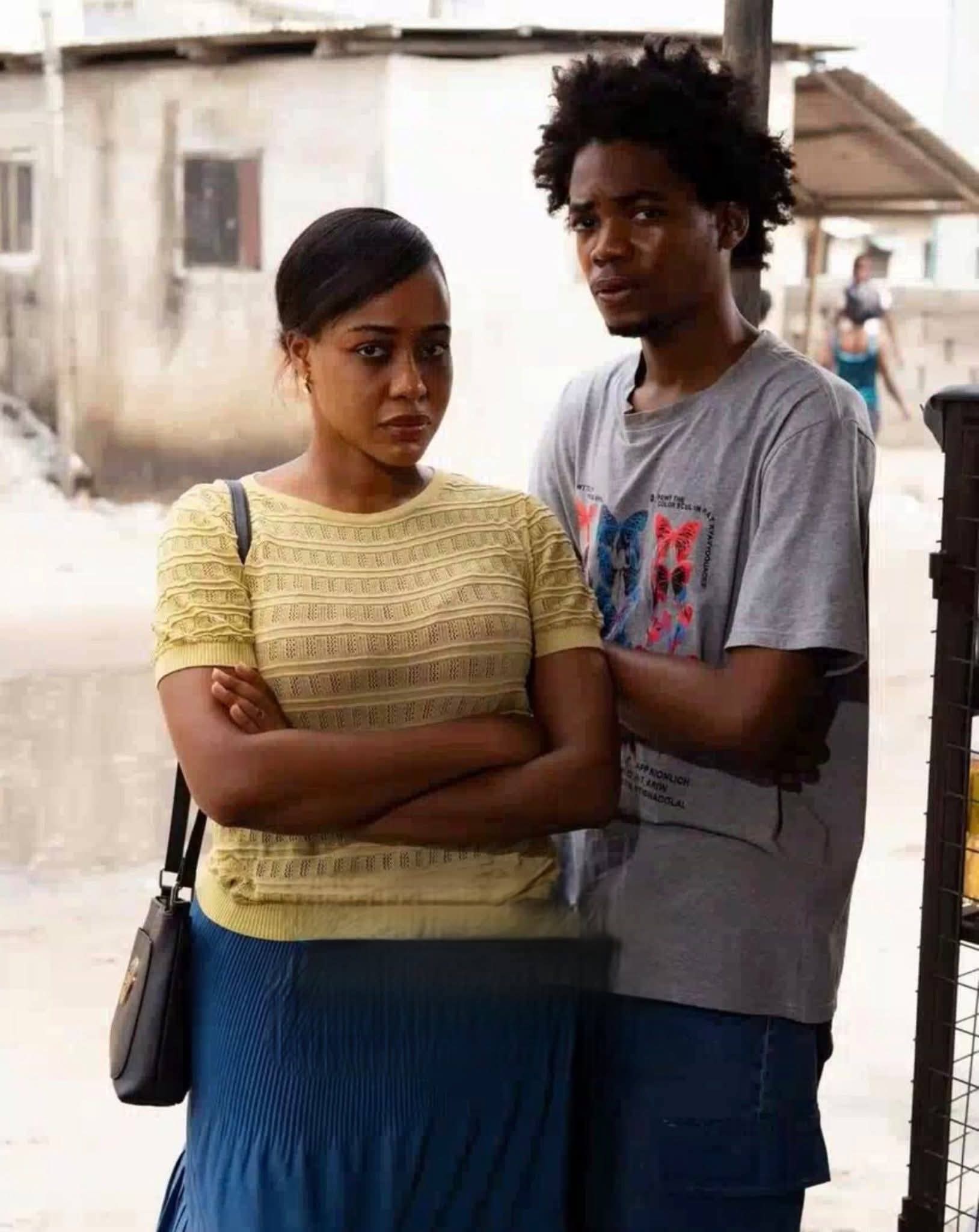
Photo – Facebook
Consequences Eventually Caught Up with Everyone:
This is inevitable, and viewers anticipated it. When Chika double crossed Monica to marry Pascal, she didn’t expect he’ll die so soon from heart disease, leaving her as a widow who eventually loses herself and resolves to drinking. Mama Monica didn’t know she wouldn’t eventually be the one to dance with her daughter at her wedding and enjoy all the benefits that come with that moment. She lost it all.
Mama Monica faced humiliation from her children and ended up sick without having someone care for her like Monica would. Bobo became a baby daddy who couldn’t even fend for his daughter’s feeding nor feed his wife who leaves him for another man.
Papa Monica’s Failure Fueled the Family’s Collapse:
Papa Monica, simply existed in his home and made everyone suffer for his failure. Unsurprisingly, many view him as passive and ineffective. He was there. Physically present and incapable. A man sitting in a house he had no business calling his kingdom, while his wife made Pap to be sold on the streets by his first daughter, just to keep the family breathing.
He simply proves that once a leader gives up, the followers will lose direction, or worse, turn a tyrant. He lost his voice in the home and became one who only nods to his wife. It’s not always the loud abuse that breaks a home. Sometimes it’s the silence. The man who cannot speak because he has nothing to stand on.
His inability to provide leadership created instability within the household. Someone who calls his children to order, speaks sense into the chaos, and anchors the house when everything shakes.
Papa Monica could not do any of that. And at the end, the weight of all he never did crushed him. The stress, the shame. When the Agbo, Mama Monica quietly administered, kicked in, his body gave out. Kidney failure. By the time he died, he had long become emotionally absent from his family. This character is a mirror. Somewhere, someone’s father is Papa Monica.
Monica’s Siblings Showed the Damage Within the Home:
In a typical African home, hierarchy comes with respect. This wasn’t the case in this movie. She did not receive love or respect from her siblings regardless of what she had to sacrifice for that.
This happens when parents fail to hold everything together. From a young age, Bobo and Chika would mock Monica of her lack of education and how she carried herself. She was reduced to nothing in front of them because her mother specifically treated her like an outcast.
Bobo slapping Monica when she stood up for herself to silence Sharon in ‘Monica’ 2 was the major humiliation she received from him. This was after he came to plead for forgiveness, unbeknownst to her, it was a way to lure her back to be used by him.
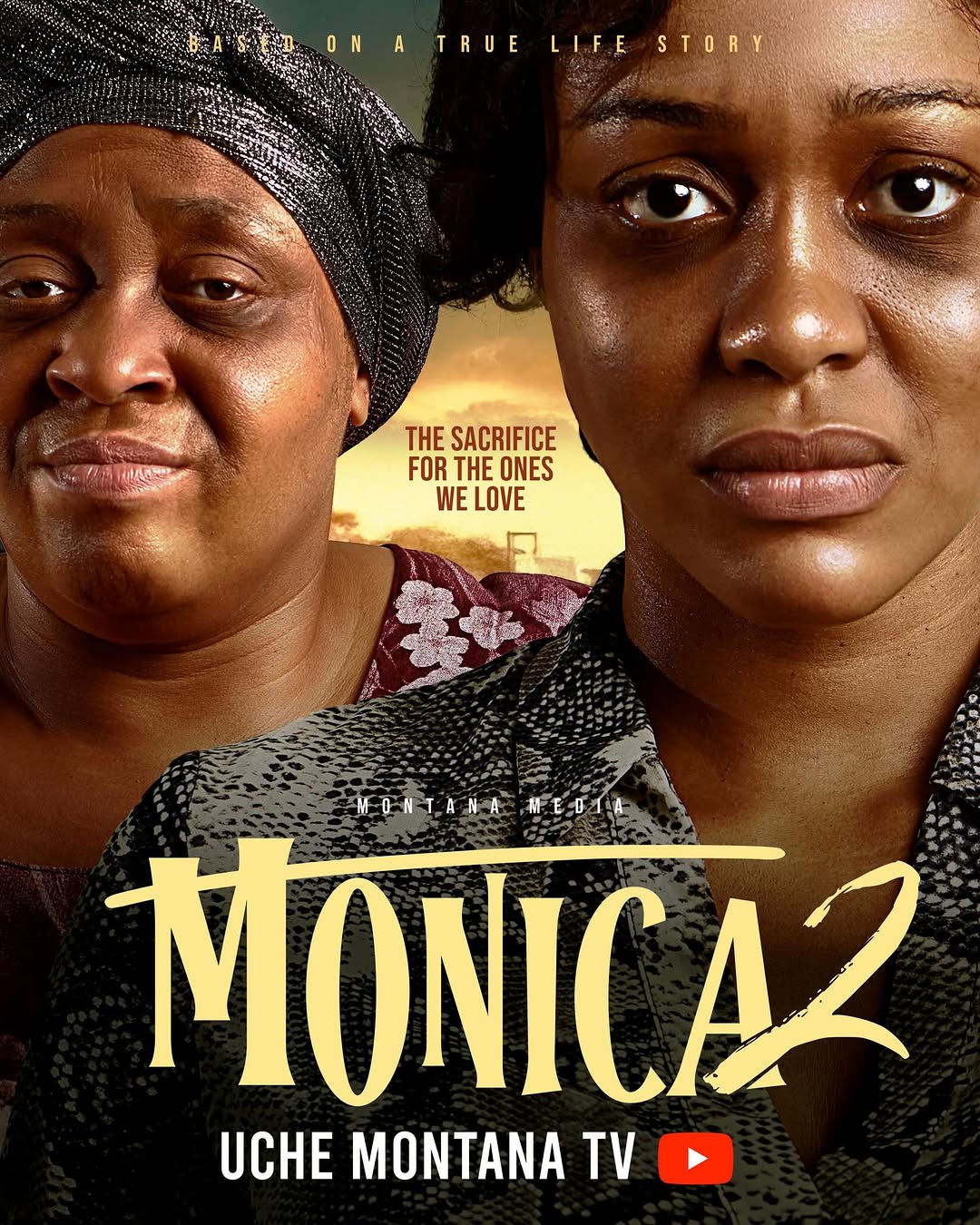
Photo – Instagram
The Film Exposes the Roles Families Force on Their Children:
This movie mirrors the harmful behaviour of some African parents towards their children. Most times, they force a fate on their children especially if it benefits them. A child can’t become an artist because the parents want him to become a lawyer or doctor to keep the family name or lift the family up.
Some project their insecurities and failures on their children. Papa and Mama Monica failed at provision allowing Monica to shoulder that. The family feeds, and pays their hospital bills when she provides.
Her dream was to build her own fashion house but that was about to be robbed by mother until Monica regained her senses and changed her story.
‘Monica’ Serve as a Reminder for First-born Children:
Most first born have accepted their fate to be the pillar of the home, forgetting they’re also part of the family. This movie is a reminder to first born that you shouldn’t lose yourself trying to pick up others who can’t do something for themselves.

Sometimes the simplest outfit says the most. In a recent post on Instagram, Dede Ashiogwu styled herself in a fitted black jumpsuit and let the white lace trim stand out. She captioned the post “I pull up like I own the city”.
The photos were taken on a night out. She wore a black sleeveless Oh Polly halter capri jumpsuit with a deep V neckline and thin straps. White lace ran along the neckline and the edges of the straps, following the dip of the V. The legs ended just below the knee, with another strip of white lace at each hem.

Photo: Instagram/@dedeashiogwu
She carried a fur structured clutch and wore a wide pearl bracelet.
Her hair was parted in the middle, with braids at the top that turned into long, loose waves past her shoulders. Her heels were Givenchy Shark Lock Heart sandals, with thick straps. Her makeup was soft, with warm tones and a nude pink lip.

Photo: Instagram/@dedeashiogwu
Her 16 September post kept the same black base, with an oversized pinstripe blazer worn open over a short black skirt, sheer thigh-high stockings and pointed patent heels. The lace is what sets the jumpsuit apart from that look, running along the neckline, the straps and both hems.

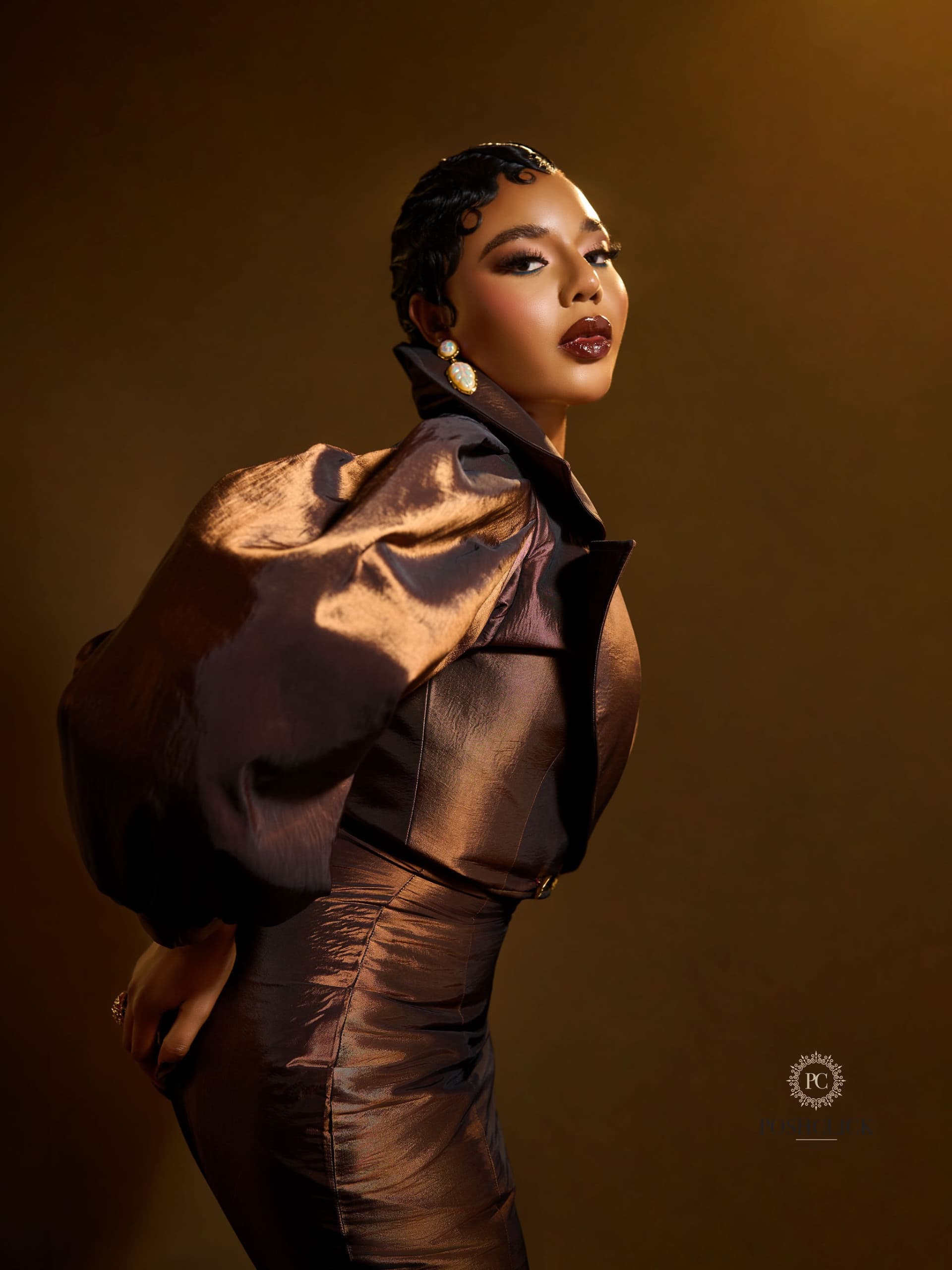
Nancy Isime has built a career across modelling, television presenting and acting. After years in front of the camera, the Nollywood actress is preparing to take on a new role as an executive producer, applying her experience in the entertainment industry to a project of her own.
In an Instagram video shared on October 7, 2026, Isime announced the project and admitted that she was nervous about taking on the responsibility.
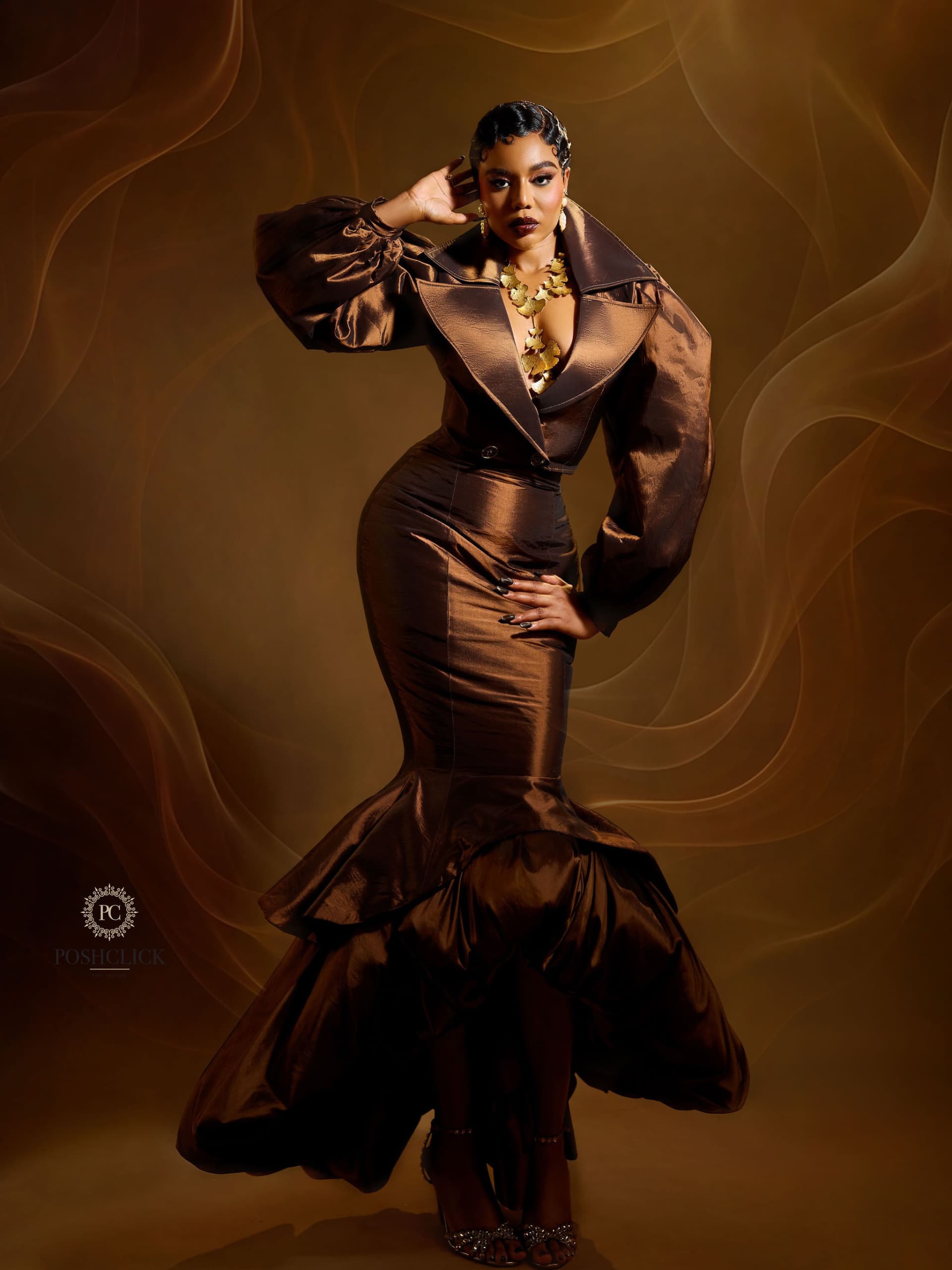
Photo: Instagram/@nancyisimeofficial
“This is my first production as executive producer. I can’t lie, I am nervous and wondering if I am ready, but I think it’s about time; I have also tried,” she said.
Isime also plans to document the production, giving fans a look at the process as the film takes shape. She intends to share updates on production meetings, creative decisions, successes and challenges along the way.
“My first film as an Executive Producer. And I want you to come along for the entire journey,” she added.
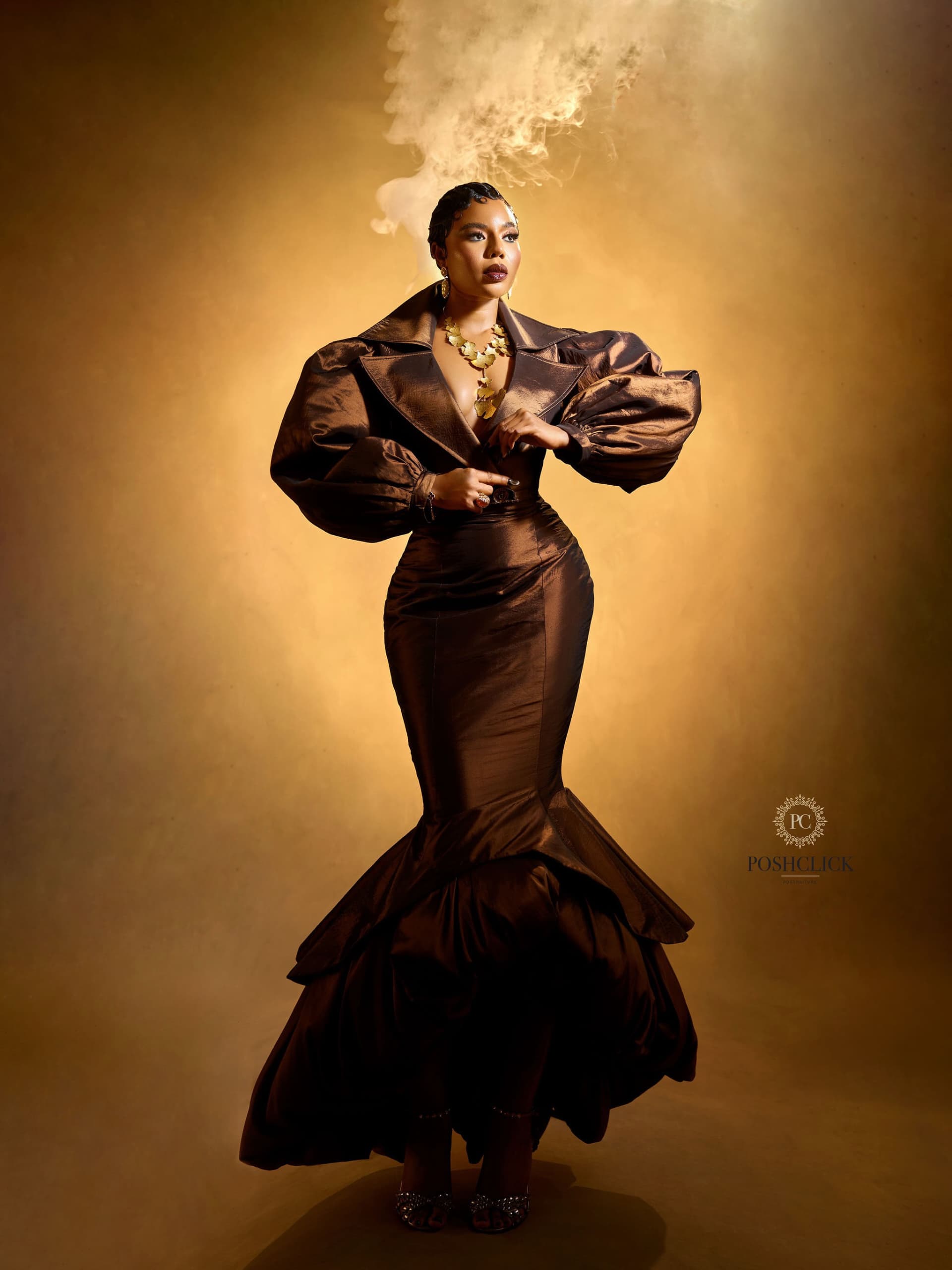
Photo: Instagram/@nancyisimeofficial
Her experience in television includes hosting The Nancy Isime Show, which launched in 2019. She also made her acting debut in the 2011 television series Echoes and has since appeared in Nollywood productions, including Blood Sisters, Shanty Town and The Wait.
Isime began her entertainment career as a model before moving into television presenting and acting, building experience across different parts of the industry before venturing into film production.
The film’s title, cast, storyline and release date have yet to be announced.
Movies
“Dear Ajayi” Makes History as First Nigerian Production in Venice Days Competition | Watch Trailer


“Dear Ajayi” Makes History as First Nigerian Production in Venice Damilola Orimogunje’s “Dear Ajayi” has been selected for the 2026 Giornate degli Autori, also known as Venice Days, at the 83rd Venice International Film Festival. The selection makes it the first Nigerian production to compete in the Venice Days section. The Nigeria-Germany co-production will have its world premiere as part of the competition.
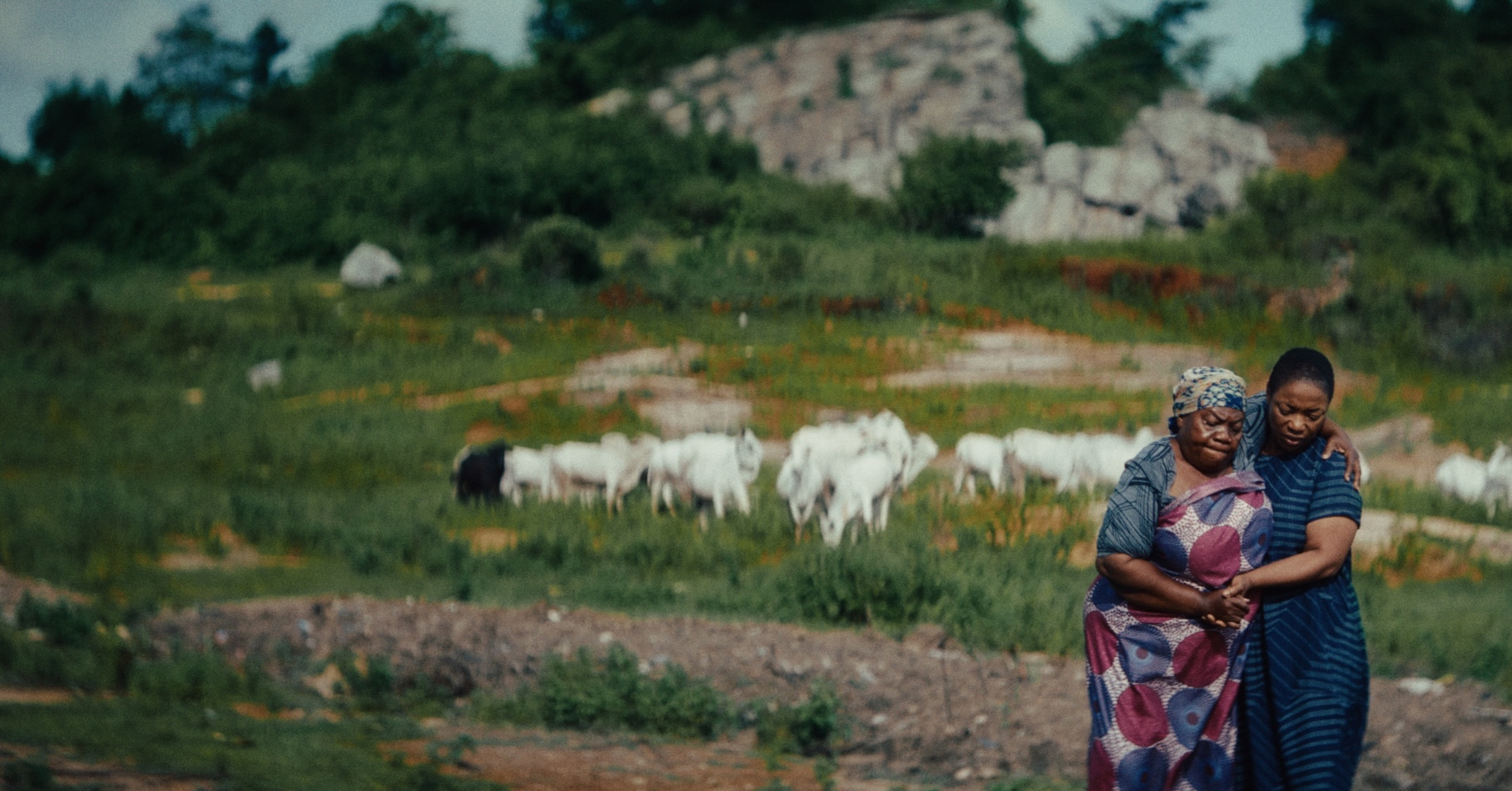
Photo: 2o9ine Films
Set in 1990s southwestern Nigeria, “Dear Ajayi” follows two sisters, Ade and Titi Ajayi, whose lives have gone in very different directions. Ade is a committed Christian and the main breadwinner in the family, while Titi is an aspiring singer who has chosen a more independent path. When their paralysed mother requires care, the sisters have no choice but to come back together.
Orimogunje wrote and directed the film. The cast includes Bimbo Akintola as Ade and Tosin Adeyemi as Titi, alongside Lanre Hassan, William Benson, Antar Laniyan, Uzoamaka Power, Michelle Dede and Chioma Omeruah, (Chigul)

Photo: 2o9ine Films
Re Olunuga composed the music, while KC Obiajulu served as cinematographer. The film was produced by 2o9ine Films, with Mayana Films, Depth and Optics Productions and Zynox Productions joining as co-production partners.
The film received support from the Hubert Bals Fund+ Europe, while Luminalia is handling its world sales
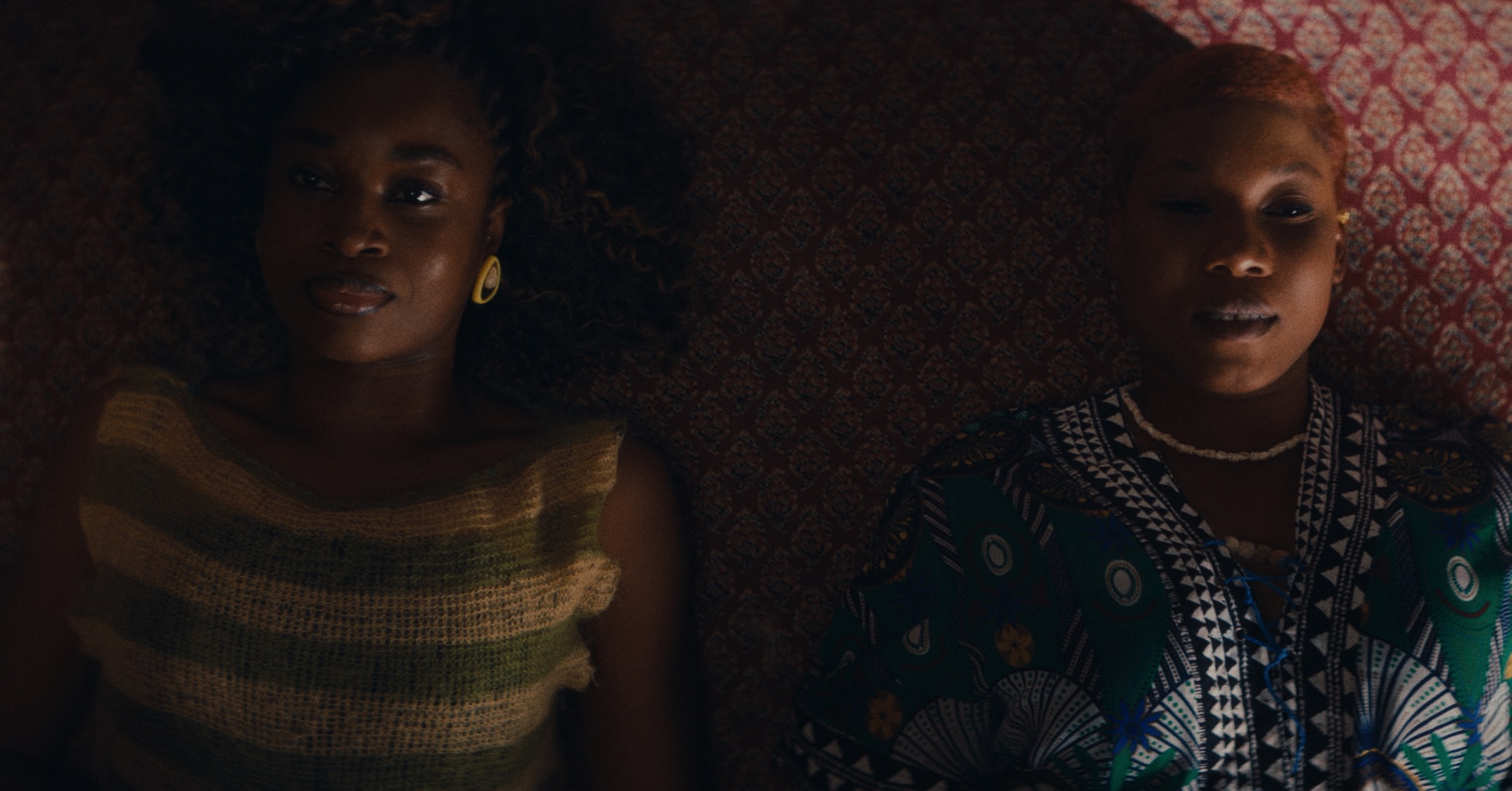
Photo: 2o9ine Films
Ahead of its Venice premiere, the first trailer gives viewers a look at the Ajayi family and the strained relationship between the two sisters.
Dear Ajayi will have its press and industry screening on September 4, with public screenings scheduled for September 10 and 12 during Venice Days.
Watch the trailer below.

Nancy Isime Gives Aṣọ Òkè a Cool, Corporate Look

Dabota Lawson and the Rise of Her Luxury Beauty Brand

Mo Abudu Opens a Black and African Cinema Hub in London

Dede Ashiogwu Styles Herself in a Black Jumpsuit With White Lace Trim

Laura Ikeji Proves Polka Dots Are Back and Better Than Ever

Rapper Tommie Lee Arrested at 2026 FIFA World Cup.

New Music to Kickstart Your Week From Victony, Timaya, Duncan Mighty, Mr Eazi & Fave.

Inside Schiaparelli’s Abyss-Inspired Haute Couture Collection

Ayra Starr Performs ‘Rush’ and ‘Heaven Baby’ at NFL Halftime Show in London | Watch Video

Ayra Starr and ZAYN Finally Share the Screen in “Heaven Baby” Video

Kizz Daniel’s ‘Owo Oluwa’ Finds Grace in Faith, Family and Loss

‘Black Market’ Breaks Guinness World Record With Over 51,000 Viewers


-
 Big Brother Naija2 months ago
Everything You Missed on Big Brother Naija Week 5
-

 The Best Dressed Celebrities This Week1 month ago
The Best-Dressed Stars of the Week Kept Things Chic and Daring
-

 Movies1 month ago
“Dear Ajayi” Makes History as First Nigerian Production in Venice Days Competition | Watch Trailer
-

 Celebrity Style1 month ago
Our Favourite Looks at ‘The Wedding Story’ Premiere
-

 Celebrity News2 months ago
Ayra Starr to Headline 2026 NFL London Game Halftime Show
-

 Models2 months ago
Tamunosoye Karibi-George Wins African Top Model Title at Miss World
-

 Big Brother Naija1 month ago
All the Drama BBNaija Week 6 Brought
-
 Entertainment1 month ago
Funke Akindele Releases First Images of ‘The Four’
-

 Entertainment1 month ago
Burna Boy Becomes First Nigerian Artist to Surpass 4 Billion YouTube Views
-

 Celebrity Style2 months ago
The Best-Dressed Celebrities of August 2026